
How to Make Pumpkin Wine – A Unique Pumpkin Recipe

This post may contain affiliate links. Read my full disclosure here.
Did you know you can make a fruit wine out of just about any fruit or vegetable with a fairly high sugar content – even pumpkin wine?
One of my foraging mentors, the late Mike Jacisin, was willing to experiment with fermenting just about anything. One year he was blessed with an abundance of onions, so he made a batch of onion wine. Alas, said onion wine went down in infamy as the worst brew he ever concocted. It’s become a running joke in our extended circle of family and friends.
Would you like to save this?
This year we had so many sweet onions that I considered a small batch of the infamous brew, since I missed out on tasting the original. Thus far my husband has vetoed the idea.
Since he won’t let me ferment onions, I’d like to share how to make pumpkin wine. Like Mike, I’m willing to bulk up my food and beverage storage with a wide variety of foodstuffs. Plus, it’s fun to break out a bottle of an unusual brew for friends.
I am not a big wine drinker, but I love the rich, yeasty smell in my kitchen as the wine ferments. Wine is pretty forgiving, too. I’ve made batches that are better or worse, but nothing completely skunky like some of my beer brewing friends have encountered.
How to Make Pumpkin Wine – Step by Step
Use pumpkins or other winter squash to make this simple homemade wine. Pie pumpkins and winter squash have sweeter pumpkin flesh than jack o’ lantern pumpkins. If you don’t have whole spices on hand, you can substitute a teaspoon of pumpkin spice seasoning.
This recipe makes one gallon of wine. The wine bubbles a fair amount during the first ferment, so I initially ferment in a 2 or 3 gallon container.
Ingredients
- 8 cups pumpkin
- 1 pound raisins (I used golden, but any are fine.)
- 1 – 4 inch cinnamon stick
- 1 inch fresh ginger root
- 1 whole nutmeg
- 1 gallon water, boiling
- 5 cups sugar (granulated sugar or brown sugar)
- 1 teaspoon yeast nutrient
- 3 teaspoon acid blend (Pumpkins are low acid, so acid helps promote proper fermentation. See below.)
- 1 package wine yeast
Directions – First Ferment
Wash, trim, peel and chop (or grind) the pumpkin. I peeled and shredded my pumpkin and mixed it with the raisins before adding the spices.
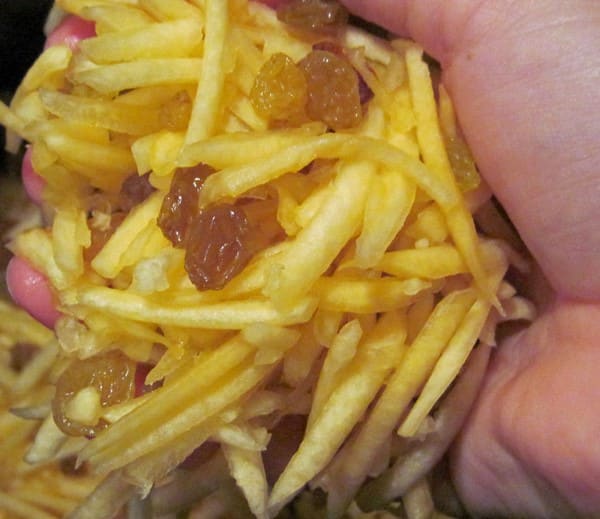
Place the pumpkin in a primary fermenter, such as a food grade 3 gallon bucket or large crock. (I used my three gallon crock.) Add raisins, spices and boiling water. Let sit overnight.
Add sugar, yeast nutrient, and acid blend. Stir well to dissolve sugar. Specific gravity should be between 1.090 and 1.095.
Sprinkle yeast over the mixture and stir. Stir daily for three to five days, until specific gravity is 1.040. (I bought a hydrometer but not a graduated cylinder, so I skipped this step. If you would like to see how to measure specific gravity using a hydrometer, check here.)
The mix will get nice and bubbly, and should have a pleasant, mildly yeasty smell and pumpkin flavor.
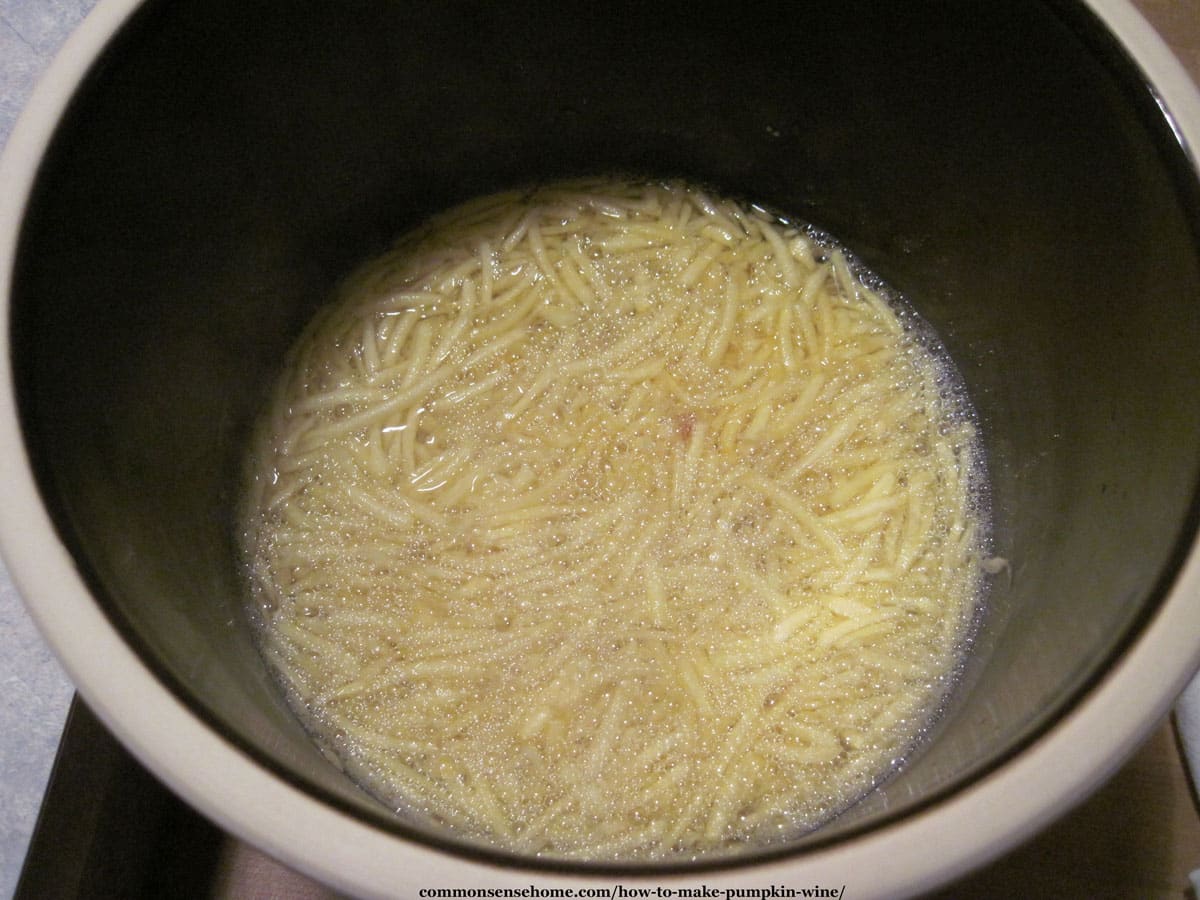
At the end of this first ferment, the pumpkin will have turned to mush and the grapes will be plump.
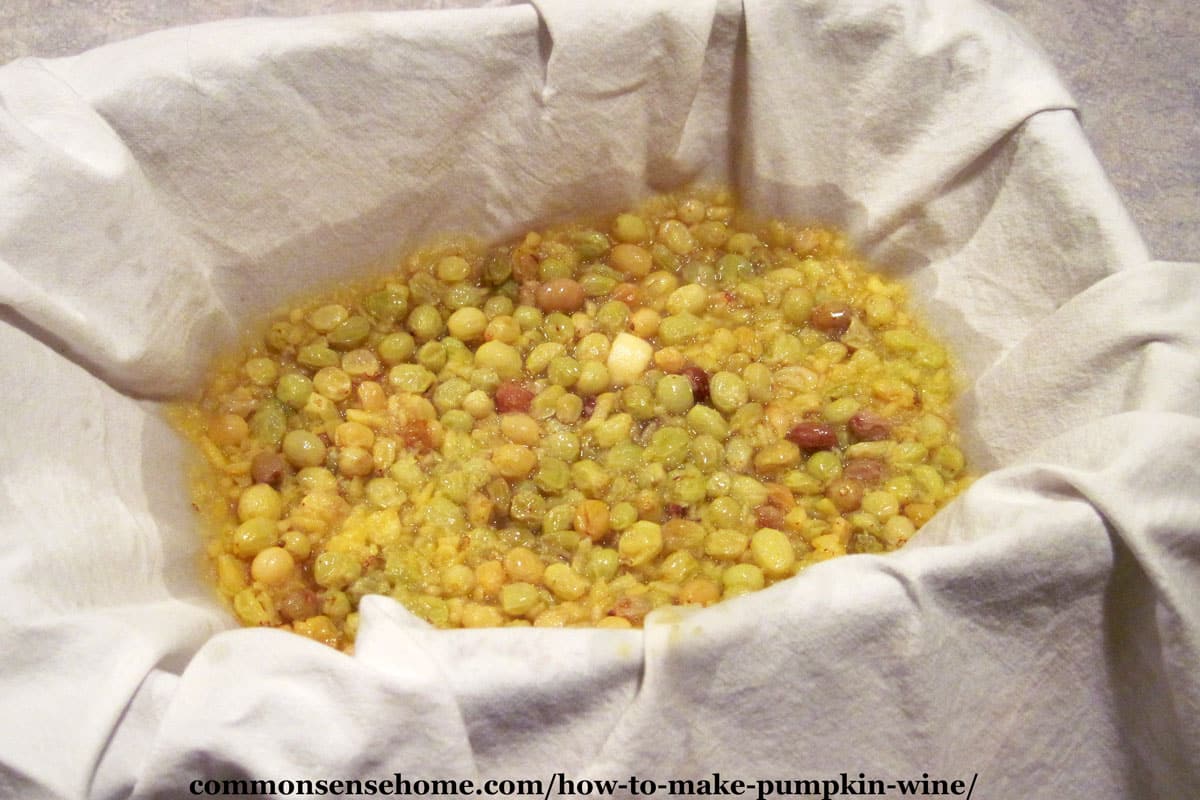
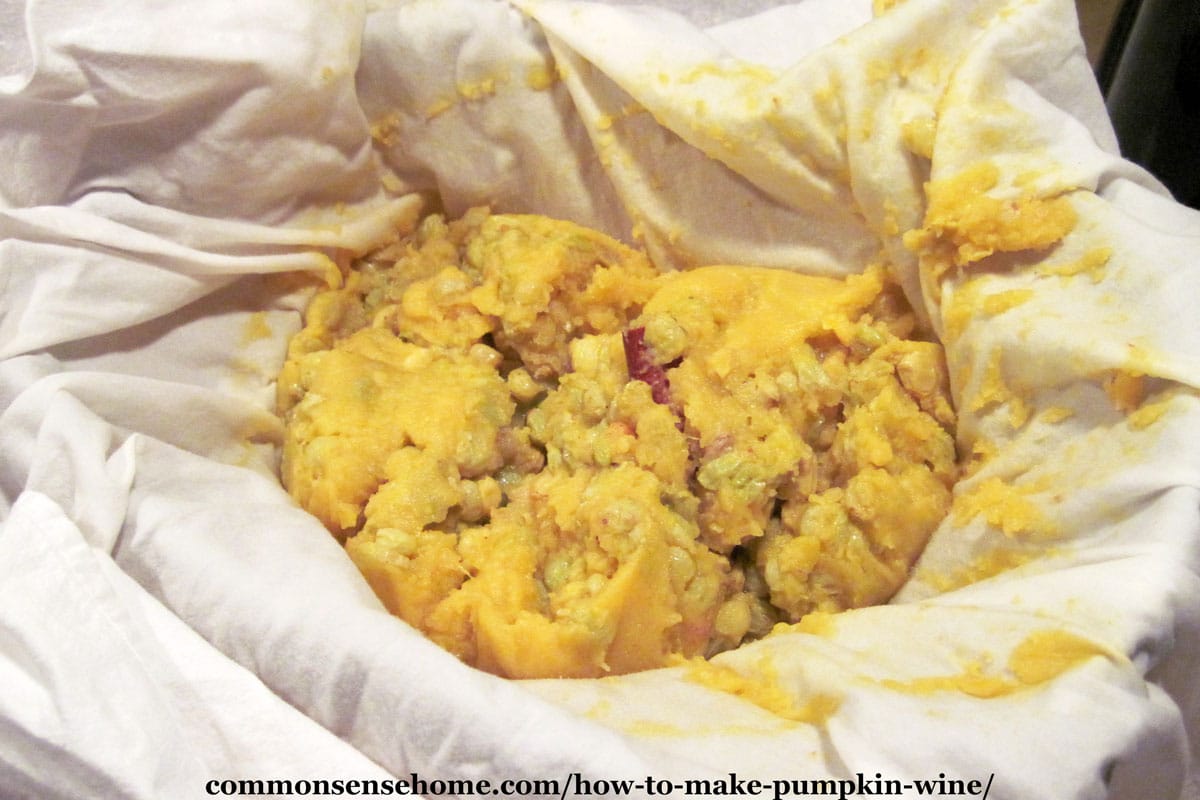
Strain the wine dregs (the leftover solids from the wine) and squeeze out as much juice as you can. We compost this or feed it to the chickens.
Second Ferment
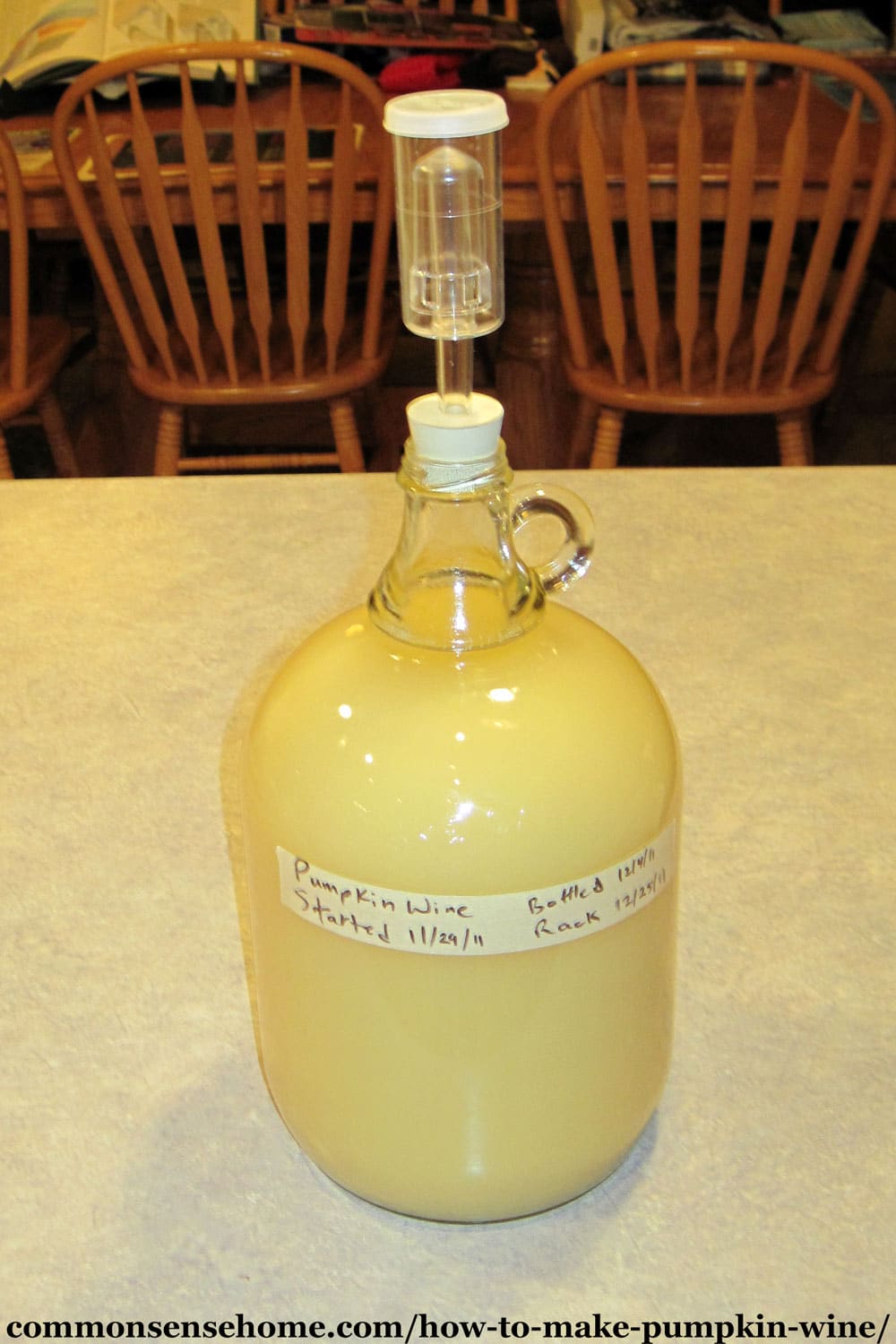
Siphon pumpkin wine into a one gallon secondary fermenter, add enough water to fill the fermenter, and attach airlock. You can see at this point the wine is very cloudy – not terribly appealing. It clears as it ages. I used a glass gallon jug with a plug type airlock.
Final Aging
For a dry wine, rack in three weeks, and every three months for one year. Bottle.
For a sweet wine, rack at three weeks. Add 1/2 cup sugar dissolved in 1 cup wine. Stir gently, and place back into secondary fermenter.
Repeat process every six weeks until fermentation does not restart with the addition of sugar. Rack every three months until one year old. Bottle the wine.
Here’s the wine is sitting, covered, in a corner of the kitchen. The particulates settled very nicely – no more cloudy wine.
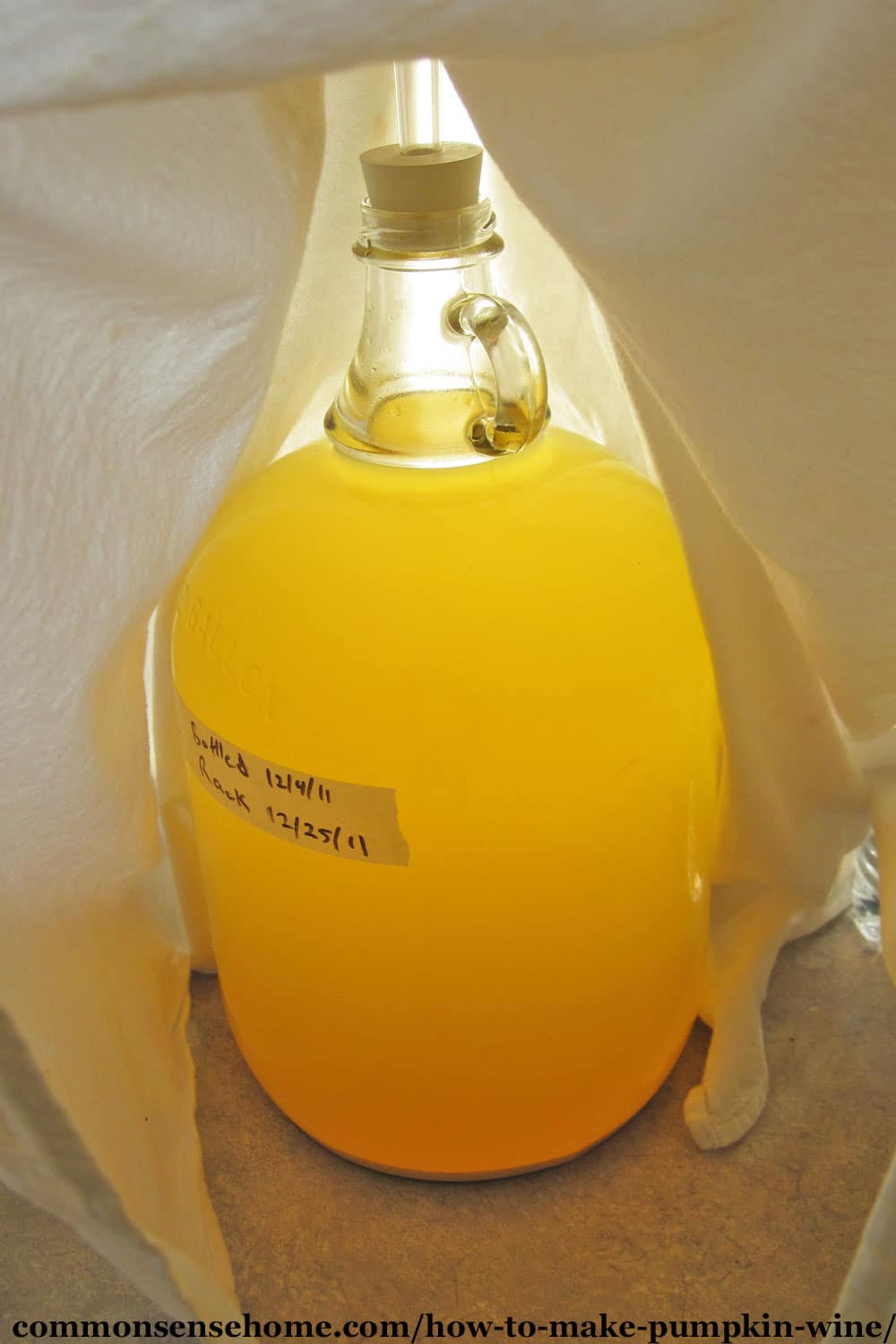
Allow the wine to age for one full year from the date it was started. Prepare it in fall to enjoy the following year.
We made the dry version in October 2011. It packed a punch, but I prefer my wine a little sweeter, so we’ve switched to the sweet version.
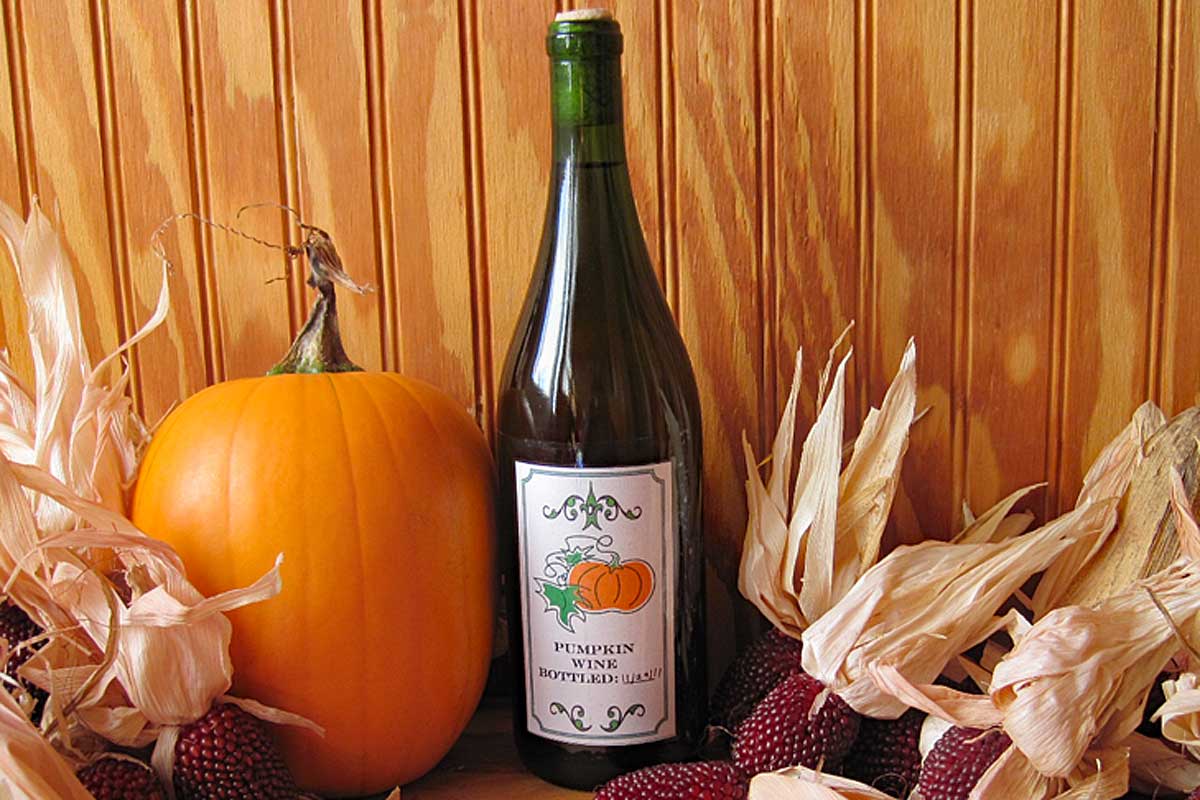
You can download a pdf of the wine labels I used here. => Printable Pumpkin Wine Labels
PrintPumpkin Wine Recipe
Sweet or dry, this unique wine is sure to be a conversation starter.
- Yield: 1 gallon 1x
Ingredients
- 8 cups pumpkin
- 1 pound raisins (I used golden)
- 1 – 4 inch cinnamon stick
- 1 inch fresh ginger root
- 1 whole nutmeg
- 1 gallon water, boiling
- 5 cups sugar
- 1 teaspoon yeast nutrient
- 3 teaspoon acid blend
- 1 package wine yeast
Instructions
- Wash, trim, peel and chop (or grind) the pumpkin. Place in primary fermenter (2-3 gallon container). Add raisins, spices and boiling water. Let sit overnight.
- Add all other ingredients except yeast.
- Stir well to dissolve sugar. Specific gravity should be between 1.090 and 1.095. Sprinkle yeast over the mixture and stir. Stir daily for three to five days, until specific gravity is 1.040.
- The mix will get nice and bubbly, and should have a pleasant, mildly yeasty smell.
- At the end of this first ferment, the pumpkin will have turned to mush and the grapes will be plump. Strain the must and squeeze out as much juice as you can.
- Siphon into a one gallon secondary fermenter, make up to volume with water (if needed) and attach airlock.
- For a dry wine, rack in three weeks, and every three months for one year. Bottle.
- For a sweet wine, rack at three weeks. Add 1/2 cup sugar dissolved in 1 cup wine. Stir gently, and place back into secondary fermenter. Repeat process every six weeks until fermentation does not restart with the addition of sugar. Rack every three months until one year old. Bottle.
- Let age for at least a year for best flavor.
Notes
Pumpkins are low acid, so you need to add extra acid to help promote proper fermentation.
What are an acid blend, acidity, wine yeast and yeast nutrients?
If you’re new to winemaking, these items may not be familiar to you. This explains acid blend, acidity, wine yeast and yeast nutrients.
Acid Blend
A blend of acids important to wines, usually tartaric, malic and citric acids. While there are many different formulations of acid blend, the recipes on this site calling for acid blend assume a blend of 50% tartaric, 30% malic and 20% citric. If your acid blend uses a different ratio, you may want to use slightly more or less depending on your blend.
Acidity
The amount of acid in the must, liquor, or finished wine. Insufficient acidity in the must will result in a poor fermentation and a slightly medicinal and flat taste.
Too much acid will give the wine an unpleasant sourness or tartness. Some acid is necessary for fermentation. Up to one-fourth of the initial acid content is consumed by the yeast during fermentation.
Low-acid musts are usually corrected by adding tartaric acid (the principal acid in grapes), malic acid, citric acid, or acid blend. An acid testing kit is indispensable in measuring initial acidity.
Wine Yeast
Yeast cultured especially for winemaking, with such desirable attributes a as high alcohol tolerance, firmer sediment formation, and less flavor fluctuation. You can buy wine yeasts from a winemaking/ brewing specialty shop or by mail order.
Yeast Nutrient
Food for the yeast, containing nitrogenous matter, yeast-tolerant acid, vitamins, and certain minerals. While sugar is the main food of the yeast, nutrients are the “growth hormones,” so to speak.
Related Recipes on Common Sense Home
You may also enjoy:
- Dandelion wine, Pear wine or Elderberry wine
- Pumpkin Leather – portable pumpkin pie
- Maple Sweetened Pumpkin Pie
- Pumpkin Pasta
Have you ever tried winemaking? What’s your favorite brew? What other ways do you use up excess pumpkin or squash?

This article is written by Laurie Neverman. Laurie grew up in the kitchen, learning baking and home cooking from her momma. At age 15, she and her mom and two sisters created Irene’s Custom Cakes & Catering. Her cookbook, Never Buy Bread Again, helps beginning bakers make beautiful homemade bread with easy, reliable recipes.
Originally posted in 2011, last updated in 2024.
hi.. is this a 1 gallon recipe, or a five gallon recipe? You don’t specify what size container, you simply say “top up with water”. We are very new to making wine, and have already run into this problem. It’s a terrible waste of sugar and time to not know the details. I’d love to try this recipe. Could you clarify this for me? Thanks in advance ☺️.
It’s a one gallon recipe. When it’s in the first ferment, it may bubble up out of a one gallon crock, which is why I do the initial ferment in a larger crock. I will add more text to clarify this in the article.
what do you mean by the term “rack” especially when you say” rack every 3 weeks”?
When you “rack” a wine, you siphon the liquid into a clean container, leaving the yeast dregs behind in the original fermenter. This gives you a clearer wine. If you only have one carboy/fermenting vessel, you can siphon into a bowl or pot. Then wash your carboy and clean out the dregs, and put the wine back in.
If liquid levels are too low in the clean fermenting vessel, you may add a little water, a little sugar water, or a little white grape juice to top it off. (You want the liquid close to the top of the carboy so the air space above the wine fills with CO2.)
My brother made Pumpkin Wine many years ago. It was very good, but a little darker as he used more cinnamon. The wine was very strong, alcohol taste. My cousin did make Onion Wine. That was good too! But I think that would only be good to cook brats or hot dogs in?
My husband makes an awesome spiced pumpkin wine. Love it! His recipe is almost exactly like yours… only difference is that he lets it sit until the yeast dies. ?
What spices does he use?
Someone show this to Trader Joe’s so they can add it to their pumpkin inventory!!!! lol ?
Hello, I am planning on making this wine I just had one question. When making it sweeter is that a 1/2 cup of sugar to a cup of wine, that’s what it sounds like, or is it a 1/2 cup of sugar to a gallon? And how would you add it with out the gallon overflowing?
1/2 cup sugar to a gallon of wine. If you rack the wine before adding the sugar, odds are you’ll open up enough space by removing the lees from the bottom to add sugar without it overflowing.
Can using My wine press after first fermentation a good idea?
Sure, that’s perfect if you have one available.
Yes I do have one, I use it for my home grown concord grapes!
So many grapes made 3 five gallon batches, one with two pounds of cherries. Also making one gallon Apple cider wine and just started five gallons of my pumpkin wine.
so I have to wait one year to bottle the pumpkin?
If you’re pretty sure it’s dead, you can bottle sooner. This one tends to have a lot of particulates, so if you want a clearer wine, keeping it in the carboy longer and racking every so often significantly improves the clarify. If you don’t mind a the risk of a little haze, it’s not an issue. Mine definitely tasted better at the two year mark than at one year, after aging in the bottles for a year.
Added note:
If you do not kill the yeast before bottling you run the risk of blowing corks out or even blowing the bottom off the bottle. I learned from experience it is a mess. A mistake you only make once
A couple of comments
1. When you add more sugar you create more alchohol. The yeast keeps feeding on it. That is why you say it packs a punch. Yeast eating sugar give off 50% alchohol and 50% carbon dioxide this causes the bubbling effect)
2. After 3 months in second fermentation most sugar will be gone.
3. To end fermination add potassium sorbate it is stabilizer (about 1/2tsp per gallon then add potassium metabisulphite (add 1/4tsp per 6 gallons). This will kill any yeast left.
4. Add a clarified. This will drop all remaining patricals.
5. Make simple syrups (I use 6 cups sugar to 2 cups of water) heat to combine sugar to thicken. Add to your wine. Mix to your desired sweetness.
Bottle and let age if you can wait) the wine should be drinkable in three months. Good luck