
How to Make a Salve with Infused Oils – Easy DIY Skincare

This post may contain affiliate links. Read my full disclosure here.
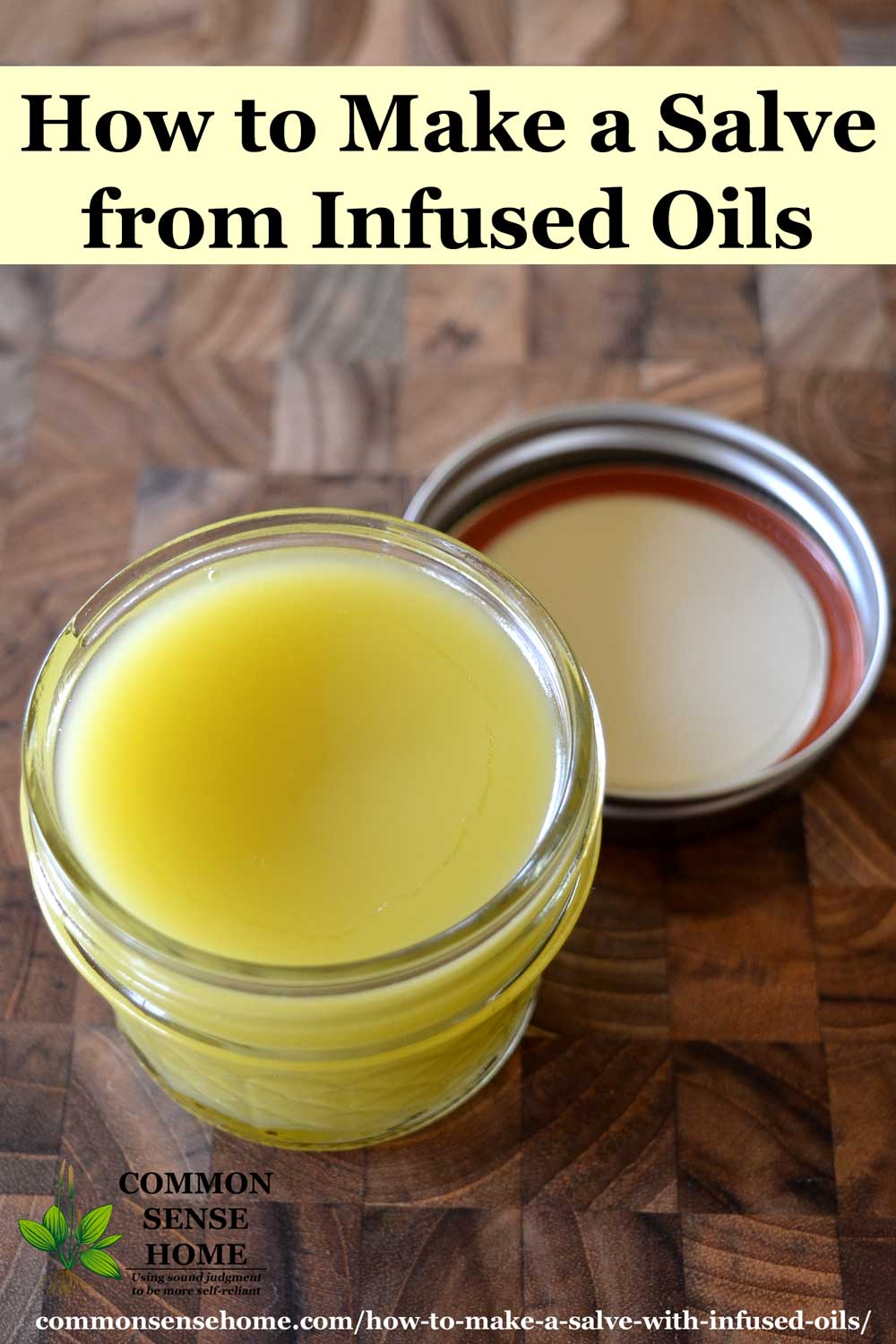
In this post I’ll show you how to make a salve with infused oils. Plantain leaf salve is good for insect bites and stings, removing slivers, hemorrhoids and winter dry skin.
Would you like to save this?
Plantain is a common lawn and garden weed. It has many medicinal properties, and can be used inside and out. Learn more in Broadleaf Plantain – Weekly Weeder #14.
The leaves themselves can be applied directly to the skin, but for ease of use and long term storage, I make herb infused oil.
How to Make an Herb Infused Oil
For more detailed instructions on how to combine herbs and oils to make an oil infusion, please see:
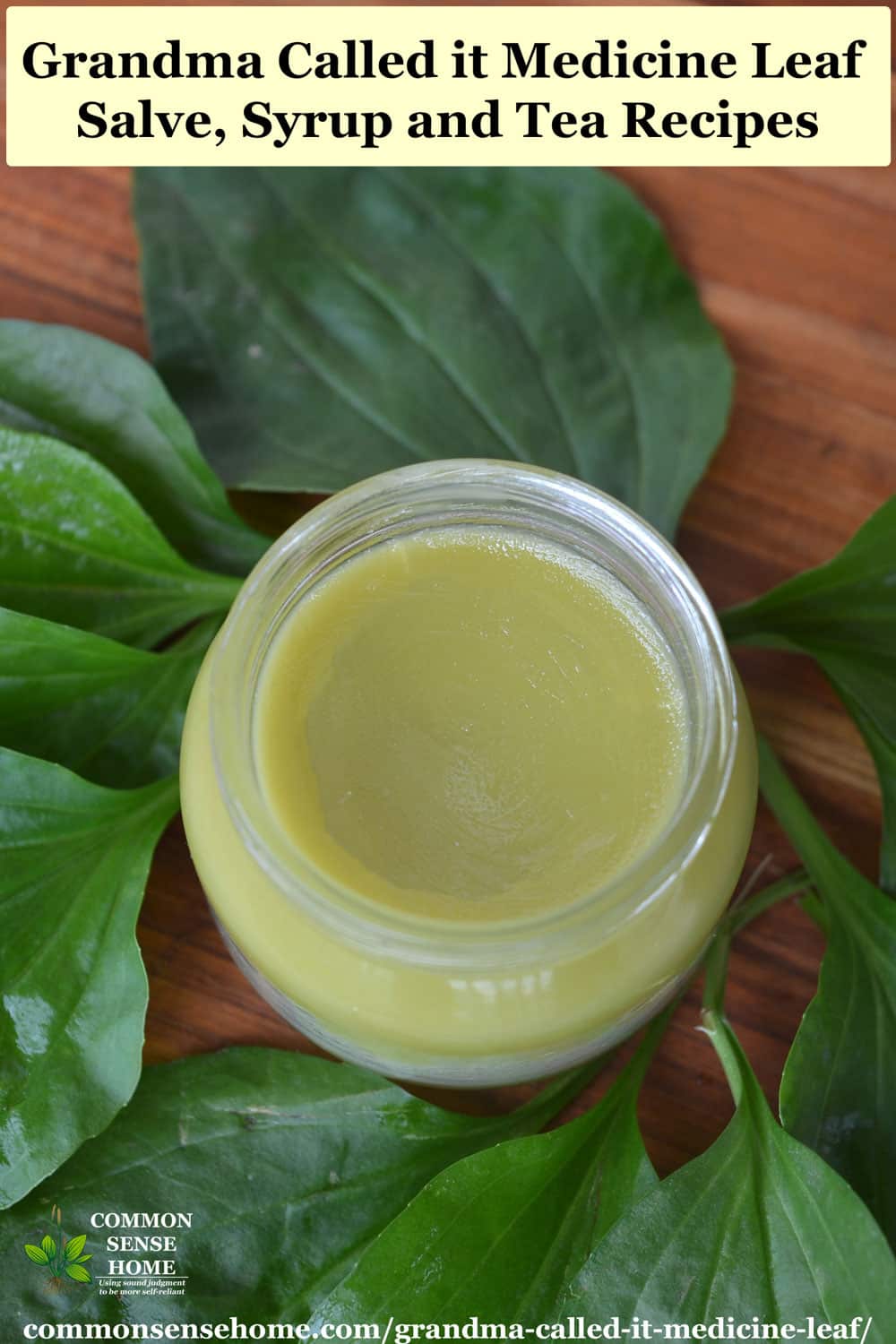
Grandma Called it Medicine Leaf (featuring a fresh plantain leaf infusion)
How to Infuse Herbs in Oil, Water,Vinegar, Alcohol, or Honey – includes instructions for dried herbs
Solar Infusions
I normally use a solar infusion for fresh plantain leaves.
To make a solar infusion, finely chop fresh herbs and fill a small mason jar or other small glass jar. Add enough olive oil or fractionated coconut oil to cover the herbs. (You can usually squeeze in about a cup of oil around your cup of herbs.)
Place in a sunny window and stir daily for 2-4 weeks. Strain the oil before use. Date and label and store in a cool, dark location.
Direct Heat Infusions
To make a salve with infused oils more quickly, you can used a direct heat infusion.
Place the fresh or dried herbs and oil in a double boiler, slow cooker or clean glass jar set in a pan of water. For dried herbs: Use a ratio of roughly 4:1 – four parts oil to one part dried herbs. For fresh herbs: Use a ratio of roughly 2:1 – two parts oil to one part fresh herbs.
Simmer the herb and oil mixture on low for about 4-6 hours. Strain and store or proceed with making the salve.
I reuse old extract jars for infused oil, but I also purchased some glass jars.
Oils are great for covering large areas (like when you get covered in mosquito bites or sunburned), but sometimes an ointment or salve is more convenient. For instance, to treat a single bite, or apply to hemorrhoids, or to pack in your purse – no spills!
Once you have an herbal infused oil, making herbal salves is quite simple.
These instructions are based on Healing Wise by Susun Weed. You can watch the video tutorial at top (make sure your ad blocker is off), or use the step by step directions below.
How to Make a Salve with Infused Oils
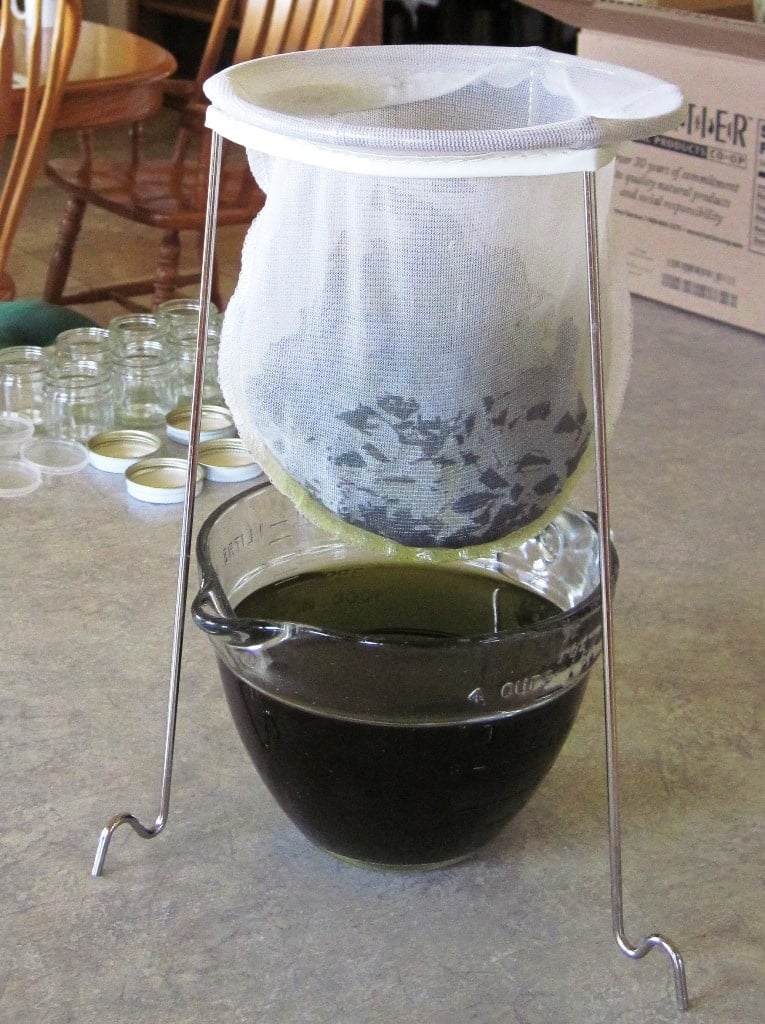
First, drain the plant material out of your oil. I use my Norpro Jelly Strainer.
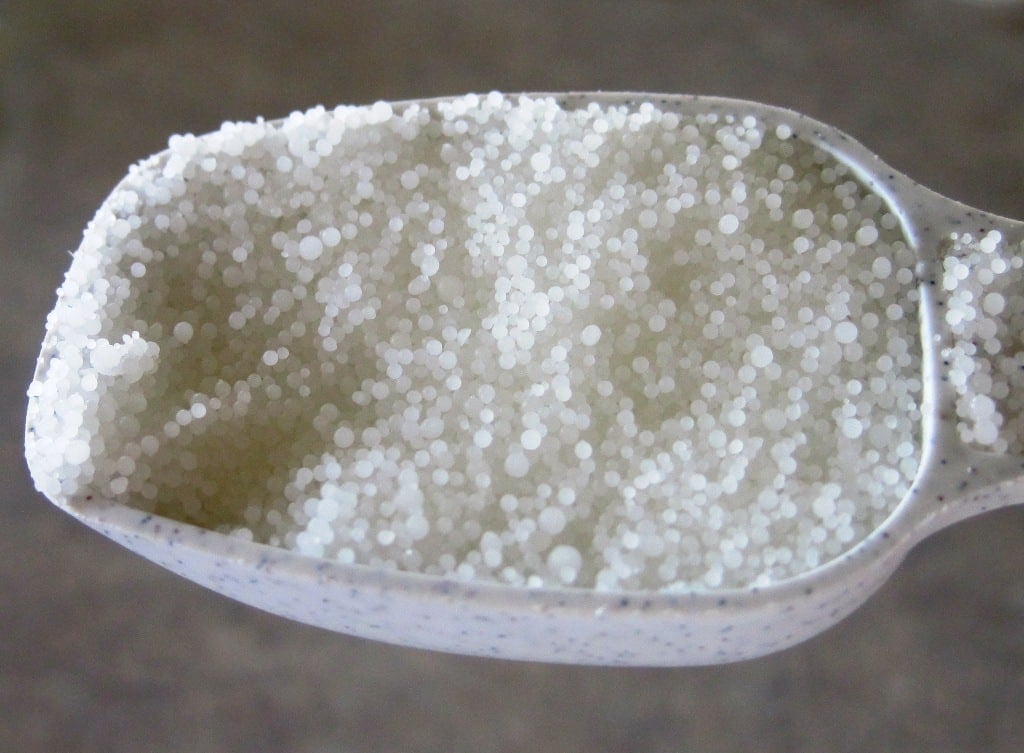
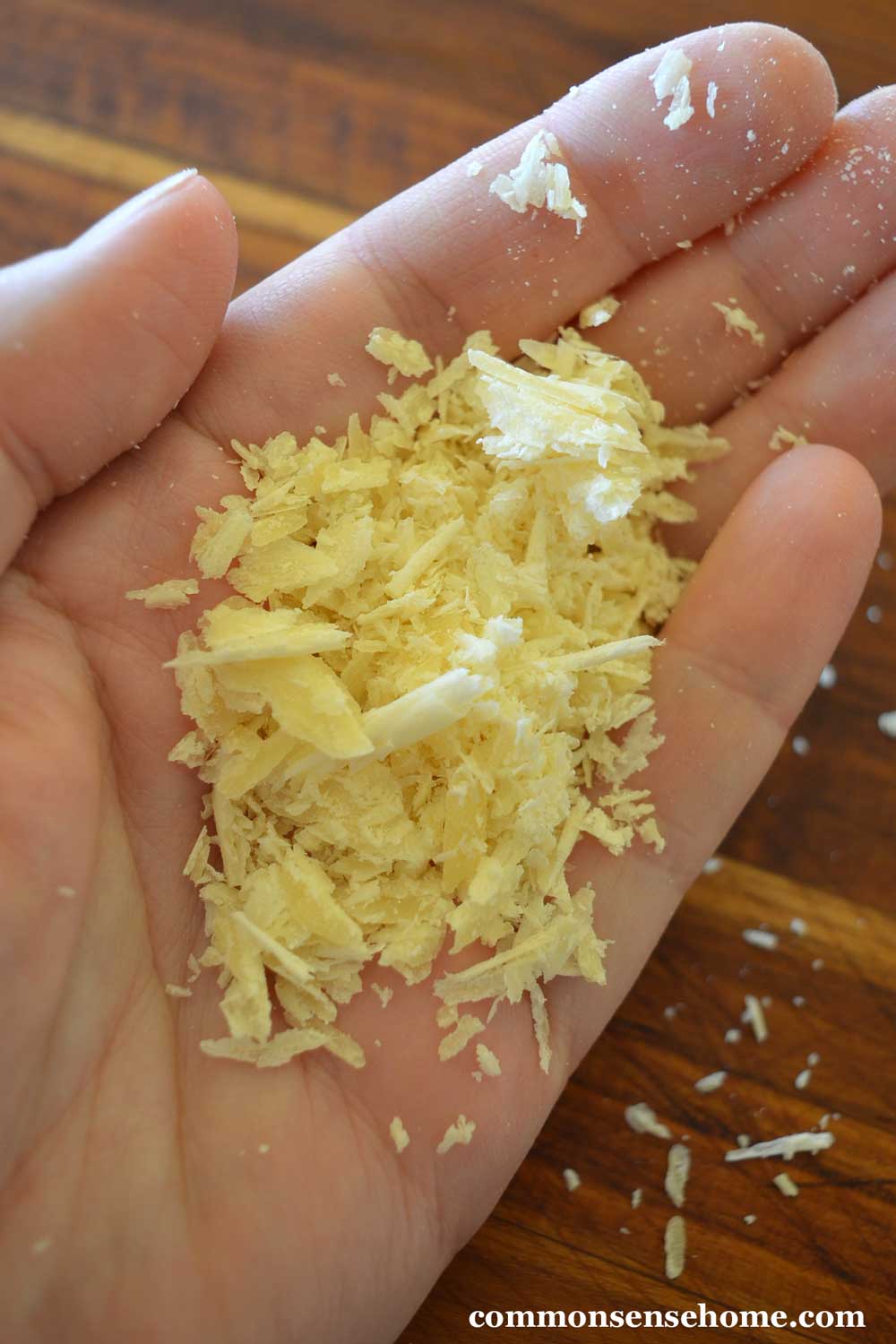
For each one ounce (30 ml) of infused oil, measure out one tablespoon (15 ml) of grated or granular beeswax. You can squeeze in a few drops of vitamin E oil to increase shelf life, but it’s not essential.
Frontier has some very easy to use beeswax beads. They pack together more tightly than grated wax or pellets, so you should use a scant tablespoon. Here’s a photo of the beeswax beads.
You can also grate bulk raw beeswax. Unbleached beeswax gives your salve a more golden color. (Get beeswax pellets here.)
Combine the oil and beeswax in a heavy bottom pot, double boiler, or crock pot.
Place the pan on very low heat. I set the burner on my gas stove to its lowest setting.
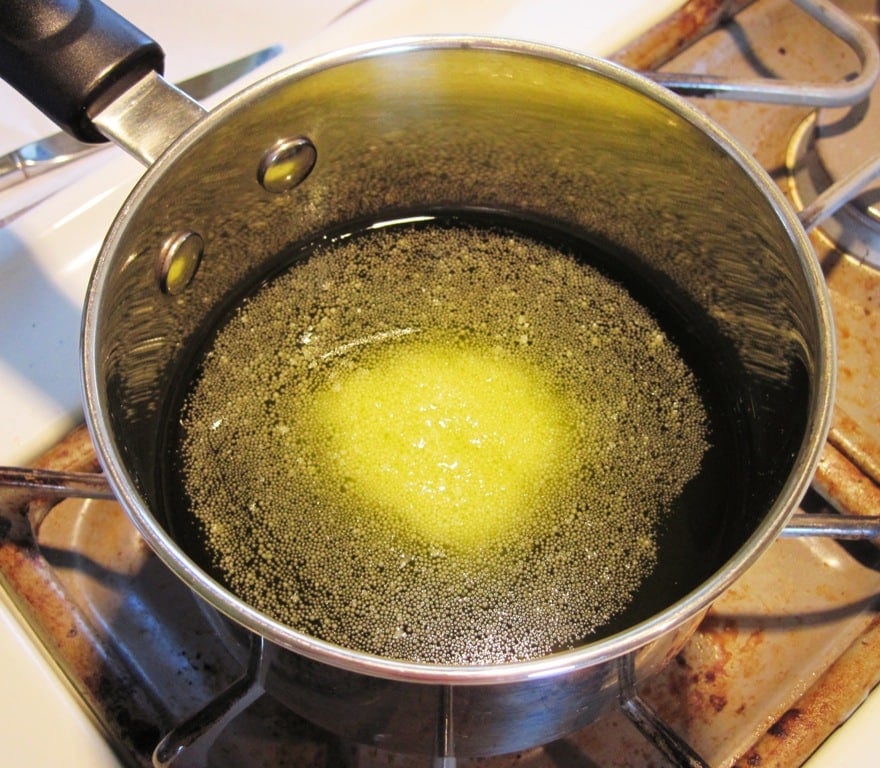
Stir constantly until the beeswax is totally melted. This happens very quickly if the wax pieces are small. I blinked and the beads were gone.
Pour the liquid into your containers and allow it to cool and solidify.
Containers for Your Infused Salve
I ordered both one ounce and two ounce containers.
The one ounce containers were plastic with flip tops, the 2 ounce were glass with metal caps. Below is all the finished salve and the extra bottles of oil I kept as oil.
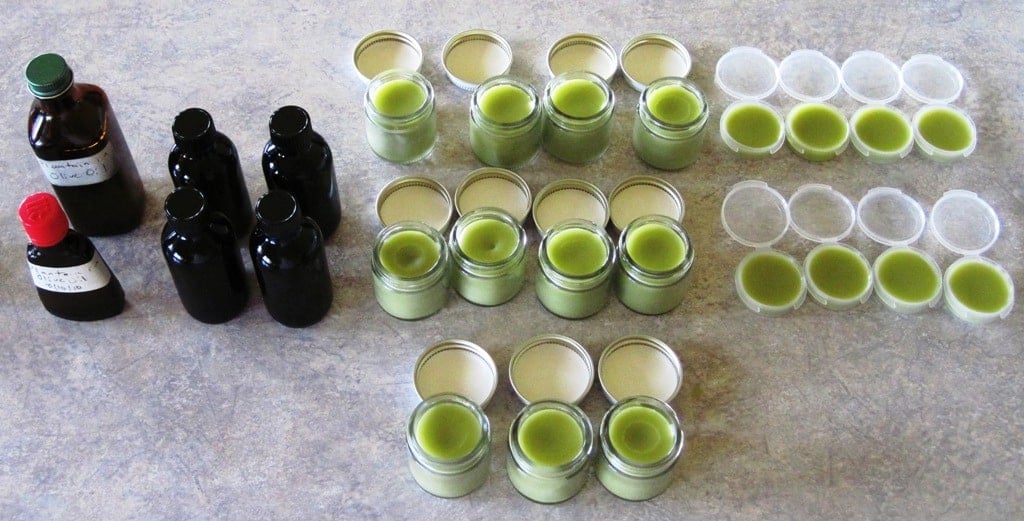
You can order containers online using the links below:
- One ounce glass salve containers.
- One ounce plastic salve containers.
- Two ounce glass salve containers.
I sold some of these at the farmers market in 2010, and also gave some as gifts. It was a terribly wet year and the mosquitoes were out in full force, so the salve was pretty popular.
If you find the consistency of your salve to be too hard, remelt it and add more infused oil. If it is too soft, remelt and add more beeswax.
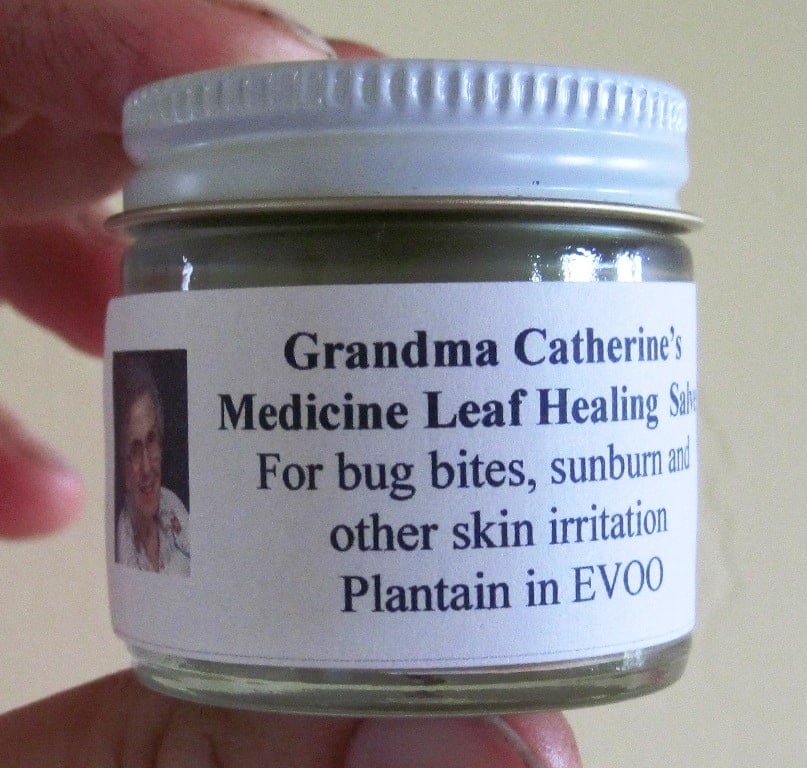
I made up labels with a picture of my grandmother on them, and named it Grandma Catherine’s Medicine Leaf Healing Salve. I hope she’d approve.
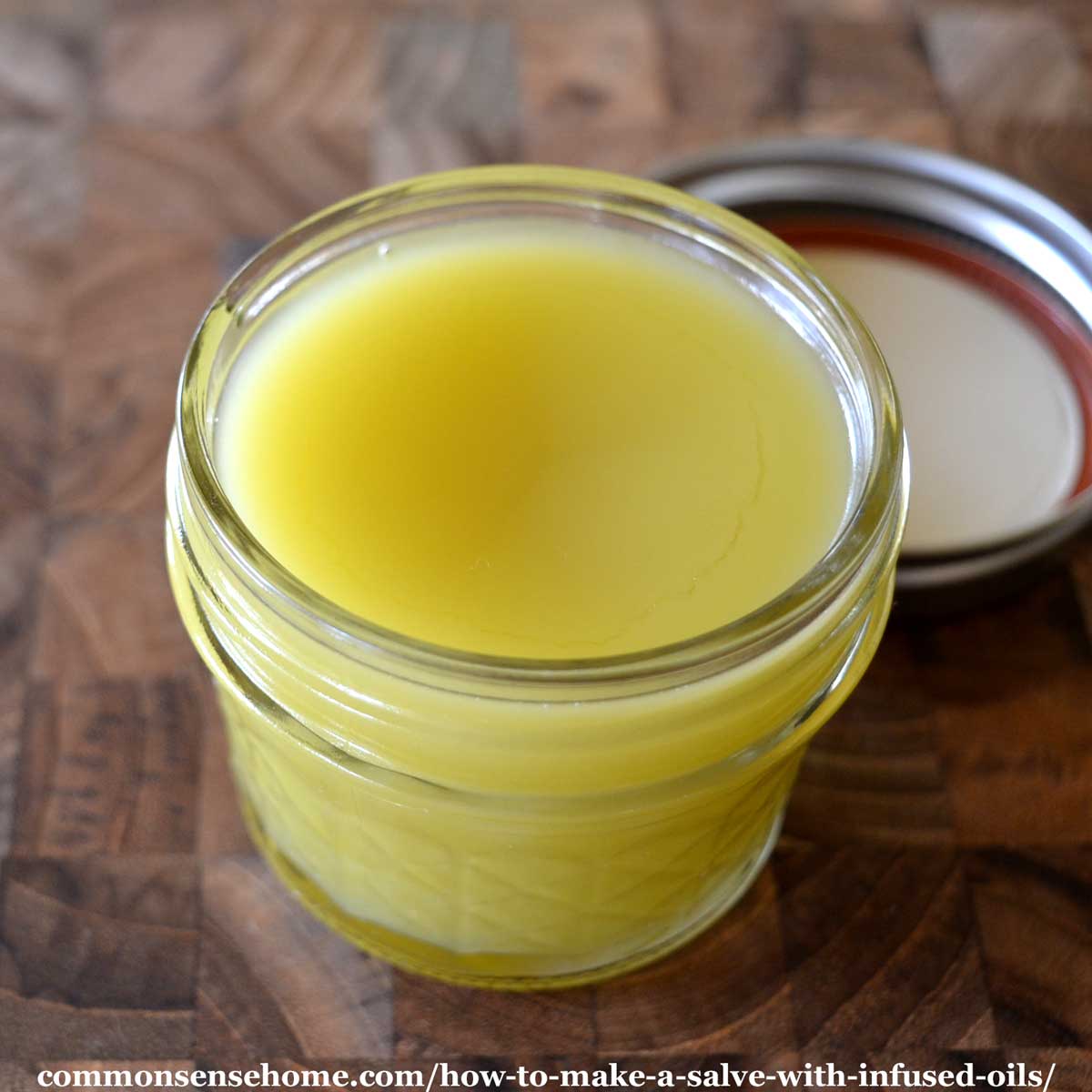
You can also use small (4 ounce) mason jars, or other containers with a tightly fitting lid.
Want More Home Remedies and Herbal Info?
Check out the Home Remedies page and the Herbs and Wildcrafting page.
We have dozens of posts on the site to help you to learn about natural remedies and the medicine growing in your backyard.
You may also enjoy:
- Natural Mosquito Repellents
- 12 Home Remedies for Sore Muscles
- Honey as Medicine – Prevent Infection, Kill Bacteria, Promote Healing
Originally published in 2011, last updated in 2020.
I love your website….so much good information. I have used plantain for stings and bites and it is a magical plant. I never thought about freezing/drying or making a salve. I am planning on doing that this summer. I am so excited to get started….just a few weeks till Spring!!!
Welcome, Pat. We love using plantain infused out and salves. It’s so easy to apply to bug bites and sunburn.
Dried or fresh herb for oils? I’m assuming dried so it won’t go rancid?
Either will work, but with fresh herbs, there is a greater risk of spoilage.
I love the plantain salve. Is my favorite magic salve for everything in my family! Love it . Thanks
I’m glad that you like it, too.
I just made this salve. I infused my plantain leaves in sweet almond oil. When I opened the infusion jar, it smelled “funny”. I used it anyway, with the bees wax and it is setting up now. The smell is not terrible, but different. Does anyone else have this issue? Do you think it is ok to use?
Plantain in olive oil smells somewhat like pepperoni, so I would suspect that it smells similarly odd in sweet almond oil.
I bought dried plantain because I couldn’t find any fresh. How much should I use in 1 cup of coconut oil?
I usually just eyeball it, but a little less than 1 ounce of dried herb per cup of oil is a good general ratio.
I made some of the plantain salve & am wondering how long the salve should be kept for before getting rid of it & making new.
I generally make a fresh batch each year, but so far it’s seemed to stay stable from one year to the next.
I make a salve out of coconut oil, plantain and bees wax…I cook or stew the plantain leaves indirectly in coconut oil in a small crock pot by using a small double boiler pan. Put the 1 cup Coconut oil in the double boiler pan and hot water in the crock pot. Add a 30 or 40 plantain leaves to the oil. I keep adding water to the crock pot and cook it all day. Eight to ten hours. The plantain leaves will become brittle and obviously “spent”. You can easily pick out the spent leaves out of the nice green oil. It will smell really good too. Add 2 Tablespoons of bees wax pellets. Pour into small jelly jars…Use for rash, shingles, poison Ivy, scrapes, bug bites, diaper rash, eczema, acne, skin rash type issue…..you name it. Simple to make. Any questions,
Jan – stitchinfox@yahoo.com
They are here in Indiana really bad too.
My plantain has been sitting in the oil for about a year in july. Can I still use it or should I throw it out?
Compost it and start over.
Okay I will do that.. Thank you so much…
I did get to try out the chewing it up and putting it on a bee sting the other day on my sister (she was skeptical) and it worked wonders….
I just started up a new batch this week. The mosquitoes are terrible this year.
How much oil and plantain leaves do you use?
I use enough plantain to fill the jar and enough oil to cover it.
For bee stings you are supposed to mix plantain and cayenne pepper. Michael Tierra says so. I’m not sure how much should be used in a salve. I never used it that way, when I go for a walk I carry a baggie of leaves and in another some cayenne. These fit in your pocket and don’t get in your way. If stung, take out the biggest leaf you have, crumple it up in a ball and chew with just your front teeth to break it open so the juice can come out. Then sprinkle a little cayenne on it. Apply to sting. It’s super strong used this way. I got this method from one of Michael Tierra’s books 20 years ago. If you haven’t heard of him, he’s one of the top herbalists in the country.
More on Michael Tierra, for those who are interested: https://www.planetherbs.com/about-our-school/michael-s-biography.html
I hadn’t heard of him before, but it looks like he has a lot of experience.
I know you said to drain your plant material out of your oil my question is how long do you let it set for before you drain it and I just want to say I enjoy your site I have just started trying to do this stuff and would really like to learn more could you tell me what is the best brand of essential oils is the best to buy? Thanks so much.
When I’m using Susun Weed’s method of sun infusion of fresh plant material, I usually infuse in a sunny window, stirring daily, for about four weeks. Other methods suggest a warm spot out of direct sunlight for 4-6 weeks. Still others suggest heating herbs and oil in a double boiler or heavy bottom pot, gently for 30 minutes to an hour.
I use doTERRA and Aura Cacia essential oils, primarily doTERRA for medicinal use. I wouldn’t recommend using anything too cheap (like NOW brand) for anything other than say, cleaning your toilet bowl.
How long will it last for?
I typically keep mine from one season to the next. In warmer areas the shelf life will be shorter. (We are in northeast Wisconsin.)
I haven’t tried it myself but I have been reading a lot about infusing hers in oil and the most consistent instructions for making these oils last longer is by drying or at least partially drying the herbs first.
Bluemermaiden
There are different schools of thought on the topic. Some people, like Susun Weed, swear by the fresh herbs for potency. Other places, like the Herbal Academy, are strictly in favor of dried herbs, because there’s less risk of spoilage.
What kind of strainer are you using in the picture?
Stephanie – It’s a Norpro Jelly Strainer. I added a direct link in the post. You can also find them in some hardware stores or where canning supplies are sold.
My kids will chew a leaf and apply to a sting or burn. It really helps. I’d love to try making the salve. It sounds easy. Thanks.
When I saw the title I thought it was plantain – part of the banana family, but I see in the link that is an entirely different plant. I live in tropical Australia so not sure that the plant that you are referring to is available here.
It does grow in Australia.
What about other types of plantain? I don’t have broad leaf growing in my yard but I think I have Buckhorn Plantain. It’s hard to tell since my husband insists on mowing everything and I never see the stalk or flowering part of the plant. If it is buckhorn, can it be used the same way?
“There are over 200 species in the plantain family, and they are found worldwide. Many have herbal uses. Plantago major is the most common one in North America, but Plantago lanceolata can also be found. Both have the same medicinal uses, and are very similar in appearance. Plantago major has wide rounded leaves, with a flowering spike covered with small nubbly seeds; Plantago lanceolata has longer, slender leaves, and a mostly bare flowering stem, with a conelike cluster of flowers on the top. ”
http://www.prairielandherbs.com/plantain.htm
All plaintain works interchangeably.
I don’t know how to yet. But I hope to learn.
That's interesting. I've only using them with olive oil, and they melted very smoothly. It was so much easier than using shaved beeswax. Maybe you got an off batch? I can't imagine how beeswax could be "off", but…hmmm…
I have had funny results with beeswax pellets. I melted it with coconut oil and some other oil and then whipped it to make a balm. The wax was grainy because it cooled off again after it melted. Kind of weird.
I have found that shea butter will granulate when cooled. It shouldn’t be the beeswax that is the problem. I also prefer not to use olive oil as it seems too sticky to me. I use Sweet Almond Oil, coconut oil, or grapeseed oil, and sometimes jojoba oil if I am feeling lavish. It helps to reduce the granulation to heat all your oils, beeswax and butters together in a double boiler on low for 35-45 minutes at 170-185 degrees. Remove from heat and then add Vitamin E Oil and Essential Oils if you desire. Whip when partly cooled, or just pour it into your containers. This should prevent most of the granulation. Can’t hardly call it Body Butter when it is more like ‘body rocks’!