
How to Infuse Herbs in Oil, Water, Vinegar, Alcohol or Honey

This post may contain affiliate links. Read my full disclosure here.
Looking for creative, easy ways to use homegrown herbs, or maybe you’ve tried some herb flavored oils or herbal vinegars and wondered about making your own? In this post we’ll cover how to infuse herbs in oils, vinegars, alcohols and honey. With just a few simple steps, you can make your own delicious flavored cooking oils, such as garlic olive oil, quickly and inexpensively.
Remember – always follow basic kitchen safely rules. Containers should be clean and dry. Glass is preferred for storage because it is non-reactive. If you have a concern about your herbal infusion interacting with your jar lid (for instance, with herbal vinegars), place a layer of wax paper between the lid and the jar.
How to Make an Infused Oil, such as Herb Infused Olive Oil
The best oils to use for herbal infusions are pure plant oils such as olive, sunflower, coconut oil, or almond oil. The oil I use most is olive, because it has a longer shelf life at room temperature.
I wouldn’t advise the use of canola, corn oil or “vegetable” oil. Most of these will be made from genetically modified crops, which I do not recommend for consumption. (Read more here.)
Small batches are always best with infused oils, so they can be used quickly before they have a chance to go rancid.
I don’t recommend mineral oils, even for topical use. If I wouldn’t eat it, I try to avoid putting in on my skin.
You can use whatever proportion of herbs to oil you prefer, but if you feel you need a measurement, start with 1 ounce of dried herbs to 10 ounces of oil. Kirkland olive oil tested clean of contaminants, and is reasonably priced.
Solar Herbal Infusion
Solar herb infusions work best with olive oil, which is the most shelf stable liquid oil. To make a solar infused herbal olive oil:
- Finely chop your clean, dry herb. (Wash herbs only if really grimy, and dry well, as excess water can cause the infusion to spoil.)
- Place the finely chopped herb in a lidded glass jar, such as a mason jar or condiment jar. (This is a great use for old jars that can’t be used for canning but have wide mouths and good fitting lids.)
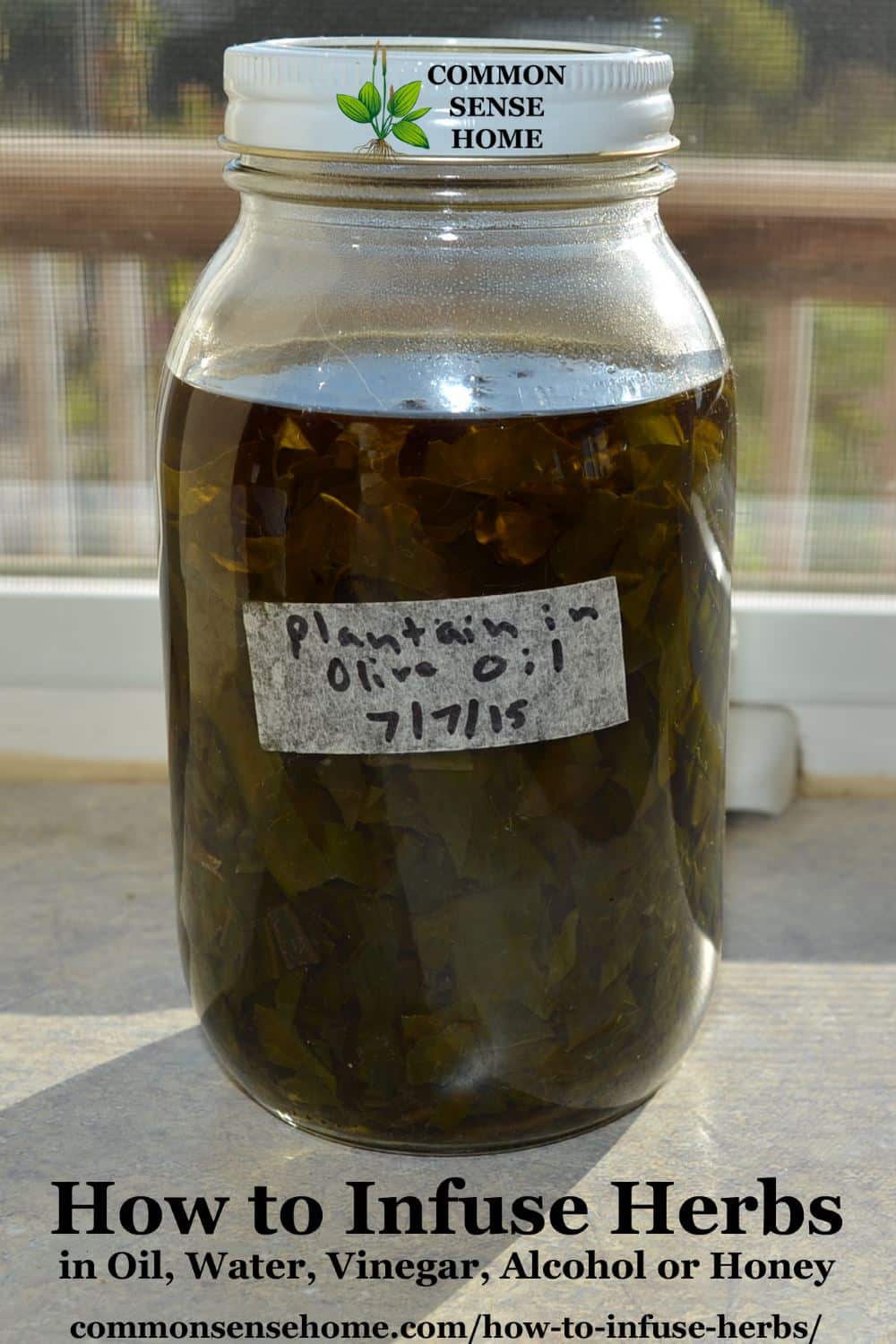
- Label the jar – for instance, “Plantain in Olive Oil’ and the date, as above. You’d be surprised how some chopped plants start to look similar to each other over time.
- Place the jar in a sunny window or other warm location for 2-3 weeks. Stir daily, pushing all plant matter below the level of the oil. Wipe off any condensation from under the lid or above the oil. Exposed plant material or excess water is likely to lead to mold.
- Strain out the plant material and pour oil into a dark glass container. Label with contents and date. Store in a cool location out of direct light to maximize shelf life.
This is the method I was taught by my herbal mentor, and is the method I use. Some people have expressed concerns over botulism because of the low acidity in involved. Botulism toxins exposed to sunlight are inactivated within 1 to 3 hours. If you are still concerned about botulism, I recommend infusing over direct heat following the directions below.
Direct Heat Herbal Oil Infusion
To quickly infuse herbs in oil for medicinal use or flavored cooking oils, you can use direct heat infusion.
For an oil infusion with fresh or dried herbs:
- Place your herbs and oil a double boiler, thick bottomed pot, or clean glass jar set in a pan of water.
- Simmer the herb and oil mixture on low for 4-6 hours for medicinal use, as long as needed for flavoring (30 minutes may be enough for a lightly flavored oil).
- Strain, cool, bottle and label with date and contents.
- Store in refrigerator.
Most people who use this method will only infuse fresh herbs if they are going to be used the same day.
For food items such as garlic or citrus peels, you should only use the direct heat infusion method and make the oil in small batches. Store in the refrigerator, and use within two weeks to eliminate the risk of botulism. Cold will slow, but not eliminate, the development of botulism spores.
Garlic and citrus are both naturally anti-bacterial (as are many herbs and spices), so risks are minimal, but we always want to error on the side of caution. Plus, fresh oils taste better!
Infused oils make a great base for homemade salves, such as plantain salve, which I always keep on hand for bug bites, bee stings and other minor skin irritations. Flavored oils such as chive or basil can be used as cooking oils and make lovely gifts.
Note: If you want olive oil with herbs for dipping, just go ahead and mix your favorite herbs right in your oil and serve, or allow to sit for a few hours before serving to infuse the flavors more strongly. Discard any unused herbal oil.
How to Infuse Herbs in Water
Water based infusions are similar to making tea, except that an infusion steeps longer. Most teas steep for 3-5 minutes to keep them from getting bitter.
Herbal infusions or medicinal herbal teas should steep for a minimum of 10-15 minutes. This will make them stronger and more bitter in many cases, but those bitter compounds are part of the medicine.
Experiment with different herbs and infusion times to see how it influences the flavor. Note: If you are under the care of a trained herbalist, follow their dosing and brewing instructions.
You can use a muslin tea bag or stainless steel tea infuser (this infuser is easy to fill and clean) to hold your herbs, but I generally prefer to leave my herbs loose and then strain after brewing.
To make a water based herbal infusion:
- Place one tablespoon of dried herbs or three tablespoons of fresh herbs into a ceramic teapot, mug or mason jar for each cup of tea you intend to brew.
- Cover herbs with boiling water.
- Place on the lid (or cover your cup with a saucer) and let steep for 10-15 minutes or overnight.
- Strain and drink.
I regularly make infusions of oatstraw and nettles for general health and wellness. Mint is great for soothing sore tummies. You can read about herbs and spices that boost you immune system here.
How to Infuse Herbs in Vinegar or Alcohol
When you infuse herbs in alcohol or vinegar, it is commonly referred to as a tincture when used medicinally, but you can make some very tasty flavored vinegars and drink mixers, too.
Which Alcohol to Use?
For alcohol based infusions, I watch for sales on vodka, and prefer those in glass jars over plastic. I figure if the alcohol can draw compounds out of the herbs, it may attack the plastic, too.
If you want to make baking extracts, vodka has the most neutral flavor, but other alcohol such as rum or brandy pairs well with vanilla and some other flavors.
See How to Make Homemade Extracts – Vanilla, Lemon and Almond and Easy Chocolate Mint Extract Recipe for more info.
Would you like to save this?
Which Vinegar to Use?
Raw apple cider vinegar is a staple in my kitchen (this is our favorite brand of ACV), so I use that for most vinegar infusions. If you want to switch things up, you can use different types of vinegars.
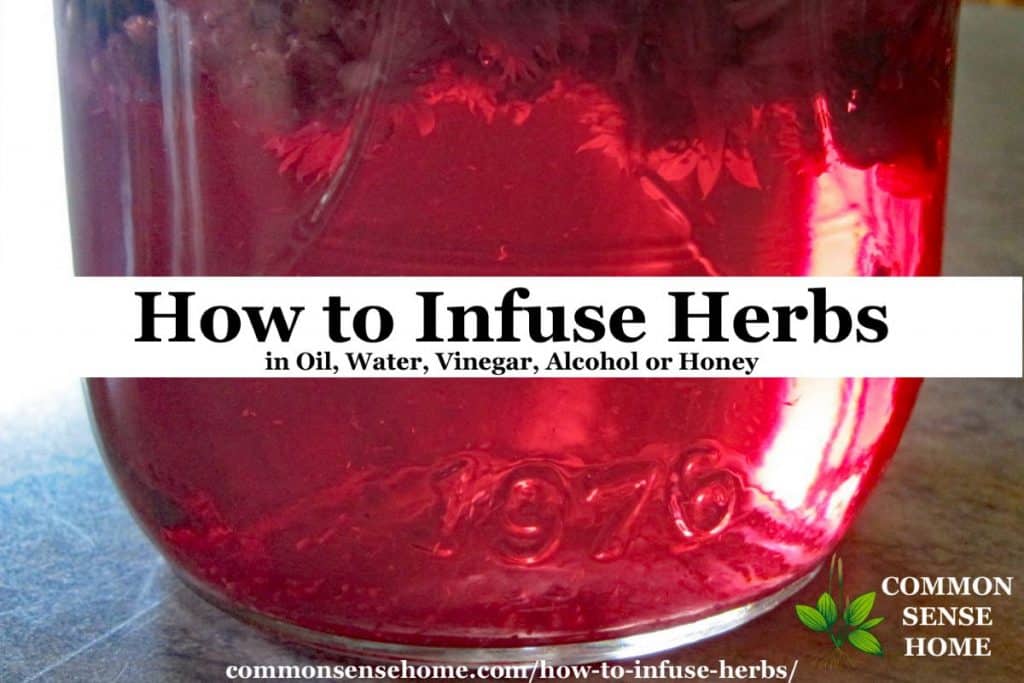
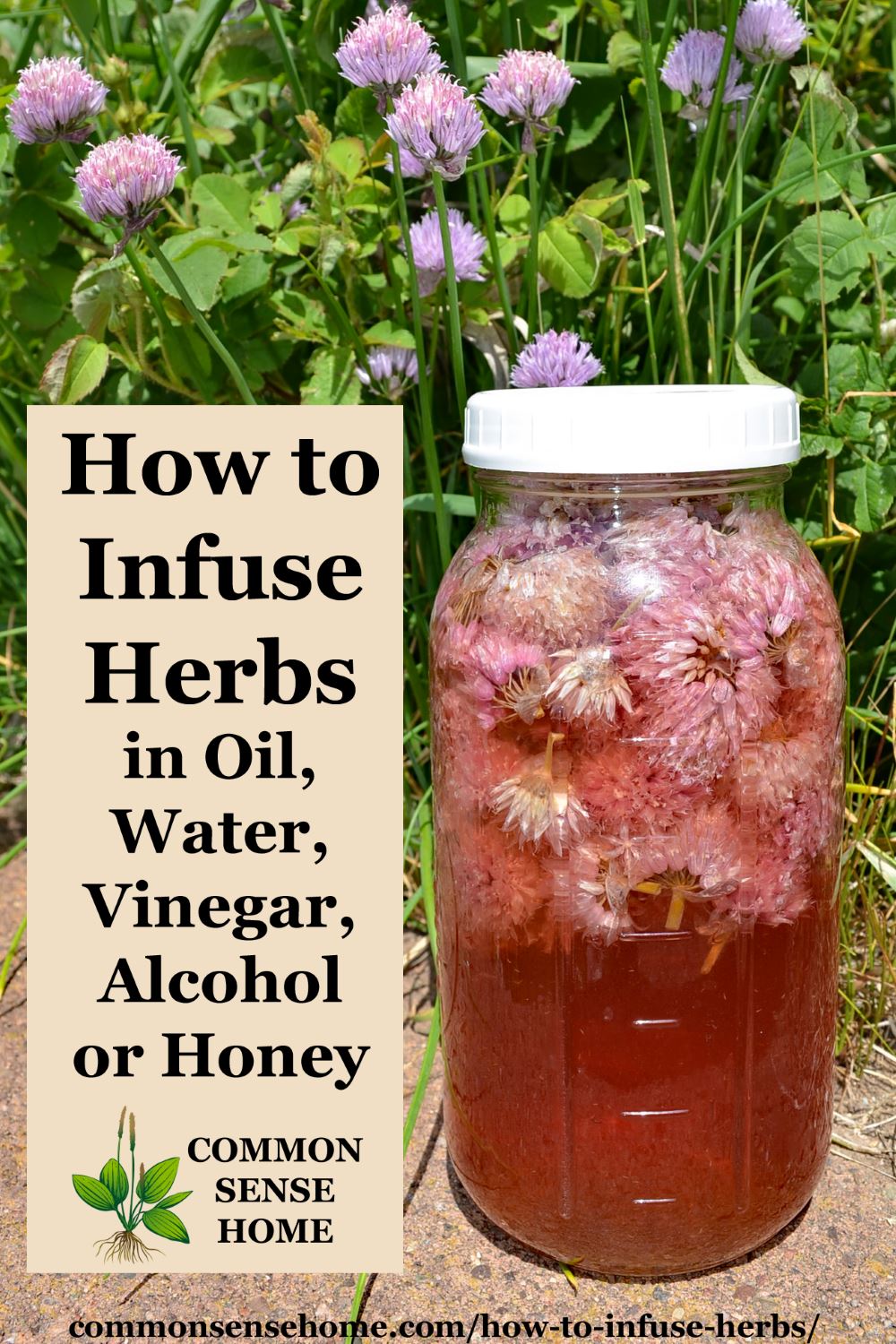
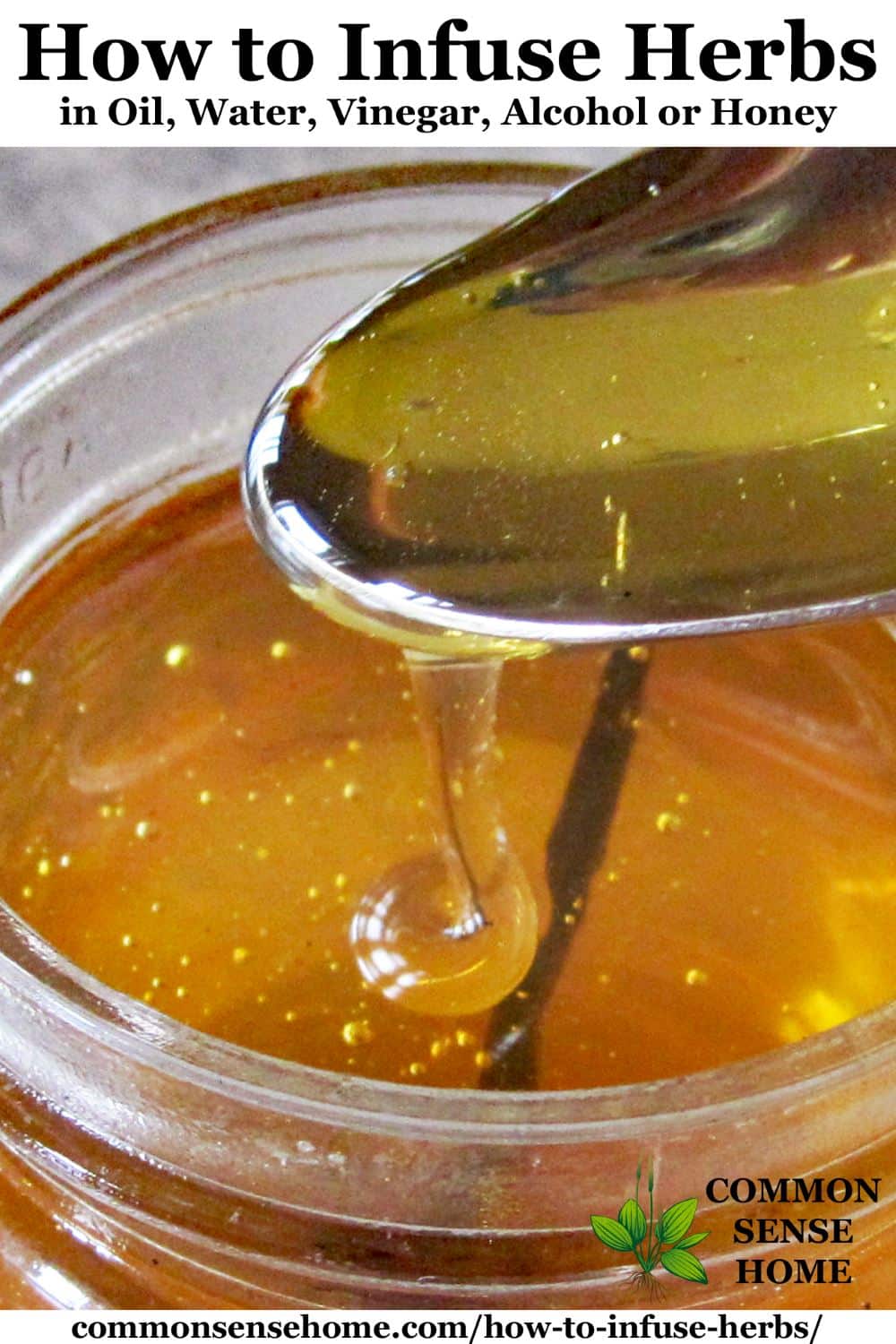
White wine vinegar turns hot pink when infused with chive blossoms. (Photo at top of post is chive blossoms and apple cider vinegar, wide photo is chive blossoms with white wine vinegar.)
I don’t typically use white vinegar for cooking, but it will work if that’s your preferred vinegar. I do sometimes pack a jar with citrus peels and white vinegar to make a natural citrus cleaner.
Herbal vinegar is ready in about two weeks, and is best stored in a bottle with a cork or other non-metallic lid. I often save my vinegar bottle and put the vinegar back in once it’s done infusing.
To make a basic alcohol or vinegar tincture:
(Adapted from Holistic Herbal)
- Place 4 ounces by weight of dried chopped or ground herbs (twice as much for fresh) into a glass jar with lid that can be tightly closed.
- Pour 1 pint of 30% (60 proof) vodka on the herbs, close the container tightly.
- Label with contents and date.
- Keep the container in a warm place for two to six weeks and shake it well twice every day. This one shouldn’t go in direct sun, but on the kitchen counter is fine.
- Strain out the plant material – it makes great compost. Don’t be afraid to squeeze it dry. You can let it settle before bottling or strain through a coffee filter if a clearer product is desired.
- Pour the tincture into a dark bottle (or store out of direct light). Don’t forget to label it with the contents and date. Pretty bottles of food stuffs look lovely on display, but light speeds the breakdown of many compounds in the food/medicine. When you’re trying to break down plant material to transfer its compounds into oil, this makes sense, but not for long term storage.
Susun Weed’s tincture making method recommends filling the jar with fresh herbs, filling it with 100 proof vodka making sure all the herbs are well covered, sealing, labeling and letting it stand for six weeks before straining. Sometimes she doesn’t even strain, just dips some out of the bottle and leaves the plant material in. She says she’s kept some this way for years with no loss of potency. I regularly use this method, because it’s quick and easy.
Is it Better to Infuse Fresh Herbs or Dry Herbs?
Susun Weed prefers fresh herbs, some sites recommend only dry herbs. Some recommend infusing in warmth and light, others recommend cool and dark. I think it’s a matter of working with what you have. I do oils in the sun, tinctures out of direct light, and I typically use fresh herbs for both. With water infusions, I’ll often use dry herbs.
Dandelion Aperitif
Adapted from Healing Wise
Ingredients
- 2-3 cups fresh dandelion blossoms
- 2/3 cup sugar
- rind of half a lemon
- 1 quart vodka
Directions
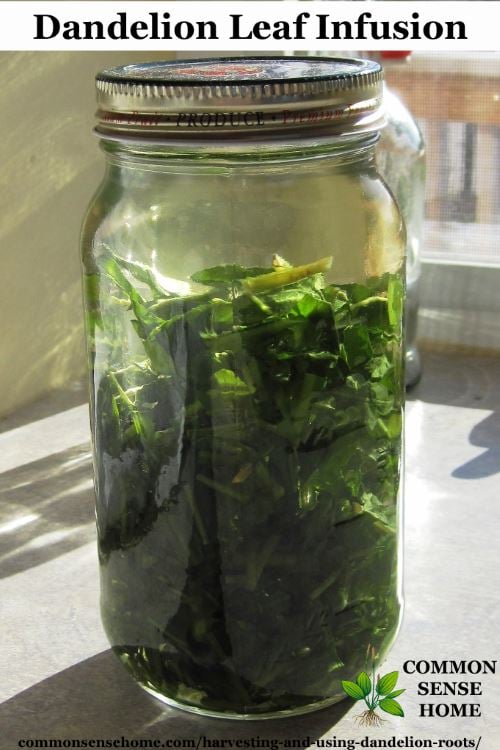
Do not wash flowers. Cut off green. mix all ingredients together into jar; cap. Shake daily. Wait two weeks, then strain and enjoy with ice and lemon, or hot with water and honey, or by itself before or after meals.
This recipe can be made with any edible flower or herb. See Top 10 Edible Flowers Plus Over 60 More Flowers You Can Eat for a list of edible flowers.
How to Infuse Herbs in Honey
You can also infuse herbs in honey. (I made some vanilla honey for Christmas gifts last year – so yummy!)
The flavor takes a little longer to permeate the honey, so I’d recommend a minimum of a month on this one, although if you are using strongly flavored herbs, two weeks may be enough.
For vanilla honey, add one or two chopped vanilla beans per cup jar, depending on the size of the bean and whether they’ve been previously used. (I used beans that had previously been used to make ice cream and let them steep for three months.)
Rose petals, mint, anise, chamomile and lavender are other popular choices for flavoring honey. 1 to 2 tablespoons of herbs per cup of honey should be plenty. Mild honeys, such as clover honey, work best for flavoring.
Want to learn more about how to use herbs? Check out the courses at The Herbal Academy, such as The Introductory Herbal Course or Herbarium online herbal library.
You may also find useful:
- Simmering Potpourri – A Natural Way to Freshen Indoor Air
- How to Make Elderberry Wine
- How to Grow Stevia and Make Homemade Stevia Extract
Originally published in 2012, updated in 2017.

I have had an interest in herbs for a long time. Would like to know how to incorporate they in everything I do. Thanks for commonsensehome.com
I made a mistake I think. I have mullein leaves in vodka, set in window for 3 days. Is it still ok? Thanks in advance
I don’t normally put alcohol infusions in the window because the heat can drive the alcohol and volatile oils off, but three days isn’t all that long, so it should be fine.
For the dandelion tincture, is it the same amount of vinegar if you don’t use vodka?
Yes.
Very helpful. So glad i came across your site keep up the good work
Hi, I am boiling moringa, gotukola, turmeric, holy basil and gooseberry powders (1 tbsp each) in 1 cup of water and allow it to steep overnight. Next morning I am not straining and drinking the mixture as it is. Is it ok or does it have any adverse effect on our health. Pl. Reply. Thank you very much.
Each of those alone are healthy for most individuals. I have no idea if there would be any side effects from using them the way you describe, but it is possible to have too much of a good thing. It seems like a rather large ongoing dose. If you plan to keep dosing at this level, you may want to work directly with a local herbalist to develop a plan that is a best fit for your needs.
Thank you for your reply.
I wasn’t thinking of leaving the fresh root in the oil but filtering it out once the curcumin dissolves in the oil, say after 2 weeks. I quite understand though the concern about exposing the oil to sunlight as this may lead to its rapid deterioration but your opinion is that it is accepted practice. Correct me if I’m wrong.
Unfortunately, I’m not personally familiar with the oil and honey blend. Typically, exposing any type of unsaturated or polyunsaturated fat to sunlight or oxygen will lead to more rapid rancidity.
I have been thinking of infusing curcumin from fresh turmeric into blackseed oil which I want to mix with honey to be taken in one or two teaspoonful as a daily tonic. Honey mixed with blackseed oil is widely available but I know of none that is boosted with turmeric. After reading what you say about botulism, I am beginning to wonder if this is a good idea.
If you mix in small batches and keep it refrigerated, it should be safe, if a bit stiff, with fresh turmeric. Dried turmeric in honey should keep indefinitely.
Hi
I would like to make non alcoholic bitters for cocktails
Is it possible to use the vinegar extraction process for that, does it change the taste if you extract it using vinegar instead of alcohol
If you use a vinegar base instead of an alcohol base, you will have a vinegar flavor – more acidic, potentially a bit fruity with the right vinegar. Drinking vinegars have become popular in recent years, so some may still enjoy it.
Thank you for this wonderful article! Recently, I’ve been more interested on using natural products for my skin care routine. I want to make an onion-infused olive oil. Some sites arent really clear on how to make one and its shelf life. You mentioned herbs, does onion would work the same way? Please help enlighten me. Thank you!
Use the direct heat infusion method and store the oil in the refrigerator. Use within two weeks.
I have some rosemary that’s been in grapeseed oil for almost a year. I was wondering if I should throw it away or if I can still use it. I put it in the sun to make sure it doesn’t spoil, but I’m still concerned. If you could help me to know, I’d appreciate it. Thank you for your time.
Once opened, grapeseed oil is shelf stable for only about three months before it becomes rancid. The rosemary may slow that down a bit, but I wouldn’t recommend using it.
I was wondering if you could let us know how to make pure essential oils
Thank you
I wish there was a simple process for making essential oils at home, but I’m afraid there’s not. Most essential oils are created via steam distillation. Here’s an example of how lavender essential oil is made.
I have been making chive vinegar for decades. Starting with a gallon jug, pour out (and save) one quart. Pack the space with chive blossoms. No measuring. The honeybees are all over the chive flowers, but I have never been stung. Move slowly and with respect for the little harvesters, and they scoot away as you pluck.
Here’s one for you, Laurie:
Chive blossoms turn vinegar into a beautiful red liquid which has a pronounced onion flavor to use in salad dressings.
Honey from chive flowers is as sweet as any source with no onion flavor what so ever.
My honey merchant, who has hundreds of hives he rents out during the growing season, says the honeybees can sneak the sweet nectar out of the blossom without causing the “onion” flavor to be released.
Works for me!
Thanks, Daryl. I don’t normally measure with herbal tonics, either, but some folks feel more comfortable with numbers, especially when starting out. I wondered about whether or not the chive blossoms affected the taste of the honey, but figured the effect would be minimal because the bloom time is so short. I like to wait until my chive blossoms are nearly done with their bloom before harvesting so the bees get a chance to visit. We try to keep a wind variety of things blooming in the yard all through the season.
How so i infuse herbs and dried or fresh fruit in vinegar to make flavored dressings.
Please see the directions in the post for infusing herbs. If you wanted to try fruit, I’d chop it finely and follow the same method.
Question on butchers broom and horse chestnut: they’re very hard and woody so I was wondering if oil infusion and water boiling would work for a diy eye cream that I am working on?
I’d probably chop the plant material as finely as possible, and then slow simmer in oil over very low heat for several hours and strain when finished.
I had made an earlier infusion but left the plants whole so I don’t think it took. Will try grating them finely this time and see, thank you.
More surface area generally means better transfer to the oil/water/etc. Good luck!
Like to make honeysuckle infused honey for cough.
Thank you, Laurie Neverman.
I have mixed 4 gram of dried yellow dock with 8 gram of dried dandelion root together and put in a ceramic, slow cooking pot with 4 quarts of water. I boiled them for about 30 or 35 minutes.
The mixed herbs tea taste great. It doesn’t smell strong as the yellow dock root tea alone. But I am still afraid that I didn’t mix a correct amount of dried Yellow Dock Root and Dandelion Root for the tea. I also don’t know how often and how much I can drink this type of mixed tea in a week. For now, I just tried it by trial and error on myself to come up with the right amount.
Anyone opinion or idea and advice is more than appreciated.
Listening to what works for your body is always a good option. I find that I respond better to lower doses of many herbs than are commonly recommended.
To infuse herb in water to make tea. You said: To make an infusion, place one tablespoon of dried herbs or three tablespoons of fresh herbs into a ceramic teapot, mug or mason jar for each cup of tea you intend to brew.
I am somehow confused of the amount of water in this case. If I use two tablespoon of dried Yellow Dock to make a Yellow Dock tea. How much water should I use to make the tea for one tablespoon of dried herb? I wonder if someone could please help me with this?
More herb will mean a stronger tea. The measurements are a general rule of thumb. For a single cup of tea, use one tablespoon of dried herb and one cup of water. If you want to use two tablespoons of dried herb, use two cups of water. Roots are very fibrous, so they should steep for at least 10-15 minutes in a covered container for medicinal use.
I love garlic and onion infused olive oil! It has cure my daughter of an ear infection within a day! What is the proper way to make raw garlic infused olive oil and do I store it in the refrigerator? How long should I let the garlic sit in the oil?
Use the Direct Infusion method as described in the post.
I made a nice extract from Madagascar Black Vanilla Beans steeped in a nice bourbon. I just cut up the beans and put them in a decanter. I used 3 beans and then added 2 cups of bourbon. I let them sit for 6 weeks, shaking the decanter occasionally. Very nice extract.