
Emergency Water Storage and Filtration

This post may contain affiliate links. Read my full disclosure here.
You can only survive for approximately 3 days without water, so water isn’t just necessary, water is life. In case of emergency, a reliable water supply is critical.
Our water supply ends if power is interrupted due to storms, earthquakes or other events such as solar flares or grid failure. Water supplies are a likely “soft” target for terrorist attacks. Emergency water storage should be a part of every home emergency plan.
Table of contents
6 Water Storage Options
- Your favorite bottled water. Pick thicker bottles they are less likely to leak in storage.
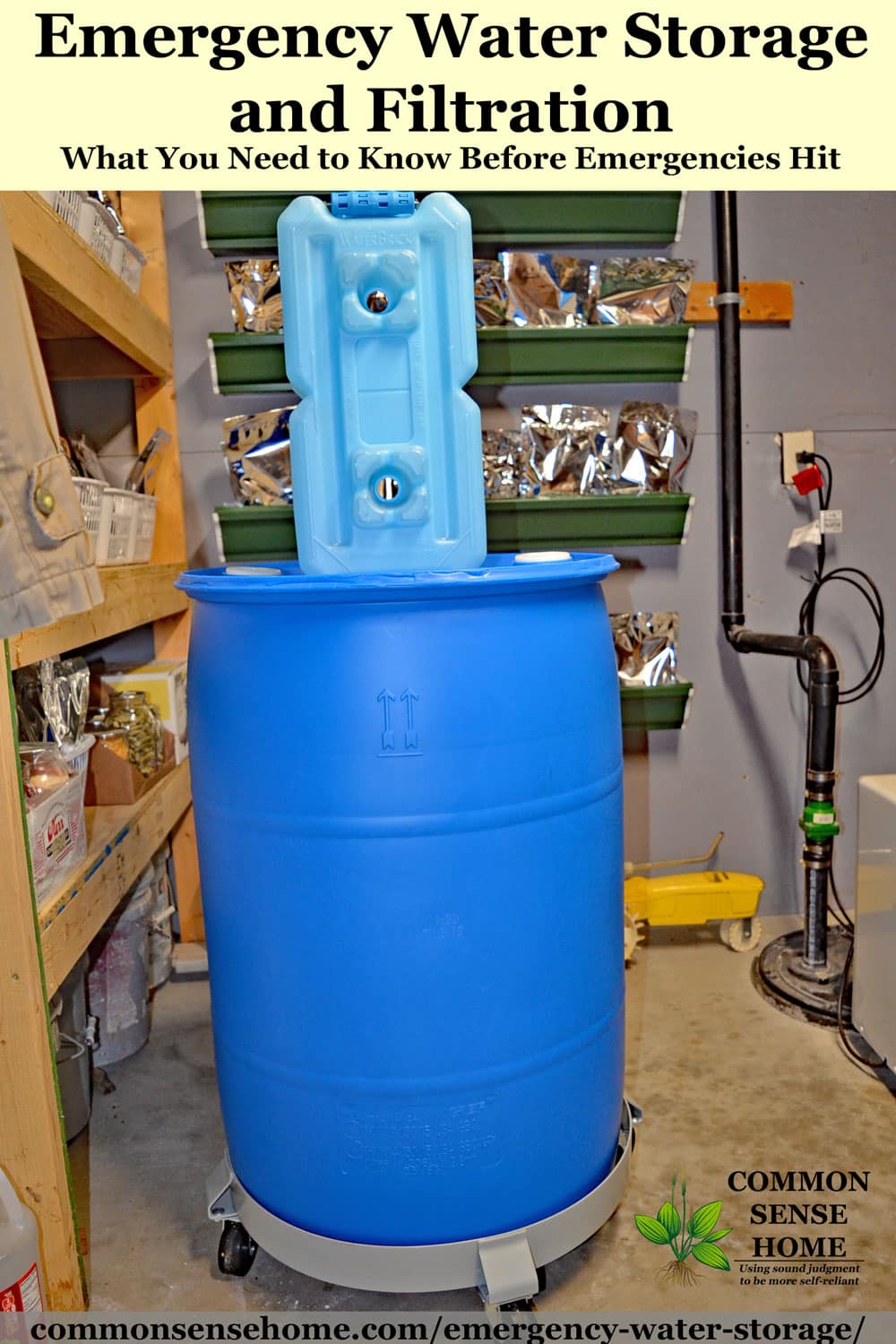
- 55 gal drinking potable water drum with pump and roller base
- Traditional 5 gallon water bottles
- 5 gal Bottle with a handle plus storage rack for 5 gallon water bottles
- 5 gal stand and spout
- WaterBrick stackable water storage
- 5 gal-Stackables water storage
- Pack of 4 1.2gal water container (not stackable)
How Much Water Do I Need to Store?
FEMA recommends one gallon per person per day, and at least three days. Half of that is just for drinking, which doesn’t leave much for cleaning and cooking. We suggest 5 gallons per day and at least a week of storage or an emergency water source.
Age, physical condition, activity level, foods consumed and environmental conditions will influence those requirements. Hot, humid weather, illness, pregnancy and lactation, increased physical activity levels will all increase the amount needed.
The Crisis Preparedness Handbook recommends 20 -30 gallons per person for a period of two to three weeks without water. This allows water for drinking, cooking, hygiene and some reserve. If you plan to rely heavily on dehydrated food, store an extra 3 gallons per week.
It’s important that you find room for water storage, even if you are living in a condo or apartment. Consider 3 to 7 days of water storage.
Best Emergency Water Storage Containers
While just about any water tight container can be used for emergency water storage, keep in mind that any leftover food particles or other materials left in the container are potential sources of contamination. If you recycle, you’ve probably come across food containers in the recycling container that had been rinsed before disposal, but still end up stinking.
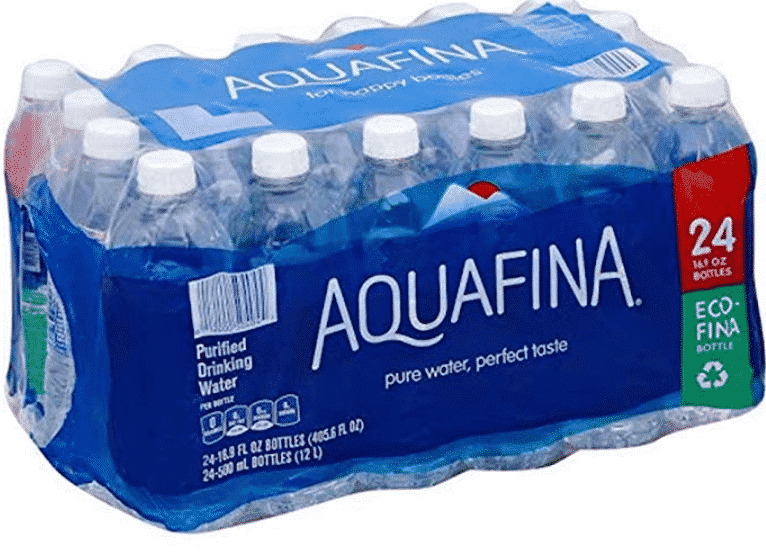
Start with standard water bottles. A stock of these are something you will likely use. Buy them on sale, and they get you started right away.
Our second recommendation are containers specifically designed for potable (drinking) water storage. We have the Water Brick storage containers. They are sturdy and easy to stack, but expensive.
A more affordable solution for much larger storage is a 55gal drum. We have a setup almost exactly the same as this 55 gal drinking potable water drum with a pump and roller base. This requires more space due to its size.
Alternate Water Storage Containers
Two liter soda bottles will work. These are good because containers that held soda need to be stronger to compensate for the carbonation, so that works in your favor for storage.
If you use them, make sure they are completely clean because sugar can foul the water long term, also keep them out of sunlight. Another alternative is canning jars for people who are home canners.
Water Containers We Don’t Recommend
Milk jugs are much thinner than they used to be. We don’t recommend them. Even the gallon drinking water contains commonly found in supermarkets will likely fail in storage.
Vinegar jugs and bleach jugs are also quite sturdy, but I wouldn’t personally use them as a first choice for drinking water.
Cheaper water bottles, with very thin plastic, tend to fail in storage. Spending a few more dollars on better water bottles is worth it for longer term storage.
Potable Water Storage Containers
We recommend two tiers of emergency water storage – “Use First” which is your best quality and “Use as Needed” as a reserve. Commercially packaged, unopened containers will have the best shelf life, but clean home stored water that is hygienically packaged will work also.
Emergency Bathtub Water Storage
A great emergency water storage solution is the waterBOB or 65gal Emergency bathtub container. It is a “thick balloon” for your bathtub.
Even if you don’t have a water bob or aqua bladder, fill your bathtub with water. Worst case you can boil it to drink or use to flush toilets.
Free Emergency Water Storage Options
- Clean old soda bottles and store filtered/boiled water in them.
- You can get drinkable (potable) water from your hot water tank. (Be careful if the tank is still hot.)
- Fill bathtubs, sinks and buckets with water. Note – these will need to be filtered and/or boiled to use at potable (drinkable) water.
- A plastic bag lining a garbage can can give you a fast way to store a lot of relatively clean water. Run this water through a filter before using. (See filtering/purification options below).
Alternate Water Sources
More water can be stored in barrels (such as rain barrels), cisterns, swimming pools, and underground storage tanks. Don’t count on your waterbed, as the material the waterbed is made of is loaded with antibacterial chemicals and such. If you have a safe way to harvest water or bring up ground water, you can reduce your emergency water storage.
- Consider adding a hand pump to your well
- Ponds, lakes and streams are okay water sources to flush a toilet, but remember to consider them contaminated. Filter, boil or otherwise clean the water before you drink it.
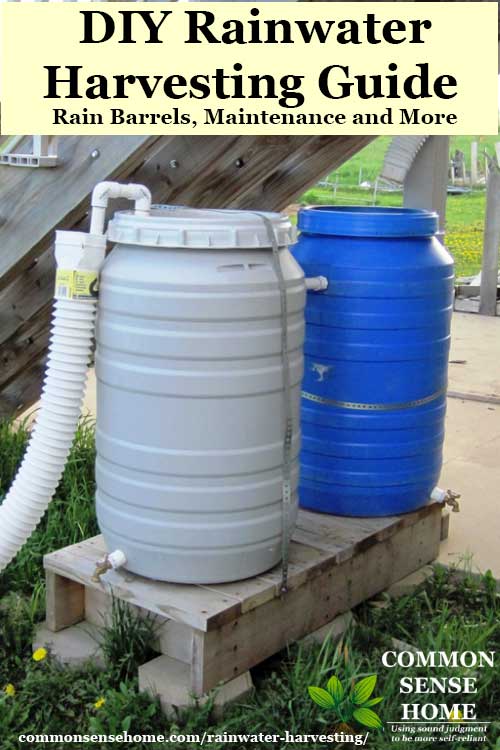
- Rain Barrels – See also “How to Build a Rain Barrel“. This will require filtering to drink.
Where to Store Water?
Ideally, your emergency water storage should be kept in a cool, dark location to extend shelf life and barrel life, out of direct sunlight (especially soda bottles). Water containers should not be in direct contact with cement.
We use 2x4s or wood pallets to keep much of our storage off the concrete floor. Be sure to date your storage containers so you know when they were filled. It’s best if your water is rotated yearly, but sterile water in a sterile container can keep for several years. (It just won’t be particularly tasty.)
Note that single use water containers are getting thinner, so they may start leaking in storage once past their expiration date. Don’t stack them above items that may be damaged by water exposure.
Store water containers under a bed, in the bottom of a closet or in a crawlspace if you are tight on storage space. See also “Preparedness Storage – Finding Room and Keeping it Safe and Sound” for more ideas.
Preparing Water for Storage
If you are using normal tap water for long term storage, it should be treated prior to storage to prevent the growth of bacteria. Three options to prepare your emergency water storage include:
Would you like to save this?
- Filter Water – Distill the water or use a Boroux System or ZeroWater or use RO water – each provides purified water that can be put directly into storage. To improve the “flat” taste of packaged water, shake or agitate to introduce oxygen to the water. If you are using distilled or RO water, you may also want to use remineralizing drops to add trace minerals back into the water.
- Bleach – use 8 drops standard bleach (avoid scented, “color safe” bleach or any with added cleaners) per gallon of clear water, mix and let stand 20 minutes. It should still have a faint bleach odor. Bleach loses potency with age, so you should rotate your bleach yearly. Double the amount of bleach if your bleach is over a year old. Note: Bleach may react with some plastic containers.
- Heat – Boil water vigorously for 3 minutes, then allow to cool before packaging. Alternatively, you may process mason jars of water with one half inch head space in a water bath canner or pressure canner. To pressure can, process at 10 psi for five minutes. To water bath can, process quarts 20 minutes and half-gallons for 25 minutes. Canned water will last for years, but presents risks in earthquake prone areas or it your storage area is likely to be hit with flying debris.
| Add Bleach | To Water |
| 2 drops | 1 Quart |
| 4 drops | 1/2 Gallon |
| 8 drops | 1 gallon |
| .5 teaspoon | 5 Gllons |
| 5.5 teaspoons | 55 Gallons |
What Are the Best Ways to Filter/Purify Water?
At times you may be forced to use water of questionable purity, so it’s good to know how to make it safe to use. Note: use groundwater rather than surface water when possible, to take advantage of the filtration offered by the soil itself. Freshly collected rainwater is also a better option than standing surface water. If you must use surface water, avoid water with debris and foul odors if at all possible.
- Filtering – running water through mechanical or gravity driven filtration
- Boiling/Pasturization – Boiling water vigorously for 1 minutes will kill bacteria, 3 minutes will kill most other harmful microorganisms. Double this time for each 5000 feet of altitude and/or if the water is dirty. Boiling will drive of some chemicals, but not all, and doesn’t clear out the chunks. Run it through a sediment filter (even a clean t-shirt or handkerchief will do) to remove particulates.
- Chemical disinfection – Chlorine and Iodine are used to sterilize water.
Other filtration/purification options include distilling (such as solar stills), ultraviolet light, ozone, reverse osmosis filters, and colloidal silver, but these may be difficult to use and unreliable in an emergency situation. In a pinch, you can also filter water through fabric.
Natural fabrics such as silk, cotton or even burlap work better than synthetic fabrics. The synthetic fibers have much smoother surfaces, which do not trap contaminants well. For more on using fabric filters, see 3 Emergency Water Filtration Options to Get the Funky Chunks Out.
Mechanical Filtering
Mechanical filters physically strain some impurities from water. They can be as low tech as draining water through sand or clay, or as high tech as a ceramic microfilter combined with an ion-exchange resin bed. The best filter for your needs depends on your situation. A Countertop Distiller will purify water but requires power.
Ceramic elements (most expensive, most durable, and maintainable) have the smallest pore size (0.1-0.5 microns) and are used by some of the leading portable water filtering companies in the world.
Portable ceramic filters boast an impressive list of long-term users, such as: International Red Cross, World Health Organization, Armed Forces (USA, Germany, Portugal, Switzerland, and US Navy Seals), United Nations, and the FBI. Ceramic elements can filter only free floating particulates and microorganisms. They do not remove chemicals, poor tastes, odors, or pollutants.
Gravity Filtering
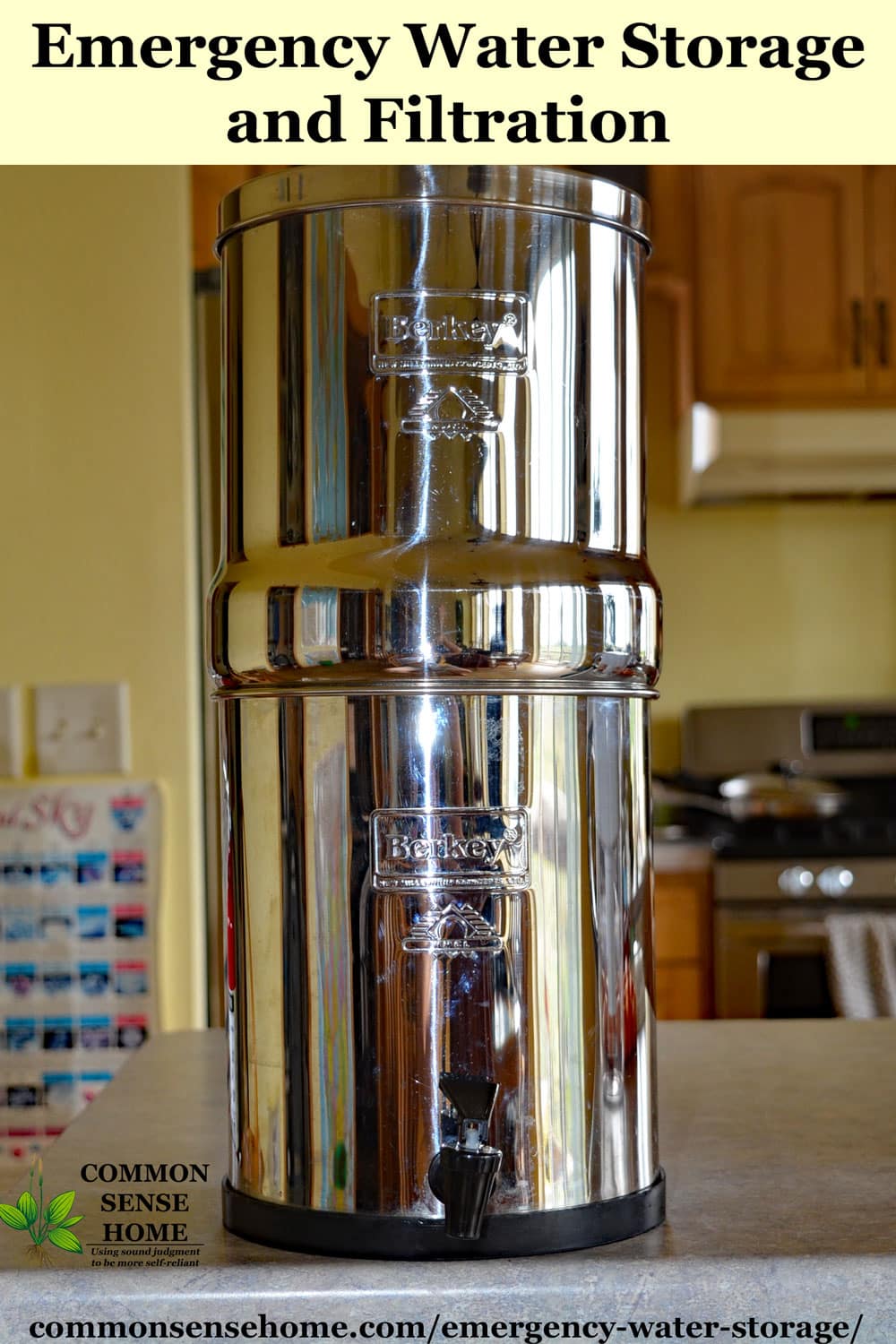
Filtration is a good compliment to emergency water storage, especially when local water supplies are tainted by flooding. Boroux filtration systems use either 2 or 4 filters in a stainless steel chamber.
Boroux filters are similar to Berkey filtration systems, which are no longer available. The 2 filter system is rated for up to 12,000 gallons. 4 filters are rated for up to 24,000 gallons.
ZeroWater Filter
Another alternative is the ZeroWater. The pictcher and filter is cheaper, but you will need to stock a LOT of filters. Each zerowater does 25 to 40 gallons. The higher the particulate count in the unfiltered water the shorter the life of the filter, so you will need multiple packs of ZeroWater Filters.
Pre-filter your water if you are using the Boroux or ZeroWater in an extended emergency. Run the water through a cotton cloth such as layers of t-shirt or old clean socks and even sand/charcoal homemade filter. Then run the slightly clean water through the Boroux or ZeroWater to extend the life of the filters.
More Portable Water Filters
For portable filtering consider the LifeStraw, the Katadyn pocket microfilter consider one per vehicle and a couple spares.
- the Lifestraw Family which is another great emergency filtration option
- the Katadyn TRK Drip Gravidyn water filter
- or the Platypus bag filter
Pasteurization
Heating water to 149° F (65° C ) for 6 minutes, or to a higher temperature for a shorter time, will kill all germs, viruses, and parasites. This can be done over a fire or other heat source.
You can also use a solar cooker to pasteurize drinking water. (Note: Pasteurization does not get rid of other contaminants, so a mechanical filter is still recommended.) The Sun Oven Dehydrating and Preparedness package comes with water pasteurizing indicators to show when your water is pasteurized.
See “What’s the Best Solar Cooker? Choosing the Right Unit for Your Cooking Style” for more information on the Sun Oven and other solar cookers.
Chemical Disinfection Options
Iodine is very effective against viruses, bacteria, and protozoa with the exception of cryptosporidium. Using iodine has some drawbacks. The colder the water you wish to disinfect, the more required time is needed for disinfecting. Because iodine is absorbed into dirt and debris, which is found in water, its purification dosage varies.
- A Counter-top distiller will truly purify water
- Use Potable Aqua™ Iodine Purification Tablets on questionable water to kill bacteria
- Pair up iodine tablets with a simple mechanical water filter
Our Water Filtration Options
We purchased a Big Berkey a number of years ago with ceramic filters. They effectively remove the “off” smell and taste from our well water. A simple “straw” type filter (lifestaw) might be a handy addition to a bug out bag or for camping use.
We will probably add a Katadyn Pocket Water Filter (also with ceramic elements) to have on hand for filtering larger quantities/filtering on the move. Ceramic filters are a bigger investment, but they have the longest life and are most durable.
For instance, the Pocket Katadyn Filter is rated for 13,000 gallons. We also have a Sun Oven with pasteurization option.
Other Things to Consider
If you have pets or livestock, do you have a plan for water for your animals? For those with a private well, did you consider a backup manual pump? If there is nearby water (pond/lake/stream), how will you transport it? Do you have backup power for your septic and well water if you are in the suburbs or county? You might want to rinse with fresh after bathing in a lake, stream or pond.
Sanitation
We won’t go into all the details, but remember if your sewer/septic system is still functional but you don’t have clean water, use dirty water to flush such as: old water from sink, old bath water etc. Don’t pour drinkable water down a toilet when you can’t get it easily.
Consider another emergency option the DIY portable toilet. Also, in an emergency you probably don’t want to waste water bathing, so buy a bunch of the no rinse bath towels/wipes to allow you some cleanup.
I hope you’ve found this post useful, and will make sure that you and your loved ones have enough water on hand should an emergency strike. Please share if you’re so inclined, and let me know if you have any comments or questions. You can view more every day preparedness posts on the Common Sense Preparedness page.
Related Articles

This post was written by August Neverman IV. August has a strong background in emergency preparedness. He served on several emergency preparedness teams during his tenure at Brown County WI Government, the Medical College of Wisconsin, HSHS, a 13-hospital system and emergency response training during his time with the Air Force and Air National Guard. Learn more about August.
Your water needs figures are way off.
the first one is for “survival” drinking water needs only, until help arrives.
Don’t expect or rely on outside help or government water trucks being brought in.
The other source is slightly better, but still way off.
Refugee camps plan on 10 to 15 gallons per person, per day for all water needs. This is the long term water needs number, needed to stay healthy.
It takes into account cooking, cleanup, drinking, personal hygiene* and a small amount of laundry. If you are dealing with sick people ( fevers, diarrhea , etc), that number goes up.
* this does not include using flush toilets.
These numbers are easily found ( verified) by an internet search of refugee organizations and their camp planning guides.
If things got bad, no one would be there to keep things like electricity and water services running.
So you better have local water sources picked out and purification methods that don’t require electricity planned for.
You also better plan on having a lot of replacement filters.
Since everyone else will be looking for or securing the easy water sources for themselves or selling water at a profit. make sure you have planned well and have a backup plan.
The post focuses on short term emergencies. We do recommend 5 gallons a person a day for hot conditions for all water usage. The feds recommend 1. Most the refugee sites I see recommend 20liters or 5gallons per person per day (allowing for minimal bathing). The filters the Big Berkey has 4 black filters each one filters 3000 gallons for a total of 12,000 drinkable IF you have a water source. We suggest in a different post pre-filters such as a sock or gravel/sand filter to get bigger chunks out before you run it through the drinking filter. https://commonsensehome.com/emergency-water-filtration/
A water source is absolutely critical in a long term emergency. Remember a nice shower uses a LOT of water. More is more water is better. We might write a post about long term water emergencies based on your feedback.
Hello. Would it be best to filter the water before filling my 55 gallon blue containers? If so would it be something like an RO that a hose plugs into, like ones you see at hydroponics stores? Or just fill them with tap water from the garden hose? My tap has about 600 ppm last time I checked
Thanks
If you are comfortable drinking it “as is” (without filtration), then you can store it without filtration. If you wouldn’t drink it, don’t store it.
As for how you filter it, that’s up to you. We haven’t tested filters that go on the end of a hose, but that sounds like it would be faster than most other filter options.
Sawyer makes an excellent group of water filtration items that filter much more than LifeStraw
Thanks. We’ll look into them.