
Common Chickweed – Identification, Foraging, and Uses

This post may contain affiliate links. Read my full disclosure here.

Common chickweed (Stellaria media) is a wild plant that pops up in gardens and lawns—and often gets pulled and tossed without a second thought. But this humble “weed” is surprisingly useful. From fresh salads to soothing skin remedies, chickweed is a nutrient-rich plant ally hiding in plain sight.
We’ll cover common chickweed identification, tips for safe foraging, how to use it in the kitchen and medicine cabinet. We also have tips to keep it from taking over the garden, if needed.
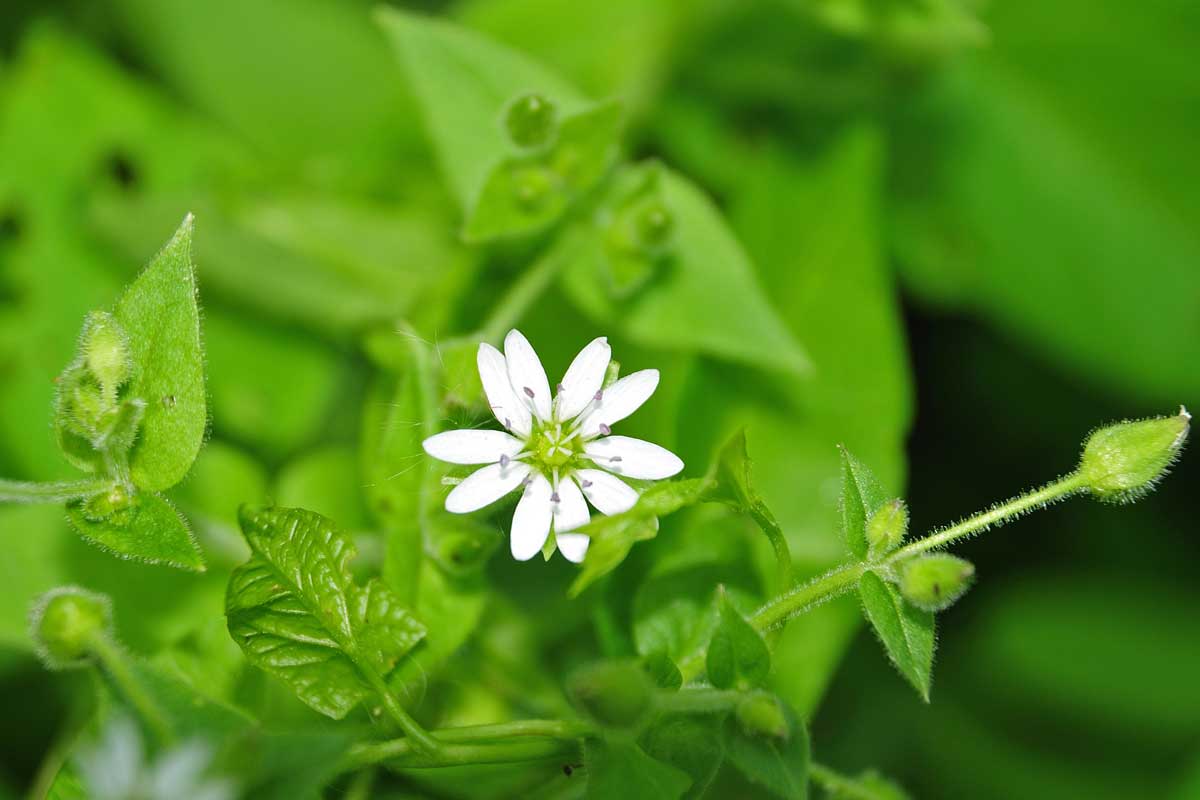
Table of Contents
I became acquainted with chickweed in the summer of 2010. Huge swaths of German chamomile were growing in my garden where it had reseeded from previous years. Mixed in with the chamomile were plants with small white flowers that were similar in size.
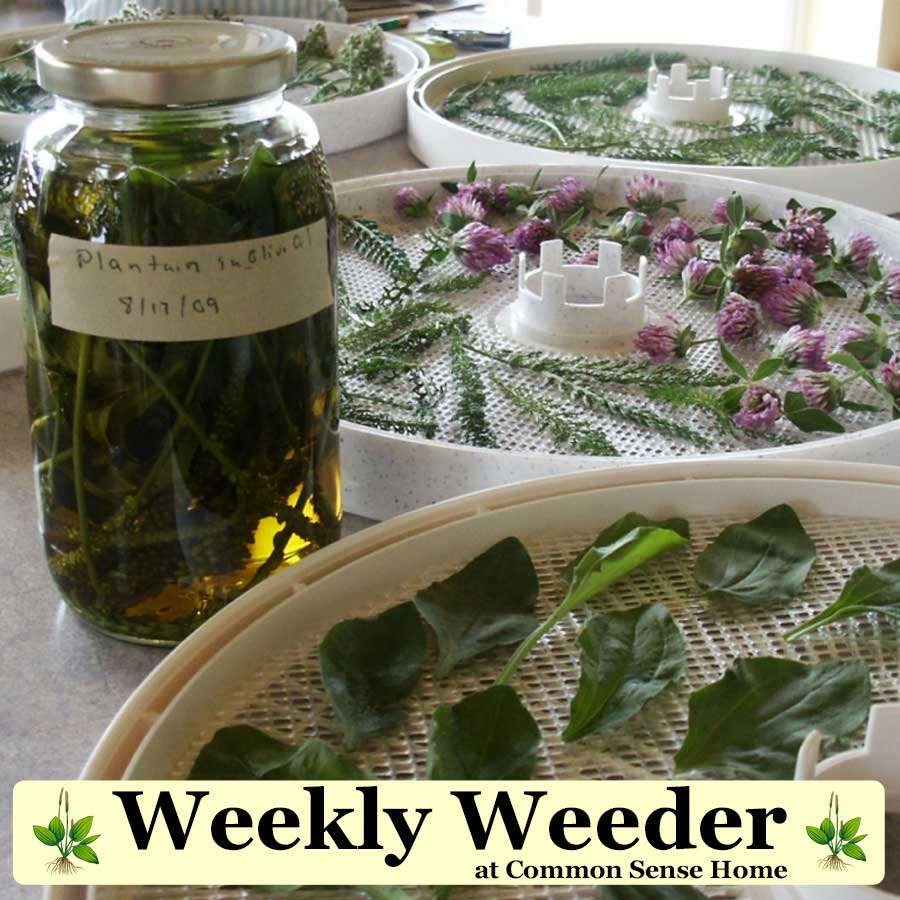
I took a big box of chamomile with to the farmer’s market to load into my dehydrator between customers. (Our little market was pretty slow, and the boys were helping man the table).
When I showed the mystery flower to the other market vendors, not one person could identify it. “It’s just another weed” was the main response. (Disappointing!)
I finally recognized the plant as I was reading through Healing Wise. Susun’s fanciful description of “the little star lady of the fields who spreads her stars at your feet” gave me an “Ah hah!” moment. The flowers really do look like a field of stars on a green background.
What is Common Chickweed?
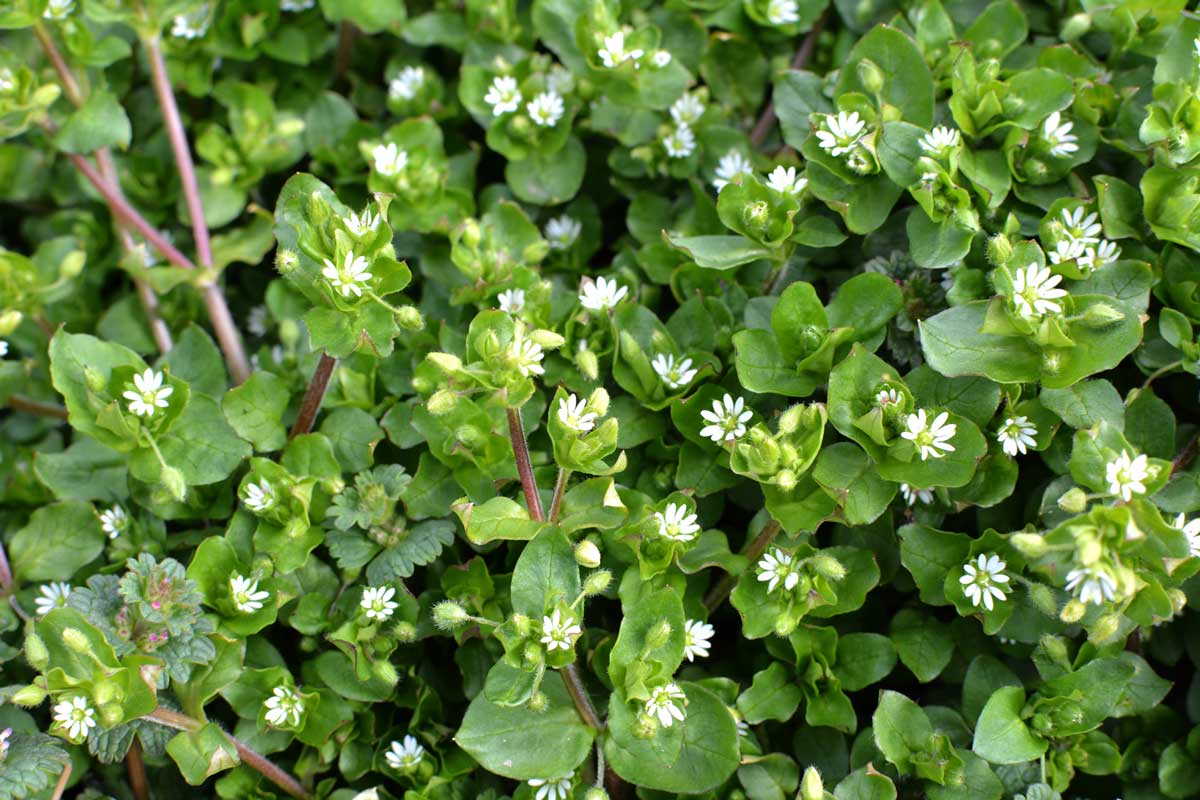
Stellaria media is a cool-season annual that grows close to the ground and thrives in moist, fertile soils. It often appears in early spring and fall in garden beds, shady lawns, and disturbed soils.
- Botanical name: Stellaria media
- Plant family: Caryophyllaceae (pink family)
- Growth habit: Sprawling, mat-forming herbaceous plant
It prefers cooler temps to scorching sun, and is a winter weed in warm climate areas. In the book “Weeds, Control Without Poisons“, the author notes that chickweed often thrives on excess organic matter. This explains the patch of it growing at the lawn edge where grass clippings stack up.
How to Identify Common Chickweed
Even though chickweed blends in with other greenery, a few key features can help you spot it:
- Flowers: Tiny flowers with five deeply cleft white petals—often mistaken for ten petals. These are one of the easiest features to spot.
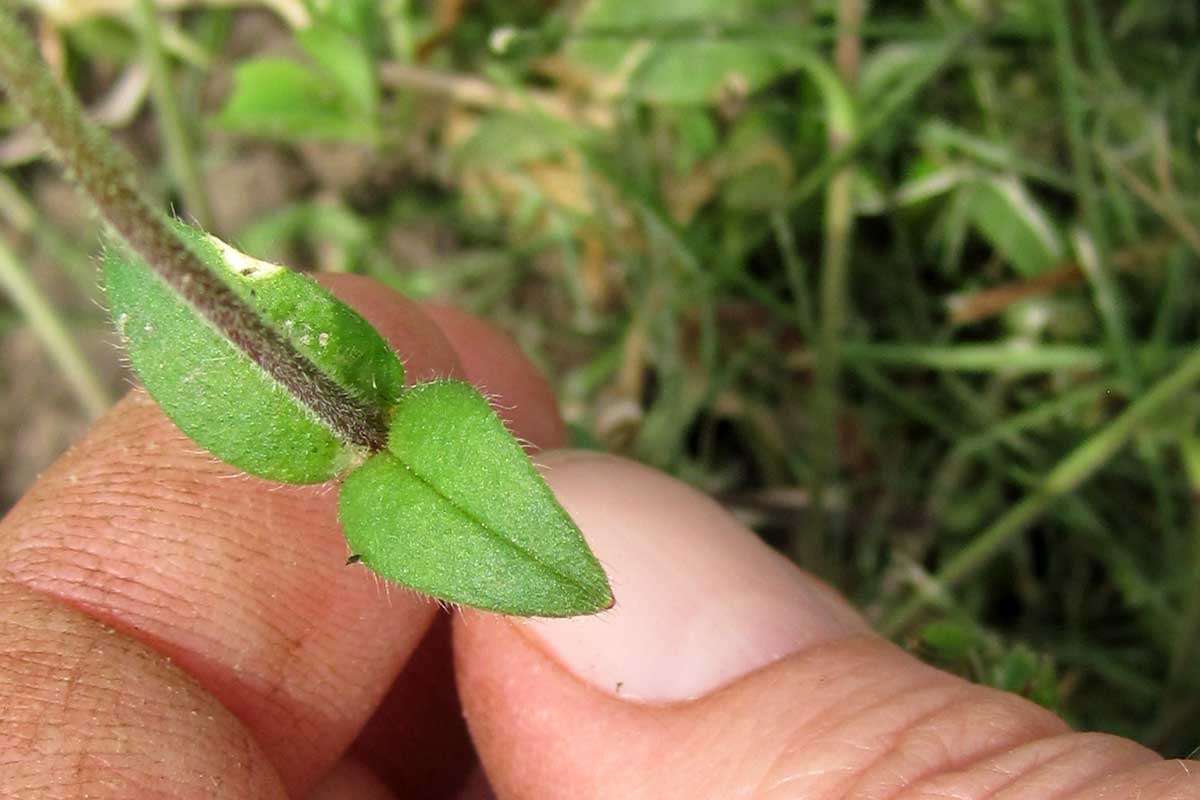
- Leaves: Small, oval, opposite leaves with pointed tips. Lower leaves have stalks; upper leaves do not.
- Stems: Delicate and green with a single line of fine white hairs running down one side.
- Roots: Fibrous and shallow. Easy to pull by hand.
- Growth pattern: Dense mats that can smother other seedlings.
Tip: If you’re unsure whether you’ve got Stellaria media or a look-alike, gently bend a stem. Chickweed’s inner core (xylem) will often stretch and snap like a rubber band.
Is Chickweed Edible?
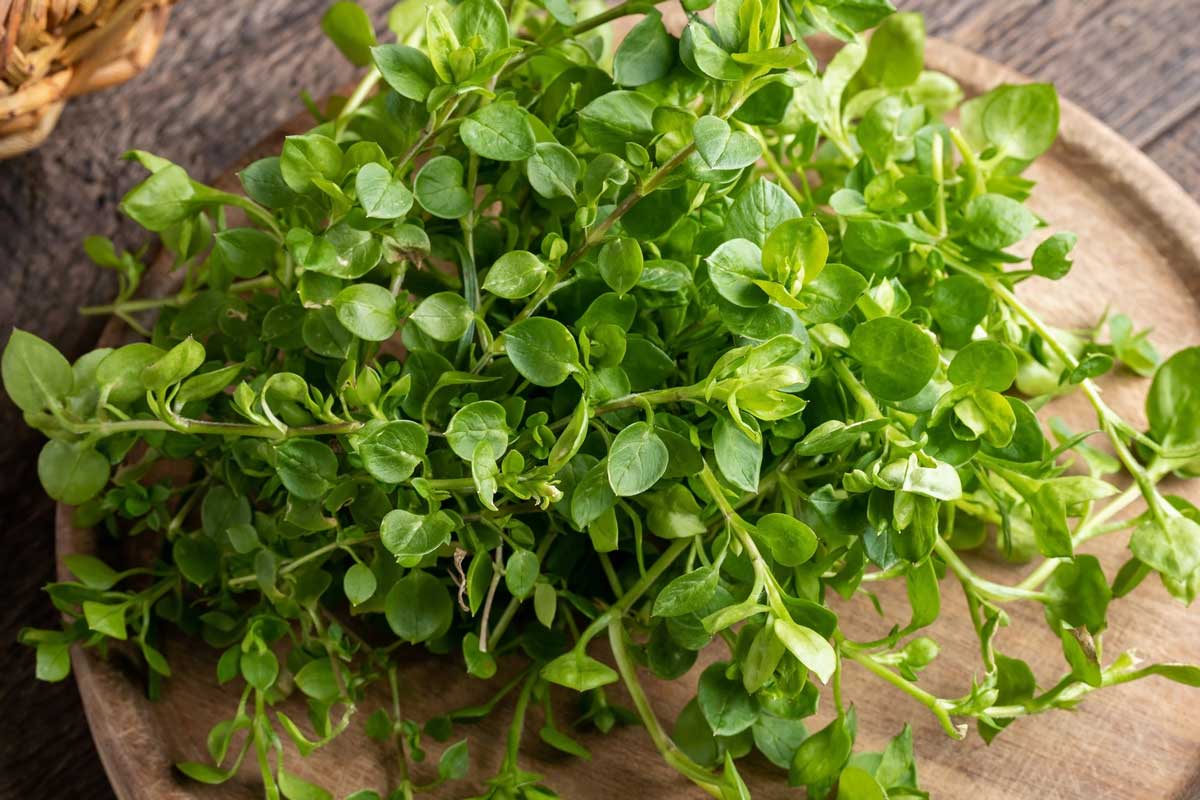
Yes! Common chickweed is one of the tastier wild edibles. The flavor is mild – even the stems aren’t too chewy. It’s packed with nutrients like vitamin C, iron, calcium, and magnesium. I include it in my salad mixes when I’m out harvesting greens in the garden.
Some ideas:
- Add fresh to salads or sandwiches for a crisp, spinach-like bite.
- Blend into green smoothies or pesto for extra nutrition.
- Chop and toss into scrambled eggs, soups, or stir-fries (cook gently – it’s best raw)
The plants are best when young and tender. Older stems can get stringy. Always harvest from clean areas away from pesticides or road runoff.
Medicinal Uses of Chickweed
In traditional herbal medicine, chickweed has a history of use for cooling inflammation and supporting skin healing.
Top Chickweed Remedies:
- Salves: Great for itchy skin, rashes, bug bites, and mild burns. Combine with calendula or plantain for added benefits.
- Poultices: Apply fresh mashed leaves directly to skin irritations or minor wounds. It’s also good for pinkeye.
- Teas or tinctures: Traditionally used for mild constipation, inflammation, and respiratory congestion.
Susun sings heavy praises of the power of chickweed. Healing Wise states:
The little star lady chickweed is a powerful nourisher to the glandular and lymphatic systems. Apply poultices externally, as needed. Twice daily doses of 40 drops of fresh tincture are used with other Wise Woman ways for those with thyroid irregularities, reproductive cysts, ovarian cancers, and testicular troubles such as cancers, swelling, burning, or itching.
She also recommends it for digestive issues, internal organ health, wound healing, weight loss, joint pain relief, and eye healing.
Would you like to save this?
The book Backyard Medicine suggests using chickweed topically for itches, bites, stings, inflammations, burns, swellings, sunburn, bruises, splinters and sore eyes.
Make a soothing chickweed bath by gathering a few handfuls of fresh chickweed. Bundle it in a piece of fabric (or an old sock). Hang the bundle under the running water as you fill your bath.
Poultices used on infections, such as pinkeye, must be thrown away after use. Poultices used on clean wounds and unbroken skin can be reused several times if chickweed is in short supply.
Note: While chickweed is generally safe, avoid internal use during pregnancy or if you’re allergic to members of the Caryophyllaceae family.
Wildlife Uses of Chickweed
Rabbits and groundhogs will browse chickweed, especially the young, tender shoots. Deer may nibble on it when other greens are in short supply, although it’s not a top preference. The flowers provide nectar and pollen of small native bees, hoverflies, and other pollinators. Chickweed produces tiny seeds that are a favorite of many songbirds, including: sparrows, doves, finches, and juncos.
Common Look-Alikes
There are a few plants that resemble Stellaria media but have key differences:
- Scarlet pimpernel (Anagallis arvensis): Orange or red flowers; not edible.
- Mouse-ear chickweed (Cerastium fontanum): Hairier leaves and stems; perennial rather than annual.
- Purslane (Portulaca oleracea): Thick, succulent leaves and a slightly sour flavor.
- Radium weed (Euphorbia peplus): Milky sap when broken, irritating to skin. Do not ingest.
As always with wild plants—if you’re not 100% sure, don’t eat it.
How to Get Rid of Chickweed
Sometimes you can have too much of a good thing. I’ve seen more than one reader complain that chickweed likes to take over their garden. Chickweed is shallow rooted, so although it may look like a green carpet, it’s easy to remove.
If it has not yet flowered, The Gardener’s Weed Book, Barbara recommends tilling it under as green manure. Don’t do this after it flowers! The plant continues to mature and set seed even after it has been pulled from the soil.
Barbara recommends winding it up like spaghetti on a tined garden tool such as a rake or pronged hand spade. I usually hand pull it if it tries to take over. Overall it’s pretty well behaved and I’m happy to have it around to eat and to brighten up the garden.
Chickweed and the Soil Connection
According to the book When Weeds Talk by Jay L. McCaman, common chickweed is an indicator of rich soil with good organic matter—but often low in calcium and phosphorus. It thrives in cool, damp conditions and tends to fade in hot, dry weather.
If you see a lot of chickweed, it may be time to:
- Add calcium (e.g., gypsum or soft rock phosphate)
- Improve drainage in compacted areas
- Monitor phosphorus levels to support flowering and fruiting plants
Letting chickweed grow in early spring or fall can also act as a living mulch or green manure. It helps retain moisture, protects the soil, and can be turned under before planting your crops.
Frequently Asked Questions (FAQs)
Yes! Chickens love chickweed, and it’s a healthy, nutritious green to add to their diet. Ducks and rabbits enjoy it, too.
Chickweed doesn’t freeze particularly well raw due to its high water content. For longer storage, consider drying it for tea or infusing it in oil for salves.
Yes—many herbalists grow chickweed in containers or garden beds. It prefers cool, shady areas and moist soil. Just be aware that it can self-seed prolifically if not managed.
More Herbal Resources
This article is part of the Weekly Weeder series, where we learn how to identify, use, and manage wild plants.
You may also enjoy other related articles, including:
- My Favorite Foraging & Wildcrafting Books
- Common Blue Violet – Identification, Use, Folklore
- Wild Strawberries – Foraging, Growing, and Look-Alikes

For more in depth plant studies, consider The Herbal Academy. They offer learn at your own pace research tools through The Herbarium, and online courses from beginner to advanced.

This article is written by Laurie Neverman. Laurie was raised on a small dairy farm in northwest Wisconsin, where she gathered wildflowers from the woods and pastures. She and her family now live in northeast Wisconsin, where they combine intentional plantings and semi-wild areas. Every season is a new opportunity to learn more about working with wild plants.
Originally published in 2011, updated in 2025.
My backyard has always boasted a large crop of chickweed, which I have ignored, for the most part, until this year. It pulls up easily by the handfuls, which made it a great treat for my chickens. This year, it took over my garden area, which sounds like a bad thing. Truly, it has been a blessing! I pass by them on my way to the rabbit cages daily. I scoop up double handfuls for the bunnies, and they absolutely love it! Now, they all run to their cage doors when they see me coming with chickweed. 🙂 I haven’t tried eating it yet, but I am ready to give it a whirl now! Thanks for the information and insights!
They call it “chickweed” for a reason. 🙂 Glad you have critters on hand who get to enjoy the abundance.
When you taste it, aim for young tender growth. The older leaves and stalks will be tougher and more chewy.
I started foraging chickweed this spring. I love it! I was surprised by your comment that it doesn’t hold up well to cooking. I’ve been lightly wilting it in butter or olive oil, with a bit of garlic or wild onion, and find it delightful. This morning, I added a big handful to my oatmeal as it was cooking, and enjoyed that as well. On the other hand, I’m not as hip on eating it raw. I don’t post this to be disagreeable, just to give another perspective as everyone has a different palate. I think I may try raw again, mixing with some other greens and dressing. To be honest, my raw experimentation was limited to eating it out of hand while harvesting.
Thank you for a lovely thorough post. Just found your blog today. ????
Thank you for sharing your experience, Cindy. I have no problem with differences of opinion, unless someone goes out of their way to be a jerk. 🙂 We don’t have a ton of chickweed growing around here, so I haven’t experimented with it as much as I would like. Since it’s a tender plant, I find it easy to overcook and get mushy. I never would have thought about putting it in oatmeal.
Laurie,
First, Thank you again for this information. Herb,Plant, Weed identification is something I want to learn this year and I love this post. I found it from reading your seed starting post and I’m glad I stumbled upon it. My hubby thinks I’m crazy because I won’t let him pull any weeds before I know what they are. I tell him ” STOP! I don’t know what that is used for yet, it might be the cure for cancer!!” haha
Next my question has to do with wheat. I looked on your list of things you are planting and didn’t see it included but thought you may have some insight anyways.
We (my family of 5) have been eating a healthy, non-processed, natural/organic diet for 5+ years. Despite all my efforts I still felt like junk 99% of the time. i.e. bloated, tired, no energy, unable to lose weight etc.
I’ve been looking into the Paleo diet and the wheat free/grain free lifestyle. I do this with caution because I really don’t support any “diet” that omits a food group. However, something in my life needs to change.
With that said- the premise of Wheat Belly, is that we (Americans) do not eat wheat as it was intended and do not prepare it in a way our bodies can properly digest it.
Do you or any of your readers know of a Wheat seed that is Heirloom or dates back to the roots when Wheat was still wheat that was meant for us to digest? The Google searches have me puzzled.
Future post: I would love to be your shadow for a day. You seem to accomplish so much in the same amount of hours we all have but get very little done. how do you do it? It would be great it you could post a minute by minute break down of how you get it all done. Or maybe you don’t sleep? haha
In addition: You are an inspiration. Please keep posting, blogging, etc no matter how many ‘likes’ or feedback you get. We are out here, we’re reading, we’re using your shared knowledge to help live better lives, keep inspiring us!
Many Thanks,
Amber Bradshaw
(843) 359-0987
lchealthyliving@yahoo.com
Amber – Bless your heart and your kind words about what I get done. Most days I barely scratch the surface of the to-do list, but I’ve always found that things are there waiting for me when I get to them, and if don’t, I guess something else was more important. For a look on the less tidy side, you can check out this recent post – https://commonsensehome.com/what-you-dont-see-in-the-photos/
My well-trained google search and I have heirloom wheat seed sources at the ready – http://www.bountifulgardens.org/Wheat/products/232/ and http://sustainableseedco.com/grains/
You can also buy these grains ready to grind from companies like Bob’s Red Mill and others. Look for Einkorn and Kamut. These are heritage types.
The book Small-Scale Grain Raising: An Organic Guide to Growing, Processing, and Using Nutritious Whole Grains for Home Gardeners and Local Farmers explains how to grow wheat and other grains on small acreage.
I’m gluten free right now, and haven’t noticed a dramatic change (I have Hashimoto’s Thyroiditis). Have you had your thyroid checked? Thyroid trouble kicks a lot of people’s backsides. I’m studying adaptogens now with my herbalism training, and I’m hoping that these herbs may be one of the missing links that I’ve been looking for with my health. There has been a lot of chronic stress in my life, and it’s taken a heavy toll. Several big problems will hopefully be resolved shortly, so that should lighten the load.
Thank you for taking time to reply, and so quickly. I will check both links. I do have hypothyroidism. I was on meds for a couple of years without any significant difference. I had a baby, after 40+ yrs, & doctors told me it was a “safe” med to take while nursing. Well my baby wouldn’t gain weight . After 1 yr of the doctors constantly questioning if I was properly feeding my child, I quit taking my thyroid medicine and she gained 2 lbs in 1 week! I would love to learn to support my thyroid function through nutrition and herbs if possible. I have only scratched the surface with research though. Please keep me posted with what you learn. I really don’t want to continue with the synthetic drugs for life.
Blessings,
Amber
Hashimoto’s Thyroiditis: Lifestyle Interventions for Finding and Treating the Root Cause is the best book I’ve found to date for identifying triggers and understanding how the disease works in your body, but the author is very focused on supplements instead of herbs I might be able to grow myself or obtain from quality sources. Still, it’s a big step up from the “just take more thyroid hormones crowd”. Magdelena (Thyroid Diet Coach) has some great info on her site, too. Some is subscribers only, but other parts are public access. I purchased her Hashi’s course. https://commonsensehome.com/hashimotos-thyroiditis/
In a perfect world, I’d put this research front and center, but as it is I end up squeezing it in here and there. Like everything, it’s a journey!
cool! i just found you a couple of days ago and i’m intrigued by what you have to share. thanks for the education! 🙂
Thanks so much for sharing this! I know this plant (I call it stitchwort), but didn’t realize it could be eaten or used as a medicinal herb. I have it growing in my backyard! Although I’m really familiar with native plants in my area in terms of WHAT they are, I really don’t know much at all about HOW they can be used so I really enjoy posts like this!