
Foraging Books – Learn About Edible & Medicinal Wild Plants

This post may contain affiliate links. Read my full disclosure here.
These are some of our favorite foraging books for identifying and using plants for wild foods and medicine. Some are old, some are new, all of them bring a unique perspective.
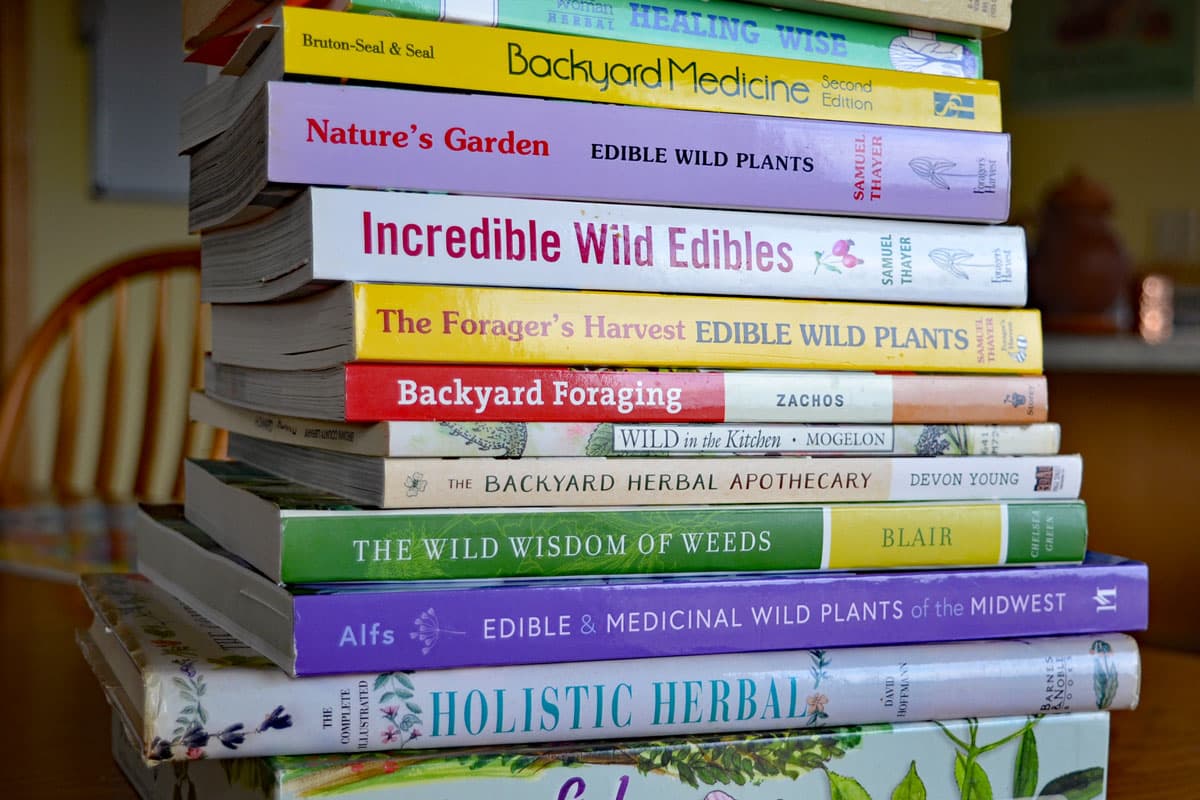
Before we get started, I’d like to note that I live in northeast Wisconsin. My top choices will not be the best for everyone, everywhere. That said, all the books I recommend are well written, and many of the plants are available over a wide area.
Foraging versus Wildcrafting
“Foraging” is searching for or obtaining food or provisions, often from the wild, but not always. “Wildcrafting” is gathering (herbs, plants, and fungi) from the wild.
I prefer the term “wildcrafting”, because it clarifies that we’re not including things like dumpster diving. That said, many people haven’t heard of wildcrafting, so I opted to use foraging in the title.
Best Foraging Books – Anything by Samuel Thayer
Samuel Thayer has four different foraging books available at this time:
The Forager’s Harvest: A Guide to Identifying, Harvesting, and Preparing Edible Wild Plants
Nature’s Garden: A Guide to Identifying, Harvesting, and Preparing Edible Wild Plants
Sam Thayer’s Field Guide to Edible Wild Plants of Eastern and Central North America – new in 2023


If you’re looking for a hardcore lesson on how to “eat wild”, look no further. Sam uses his many years of experience to help you identify what’s safe to eat and exactly how to eat it.
Unlike many foraging books, he makes a point to claim every photo and piece of text in his books. He has survived exclusively on wild edible species that he collected himself.
His books are detailed, with many photos. He also includes photos of commonly mistaken species to make identification easier.
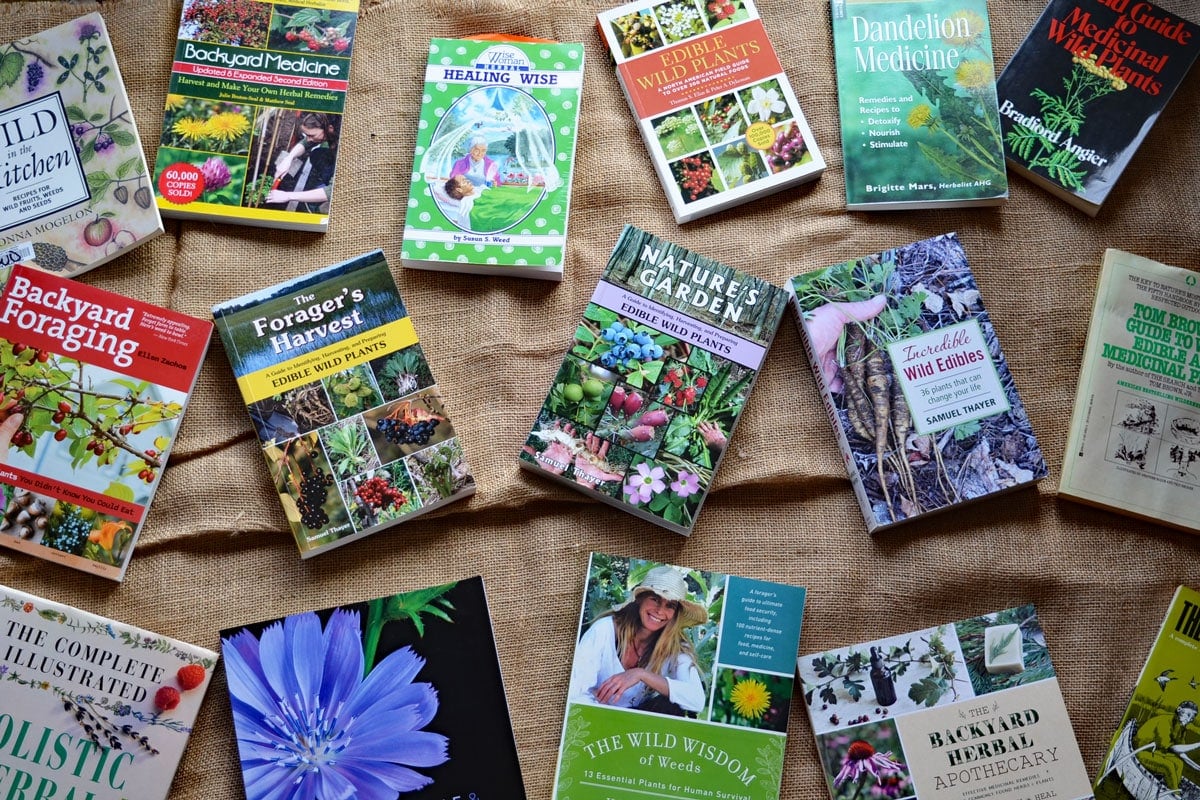
Wildcrafting Books for Food, Medicine and Self-Care
Note: Always practice sustainable foraging, never overharvesting sensitive species. Make sure that you correctly identify wild plants before use. Always try a small amount of a new plant first to make sure it agrees with you.
Backyard Medicine
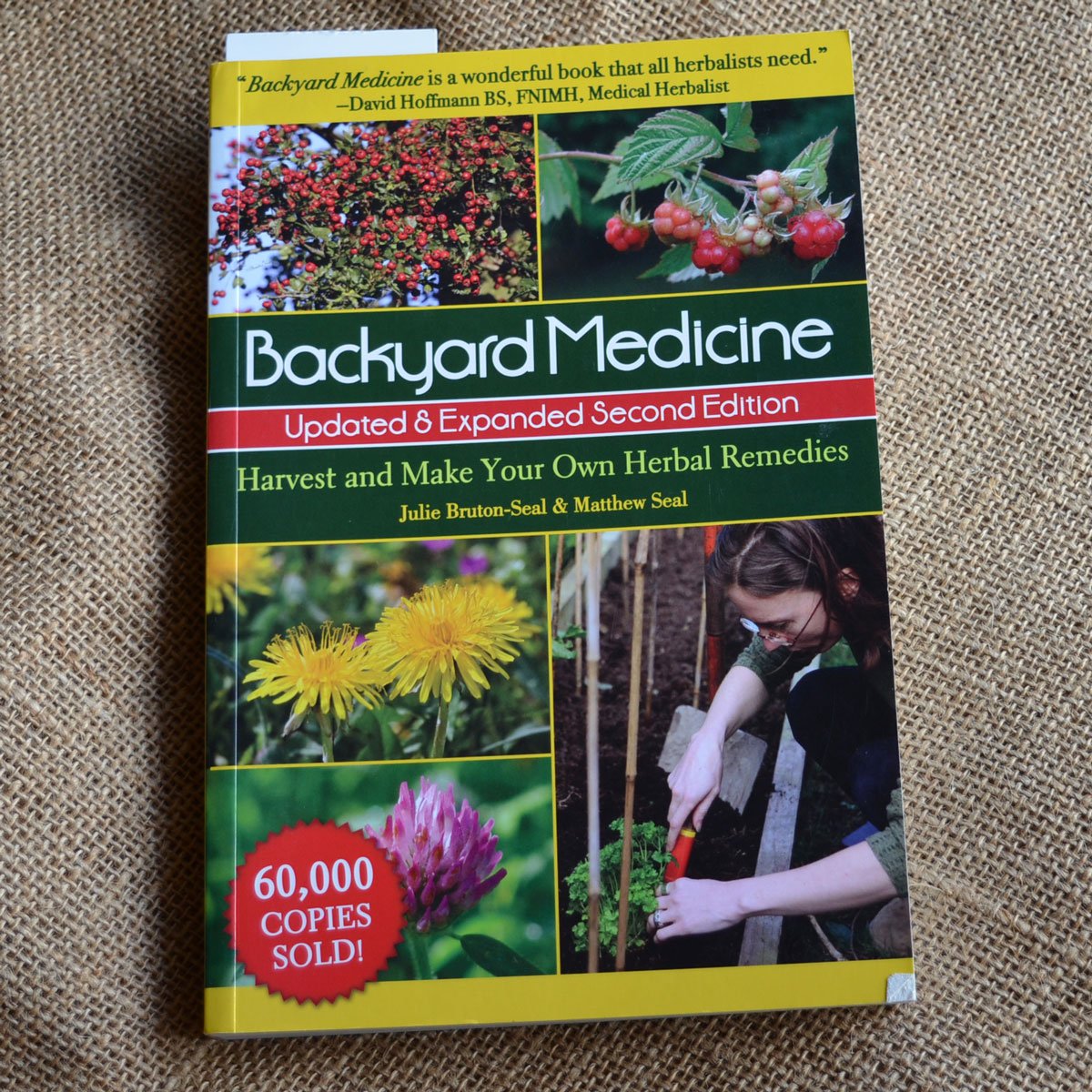
Backyard Medicine – Harvest and Make Your Own Herbal Remedies is my favorite herbal wildcrafting book. I think it’s a “must have” for every herbal wildcrafting library. It’s easy enough for beginners, but invites experienced herbalists to dive deeper.
It has several photos per plant, with close ups and images of the plant where it’s likely to grow. There are historical uses, recent research, and at least one simple recipe with instructions for use with each plant.
Backyard Foraging
Backyard Foraging – 65 Familiar Plants You Didn’t Know You Could Eat is an easy to follow guide for common plants. Some plants are wild, some are commonly cultivated (like lilacs). Each plant has full color photos, and a color tab at the top of the page for when to harvest. It does not include toxic look-alikes, so make sure to cross check unfamiliar plants.
Edible & Medicinal Wild Plants of the Midwest
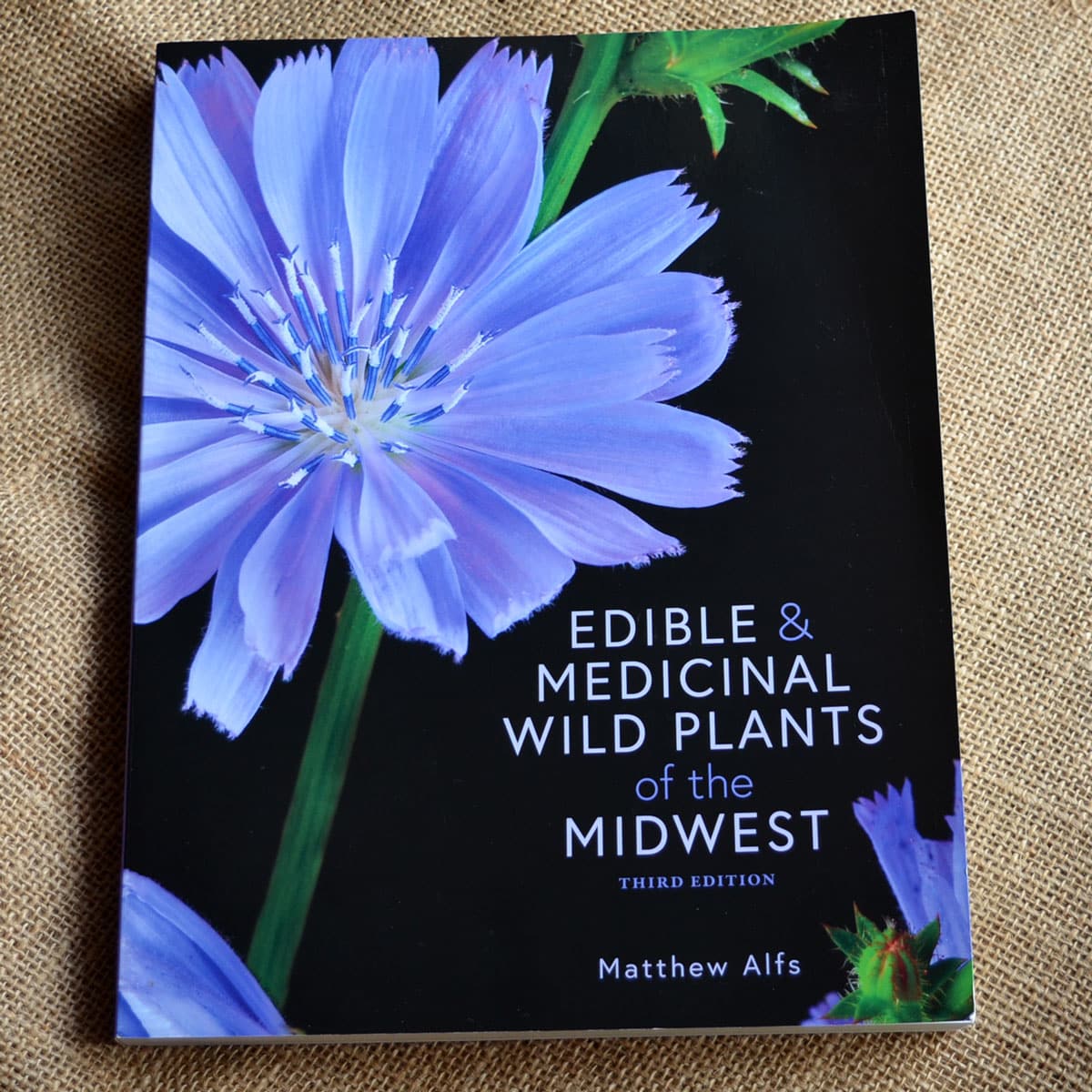
Edible & Medicinal Wild Plants of the Midwest by Matthew Alfs is a beautiful book, rich in history. There’s basic identification information and full color photos. The strength of this book is the descriptions of historical plant use. It creates opportunities for herbalists to re-explore lost remedies.
The Backyard Herbal Apothecary
The Backyard Herbal Apothecary by Devon Young provides detailed recipes for herbal preparations. Each plant listing includes an herbal monograph, photos, and safety precautions. There are also cultivation instructions for those who want to encourage wild plants in their home gardens.
Wild in the Kitchen
Wild in the Kitchen by Ronna Mogelon is a fun book featuring common wild plants. There are simple line drawings, but the star is the recipes. From salad to dessert, Ronna helps you bring wild flavor to the table with easy to follow recipes.
Would you like to save this?
The Wild Wisdom of Weeds
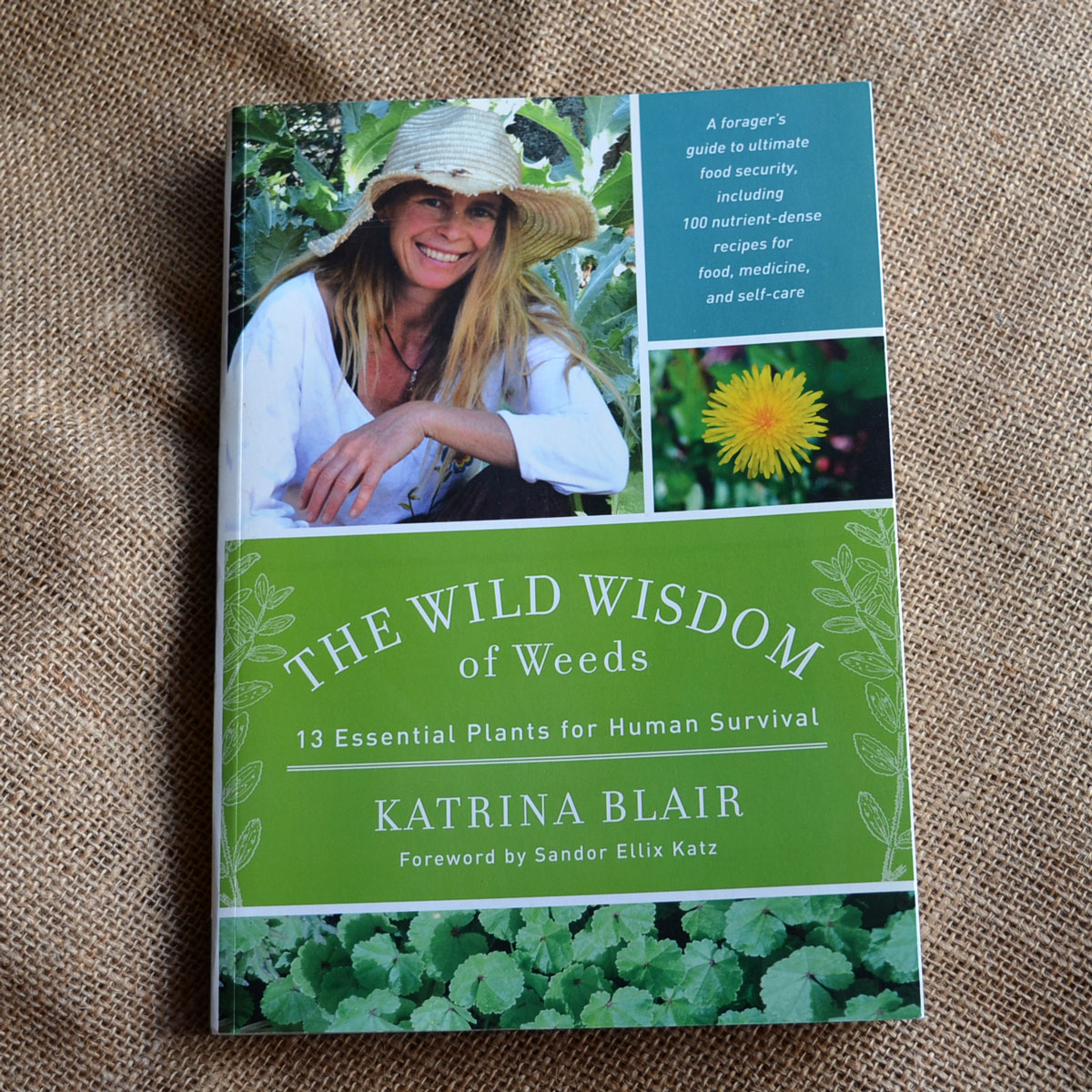
The Wild Wisdom of Weeds: 13 Essential Plants for Human Survival – A forager’s guide to ultimate food security, including 100 nutrient dense recipes for food, medicine, and self-care by Katrina Blair an eclectic mix.
It features dandelion, mallow, purslane, plantain, thistle, amaranth, dock, mustard, grass, chickweed, clover, lambsquarter, and knotweed. There are passing mentions of other weeds and related species. Most of these plants are on the USDA noxious weed list somewhere in the US.
The thing is, while we’re waging war on these plants, all the plants are trying to do is heal the soil.
They all thrive in disturbed areas, and all are edible and medicinal. Instead of fighting them, why not put them to good use?
As Mark Shephard says, we need to “stop trying to grow things that don’t want to grow and killing things that do want to grow”.
Katrina introduced me to many different ways to prepare these weeds that I didn’t know. One of the best things about weeds is that they are ready to harvest in the spring garden when little else is. You can even gather seed heads in winter and use them to grow sprouts and wild microgreens. I love free food!
Many of the recipes are raw vegan, but there’s a wide variety to appeal to any healthy eater. This is a great foraging book for those interested in wild edibles, herbalism and making personal care products.
The Complete Illustrated Holistic Herbal
The Complete Illustrated Holistic Herbal by David Hoffman discusses wild and cultivated plants. Each plant has an herbal monograph in the front of the book. The back of the book is sorted by treatments for specific health issues. There are also clear instructions on how to make basic herbal preparations.
Healing Wise
Healing Wise by Susun Weed has a creative and whimsical flare. Susun’s style may be off-putting to some, but I found her descriptions to be intuitive and memorable. She focuses on working in harmony with nature, and listening to our bodies and our plant allies.
In this book, she focuses on burdock, chickweed, dandelion, nettle, oatstraw, seaweeds and violets, providing general recommendations and recipes.
Vintage Foraging Books of Note
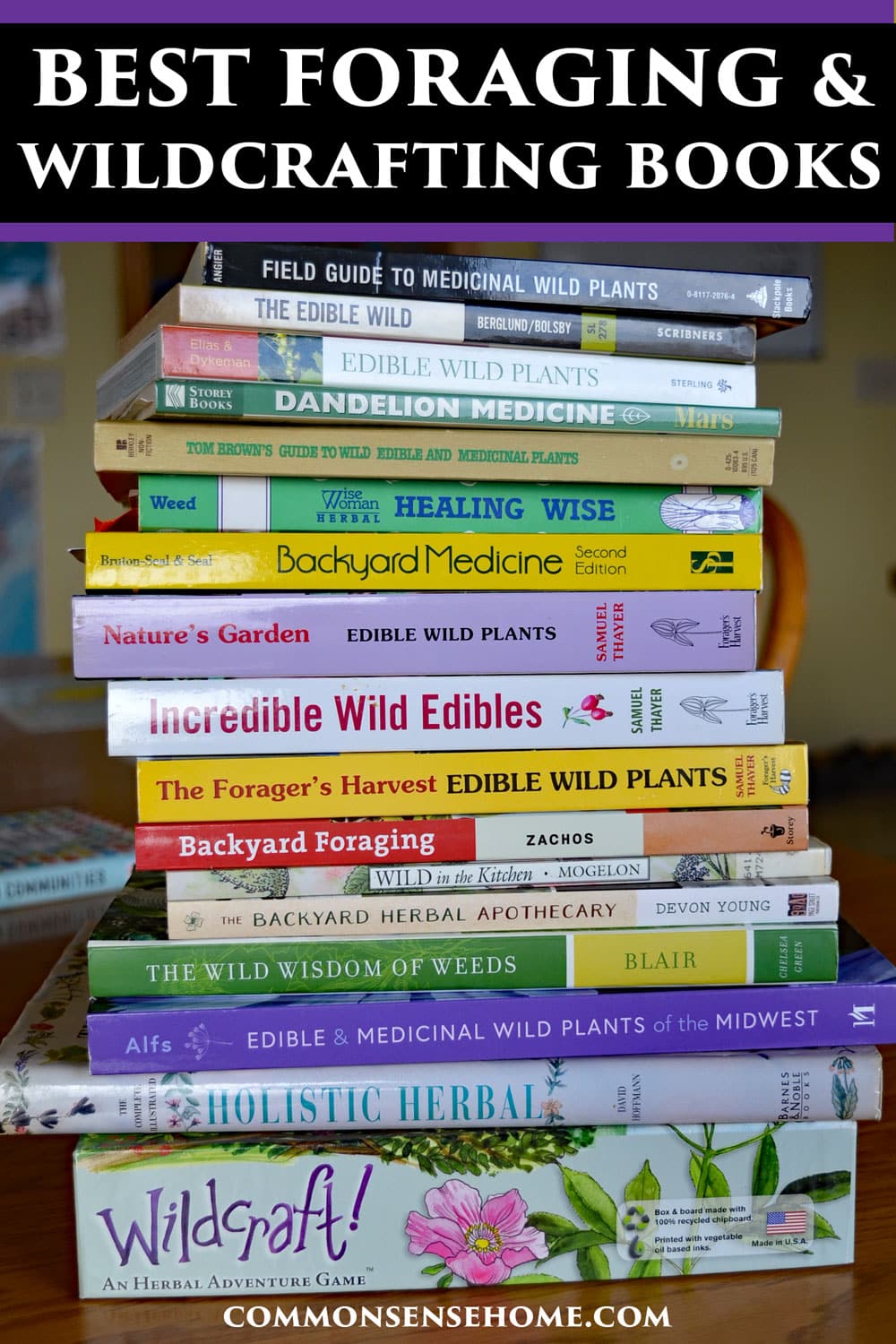
Don’t dismiss older books simply because they’re older. Many foraging books from the 70s, 80s, and 90s were written by the original “back to the land” folks. Below are some gems I’ve found at used book sales.
Tom Brown’s Guide to Wild Edible and Medicinal Plants is rich with stories and connection. The author shares traditions and lore passed down through his family along with plant use tips. There are no photos, only illustrations, so you’ll need another book to help with identification.
Field Guide to Medicinal Wild Plants by Bradford Angier was originally published in 1978, and updated in 2008. Known as Mr. Outdoors, Bradford authored over 35 books on surviving in the wild and living lightly on the land. There’s an alphabetical index at the beginning, and each plant has a color illustration and monograph.
Edible Wild Plants – A North American Field Guide to Over 200 Natural Foods. Originally published in 1982 and updated in 2009, this is a compact, well written guide book. Not as detailed as Sam Thayer’s works, but a quality foraging book.
Dandelion Medicine by Brigette Mars is a deep dive into using dandelions for food and medicine. It has an interesting assortment of recipes for foods, drinks, and dandelion remedies. The second edition came out in 2023, so this wonderful book is available again.
The Edible Wild: A complete cookbook and guide to edible wild plants in Canada and North America by Berndt Berglund and Clare E. Bolsby. This is a great little cookbook for wild plants. It has cooking instructions for camp cooking, with more elaborate recipes for the home kitchen. There are simple line drawings of the plants.
More Information on Foraging and Wildcrafting
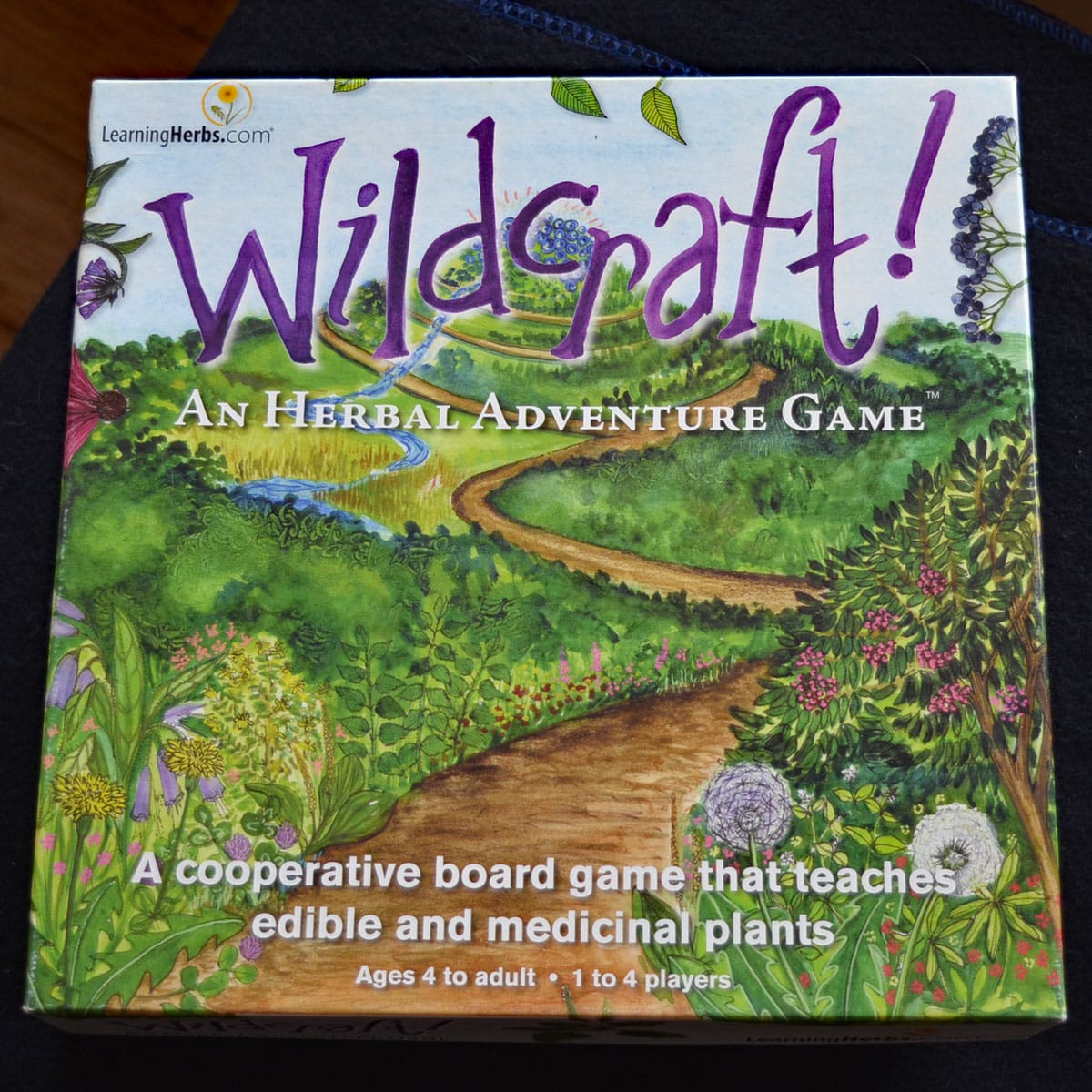
Thought it’s not a foraging book, I love the board game “Wildcraft!” for introducing wild plants to kids. My sons played it many times with friends over the years, and still bring it out occasionally, even as adults. It’s a cooperative game that’s easy to play and builds basic herbal knowledge.
We have over 50 articles on identifying, harvesting, and preparing edible wild plants. The Weekly Weeder series covers all things “weed” related, including:
- Identification
- Uses (culinary, medicinal, companion plants aspects, habitat, etc.)
- Tips and tools to get rid of unwanted plants
Weed control methods must be non-toxic and non-damaging to the environment. You can visit the Herbs and Wildcrafting page to see a list of all the posts in this series.
Some popular articles include:
- Grandma Called it Medicine Leaf
- Quackgrass – Powerful Herbal Medicine
- How to Make Elderberry Syrup with Fresh or Dried Berries

This article is written by Laurie Neverman. Laurie was raised on a small dairy farm in northwest Wisconsin, where she gathered wildflowers from the woods and pastures. She and her family now live in northeast Wisconsin, where they combine intentional plantings and semi-wild areas. Every season is a new opportunity to learn more about working with wild plants.
Originally posted in 2011, last updated in 2024.
I’m looking for a chart or book that tells me when, what time of year to harvest medicinal herbs and plants. The parts of the plant, leaves, blooms ,roots, etc. in north Georgia. That way I know when and when and where to look. Any suggestions? Thanks John
Southeast Medicinal Plants: Identify, Harvest, and Use 106 Wild Herbs for Health and Wellness may be helpful. It’s generally well-reviewed and has quite a few reviews.
Love some of the suggestions. I prefer the older books-i dont think people were as afraid of using herbs; it wasnt as foreign to them. Euell Gibbons, when you can find his work, has a mix of memorable stories and information. His work isnt complicated or splashed with color, but good stuff!
You have SUCH a wonderful blog!!! Thank you so much for all this wonderful information! My family and I have started prepping/homesteading on our ranch! Well I should say we are STARTING to! Its so hard to know where to start! Your blog is so good we dont know what to do first! We do live on a big ranch so that makes it easier haha! My husband and I have a one year old son, and actually he is sick with a cold right now, what would you suggest we use herb wise for a yuck nose and no sleep?
Thanks, Tori, and welcome.
Your son is one year old? When our guys were little, we found a combination of cool/cold outside air and warm, steamy air helped open airways and clear gook safely.
The Natural Health page has a section on Cold and Flu remedies. These posts include recommended immune boosting foods in the “herbs and spices” and “vitamins and minerals” posts. The essential oils post may also be helpful – https://commonsensehome.com/preparing-for-cold-and-flu-season-with-essential-oils/ You can diffuse the oils into a room, or make a vapor rub as explained in this post – https://commonsensehome.com/home-remedies-for-congestion/ Keep him hydrated, let him be as active as he cares to be, get nourishing foods into him, and it should clear.
Hi mkj! EWWWW on the rosehips! That is a concern when foods aren't sprayed but I figure it's worth the risk. Maybe you could blanch them before drying, to make sure any passengers are dispatched. Then they would at least be worm jerky when you dried them.
Thanks for stopping by and taking the time to comment. I'm learning a lot, too.
Hi Laurie,
Just found your website through Kitchen Stewardship. I have been getting more interested in finding things I can harvest around my area lately for food and medicine. I picked a bunch of rose hips and tried to dry them, but after a few days there were worms crawling out of them! I dried raspberry and blackberry leaves today to make tea. I'm interested in taking goldenrod for my kidney stones- that's next! Thanks for your blog. I look forward to learning a lot from you!
rosehips need to be harvested after hard frost so the worms don’t come out 🙂
Thanks, Kristine! I’ve got no rosehips here to experiment with. Sounds like that way at least you’ll only have worm jerky. 🙂
A fellow weed lover! 🙂 I hope you'll stop by next week and link up a post.
Weekly Weeder, That is funny! I am looking forward to this series. I love my weeds ;-).