Oct 212010
 

A Day in the Slow Life @ Common Sense Homesteading

Annette at Sustainable Eats (a truly inspiring woman with very interesting blog) tagged me in a meme that asks participants to share a day in their slow lives.  I have to say, from what I’ve read so far, most of the “slow life” folks have pretty busy days.

In an effort to get this posted in time for Simple Lives Thursday, I’m going to try to recollect this past Monday.  The days sometimes seem to run together.  There’s always so much I’d like to do, and then there’s what can reasonably be accomplished (at least by me, an individual who requires sleep).

6:00 am-ish – Hubby gets up to shower and head out for two hour drive to work.  Since having to take a job out of town last year, he now comes home on weekends and stays in a small condo near work during the week.  It’s been tough being apart, but for now a lot of things are still up in the air and we’re hoping to hang on to our current home (our “dream house” built on 35 acres in the country back in 2005).  I say a little prayer each day that eventually he’ll be able to find a job back in the area.

While hubby is in the shower, I gather the trash and recyclables for him to drop at the end of the driveway on his way out (we have a really long driveway), and pack some food stuffs for him to take to the condo (this week it’s homemade gluten free vanilla cookies).

6:30 – Hubby is gone.  Eat a tablespoon of coconut oil.  Put on exercise shoes and do about a half hour of aerobics followed by 15 minutes or so of stretching.

Minipig (left) and Snap

7:15 – Feed inside and outside cats.  Put away dishes left to dry from previous night.  I usually do dishes/run the dishwasher in the evening and let things air dry overnight.  Went downstairs to go out to the garden to grab some kale for breakfast (we have a walk out basement and the basement patio door is the closest one to the garden), got sidetracked cleaning up the basement.  I have an eight foot folding table down there that was covered with four types of shell beans, melons, seed heads, tomato ties, clippers…uh…well, it was a mess.  We’re talking with some homeschool friends about blowing things up down there instead, so I had to make room.  Melons to the counter (there’s a kitchenette), beans upstairs to be shelled, seed heads upstairs, tie bands to the laundry room, clippers to their storage bin, etc.  Grab a gallon bucket of walnuts from where they’re curing in the greenhouse and take them upstairs to shell, too.  Go back down and outside to finally grab the kale I’d forgotten earlier.

8:15 – Dice up kale and throw it in a pan with some organic butter and the last of the cherry tomatoes.  Usually I have tomatoes that store a little later, but I got hit with late blight at the end of the season and my remaining tomatoes did not keep as well as usual. Once the kale is tender, shove veggies to the side of the pan and throw in a small duck egg from the neighbors.  Cover and cook a few minutes for sunny side up, then dump the whole mess on a plate and add a little bruschetta for extra kick.  Boot up the computer and munch breakfast with a side of Toffee Apple kombucha (kombucha w/ apple cider and a little English Toffee liquid stevia).

8:45 – Boys awake (yes, they are night owls).  Get them some breakfast (bagel with cream cheese and coconut oil (not homemade), peanut butter and strawberry rhubarb jelly sandwich (all homemade), apple slices on the side.  Let them play a while and munch breakfast, have them sort the laundry.  Get the laundry going, pay some bills, catch up on email, do some research.

10:00 – Get the boys started on bookwork for the day.  We homeschool, but we keep a pretty relaxed schedule.  Dunc starts working on adding and subtracting decimals, August on algebra.  Hang up the laundry on the line and start the next load.  It’s a sunny day, so even though it’s cooler the laundry should be almost dry by evening.  We’ve got a porch that runs along the south side of our home and acts as an overhang for the passive solar aspect of the home, and I’ve got my laundry line right on the porch so it’s very convenient.

11:00am – The boys shift to handwriting, grammar, and vocabulary.  I hang up the second load of laundry, and help out as needed.  I put some milk kefir and chia seeds in the Vitamix to soak in preparation of making a green smoothie for lunch.  Start another batch of milk kefir.

Noon – Lunch time.  The boys put on a special about earthquakes to watch while they munch.  I make up some toasted cheese sandwiches and tomato soup for them (they’re not big on green smoothies, but I keep trying).  For myself, I raid the fridge and freezer – green beans, cucumbers, dried coconut, nutritional yeast, Superior Reds powder, blueberries, strawberries, banana, peach (last four all frozen) – everything goes into the Vitamix.  Turn up the power and I’ve got a smoothie.  I pair this up with a few slices of raw cheese and Nuthins, and that’s lunch.

1:00 pm – Science time.  We’re studying geology right now.  We read a section about ocean vents, and then watch some cool footage on YouTube.  I love the internet.

2:00 – The weather is nice, so we’ve got to make some progress in the garden today.  The boys work on pulling the last of the tomato trellis parts, and I work on cleaning the pathways around my center wagon wheel shaped permanent beds.  The herbs and weeds went a little nuts this year with all the rain, and the garden got rather overgrown.  The center-most herb bed is still a thicket, but at least now the paths are walkable.  We start putting down cardboard, old newspaper and bird food bags to block the weeds, covered by wheat straw.  We manage to get about half of the paths done.  The bean plants are clipped back, a few more stray dry beans are found.

This year we had Calypso, Bumblebee, Tiger Eye for dried beans, and Emerite pole beans for green beans.  I brace up the cilantro plants, hoping that more of the seeds will ripen yet this season.  We’ve had a light frost, but the plants survived.  I grab a dill weed seed head, and take that inside to save, too.  We have cabbage, kale, and Swiss chard ready to harvest.  We’ve been digging up carrots and sunchokes as we need them, but will dig up the remainder of the carrots before the ground freezes.  We eat some sunchokes, but the patch produces way more than we care to eat now.  The parsnips will stay in the ground over winter.  There’s still celery and parsley, too.  I’ll dig those up and move them into the greenhouse soon.  The green beans are still alive, and I grab about a gallon of beans to eat.

Kefir brewing

5:00 pm – We head inside.  The boys crack some walnuts and grab the laundry off the line while I cook supper (and eat a tablespoon of coconut oil).  Tonight’s special is modified breakfast leftovers – tomorrow I cook “for real” again.  We’ve got diced and reheated breakfast sausage from the little meat place down the road with scrambled duck eggs from the neighbors and a side of the green beans I picked earlier.  The boys are drinking local apple cider and I’ve got some heavily fermented raspberry lemonade water kefir.  This bottle was forgotten in the basement fridge for about a month and has a heck of a head on it.  Thus far I prefer my water kefir flavored with citrus (lemon-lime, raspberry lemonade).  The boys will drink root beer flavored (I currently use extract, but did recently buy some roots to experiment with).  I want to experiment with hibiscus and other herbs, too.  That’s what winters are for.  :-)

Nutcracker boys

6:00 – Sneak in a dry brush and shower (with hot/cold rinses at the end – I’m working on detoxing).  I’ve got some lovely vanilla mint soap I made with a friend, and I use coconut oil to clean my face.  Sort laundry, do the dishes, tackle the rest of the stacked up mound of paperwork (more bill paying, balance bank statement), more email, visit with friends.  The boys like to play online games.  We are all in one room together, so I can keep tabs on what they’re up to.

9:00 pm – Head the boys off to their showers and bedtime prep.  Somewhere between 9:30 and 10, we all pile into my bed and read some history.  This week we’re covering the 1900′s, and that night was about President Roosevelt.

10 – ish – The boys head off to their beds and I get a little reading done.  I’m working my way through a new whole foods cookbook, but I’ve been a little disappointed.  Way too much soy, no soaking or sprouting of grains (although it is gluten free, which is why I bought it in the first place), no soaking their nuts to reduce phytates, and heavy use of spices (I know they’re good for you, but our palates are just not into overly spiced food).  Fat use is minimal – I like my fats, and they like me.  Lots of use of fresh fruits and veggies that are not available in my area for much of the year.  Very little fermenting – a couple of sauerkraut recipes.  Sigh.  I guess I just keep assembling recipes off the internet.  A big thanks to all my real food blogger friends who share their awesome recipes (and the problems they’ve run into :-) .

10:30 or so – I use some coconut oil I keep by the bed to coat my feet and hands.  They get so dry in the cooler months.  Another goal I have for this fall is to make a couple more dry skin salves to try out.  I want to make one with burdock root (we have a TON of it around here) and one with hibiscus flowers (I found a recipe online and the flowers were on sale recently through Frontier).  Lights out.

And now I’m tagging Pamela of Seeds of Nutrition, Paula of The Chicken Coop (see, this is what you two get for chatting with me regularly on Facebook) and YOU! I’d love to read all of your “day in the slow life” posts in this Thursday’s Simple Lives. Please consider it – we all learn so much from each other.

Sep 142010
 
Root Cellars 101 - Root Cellar Design and Use
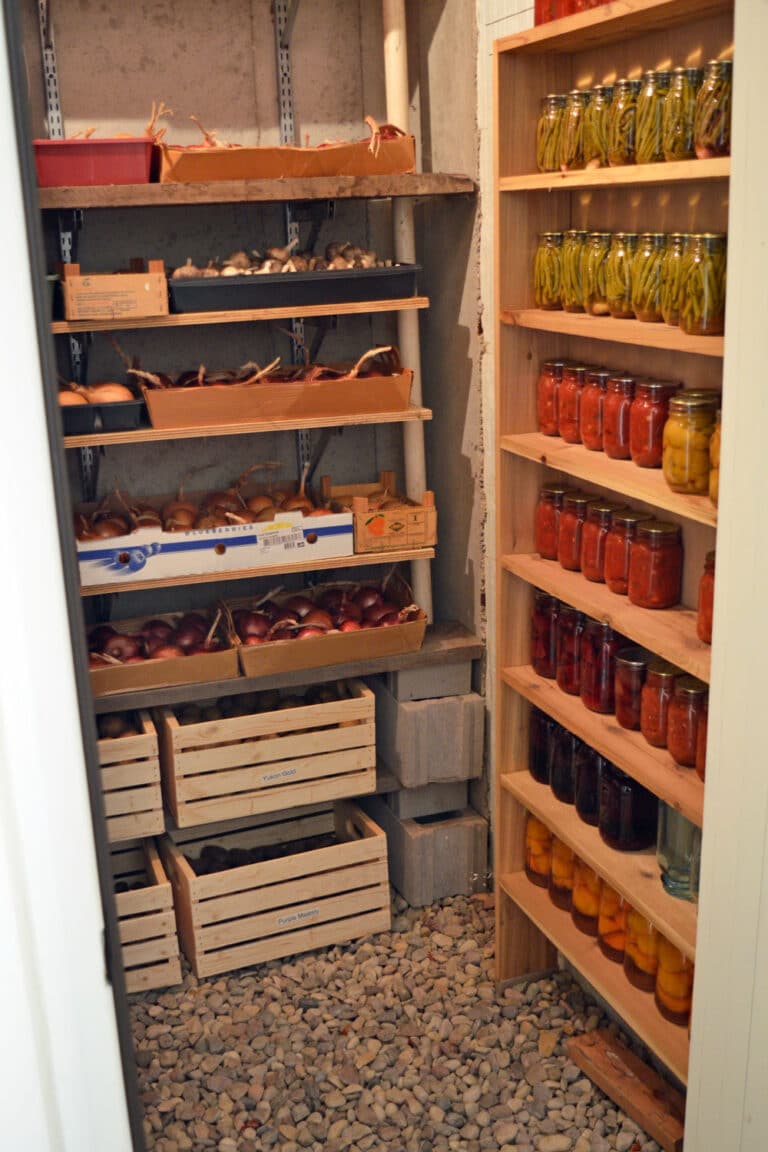
Looking into our root cellar

We built a root cellar under our front porch.  Typically, if you’re building new your porch floor is formed out of a concrete slab, you need to put a foundation wall under it anyway, so why not put this area to good use?  Even if you can’t deal with (or don’t want to deal with) traditional root cellaring (storing vegetables and fruit), you could use the space as a wine cellar, gun cabinet, place to brew beer, a battery room for your PV/Wind system or simply more storage.  I highly recommend including a root cellar as part of your emergency preparedness planning if you can, as it’s a great low-cost, no-energy way to store food and extend the shelf life of fresh produce.

Our root cellar measures about 8′x8′, which provides plenty of room for our stash of root veggies, plus gives a nice sized porch above.  We have simply shelving along the east wall (opposite the door) composed of rough cut 2″x8″ boards and cement blocks.  Produce that likes drier conditions (like onions, garlic and potatoes) is stored in trays on the shelves for better ventilation.  This way, if an onion or potato starts to go bad, they can be spotted and removed immediately before they spoil the whole batch.  My mom used to store hers in mesh sacks, but many times one bad roots would spoil a large number of those around it.  I cover the potatoes with burlap or landscape fabric or whatever else is handy to block out the light (and prevent green potatoes) but allow ventilation.  A few cabbage go on the top shelf, and apples go out in the garage.  Pumpkins and squash go on the floor of the canning pantry because they like it a little warmer and drier.

I store vegetables that need more moisture in buckets, bins or boxes packed with lightly dampened leaves.  For us this usually means beets and carrots (I overwinter parsnips out in the garden).  I tried packing these vegetables in sawdust and in sand, but prefer the leaves.  For me, sand stayed too moist and led to rotting, plus it made a terrible mess.  Sawdust was also very messy, but better than sand.  It really liked to cling in all the little root hairs.  The leaves provide moisture to keep your roots from shriveling up, but are easy to brush off with much less mess.  They can be recycled into the garden during the next planting season to enrich to the soil.  (I like to mix mine with the dirt I use to back fill my potato planting holes.  Leaves add acidity to the soil, which helps prevent scab on potatoes.)  Do use fresh leaves each year to prevent potential pathogen buildup.

View to the left

Locating the root cellar outside the footprint of the home permits the root cellar to maintain cooler temperatures more easily than a cellar located within the house, but even if you have a pre-existing home you may be able to section off a portion of your basement with good results.  Using an exterior grade door (preferably insulated) on your root cellar also helps to maintain proper temperature (both in the root cellar and in the house).  If you are building new, consider putting the root cellar door in the back of an unheated storage room so that the temperature difference is less.  You can use this room to store veggies that require somewhat warmer and drier storage than a root cellar provides, as well as canned goods and whatever else you may need to stash.

Root cellars must have ventilation!  This is one of most common mistakes that people make when designing/installing them.  Proper ventilation moves the ethylene gas that causes spoilage away from the produce, increasing your storage time and the quality of the items in storage.  It also slows down molds and mildews and other fuzzy things that thrive in dark, damp, still environments.  You need the equivalent of a low and high 2” PVC pipe, preferably placed so as to bring in fresh air low on one side and to vent stale air out high on the opposite side.    Don’t skip the vent pipes if you’re building new, or at least their penetrations, even if you’re not sure you want to use the space for a root cellar.  You can always cap them off and they’re much more difficult to add later.

The root cellar should have no “standard” heating or cooling, other than a way to introduce outside air to cool the space. A “finished” floor is optional, and in fact a simple gravel floor is probably your best option for controlling humidity.  Root cellar produce keeps best with high humidity and cool temperatures.  A gravel floor introduces ground moisture and allows you to sprinkle the floor to add moisture when needed.  A single incandescent light (switched on exterior) should provide adequate lighting (unless your room is really huge) and, if for some reason your storage gets too cold, you can always use it to introduce a little heat.

The best resource we have found on root cellars is the book Root Cellaring: Natural Cold Storage of Fruits & Vegetables by Mike and Nancy Bubel.  No matter what your location or how much space you have, the Bubels are likely to have a root cellar option that will work for you.  It contains detailed explanations of how to store vegetables and fruits without electricity with specific temperature and humidity recommendations for each variety.  There are also good photos and diagrams, which I really like.

Links

Yakhchal – Ancient natural refrigerators – who knew?

Keep Your Ice Cream Cold Without Electricity – Nifty article on a home built refrigerator substitute that uses no electricity or fuel.

Build a Basement Root Cellar by Steve Maxwell – Article from Mother Earth News

A Root Cellar for Your Homestead  by Victoria Ries – Some basic information on the cellar, more information on the proper storage of the fruits and veggies themselves.
The University of Missouri Extension Office suggests the following guidelines for storing food in root cellars:


Root Cellar storage requirements

Apples

  • Cold and moist
  • Do not store with vegetables
  • 32 to 40 degrees Farenheit
  • 80 to 90 percent relative humidity

Beans, dry

  • Cool and dry
  • Home and commercially prepared foods also need a cool, dry storage place
  • 32 to 50 degrees Farenheit
  • 60 to 70 percent relative humidity

Beets

  • Cold and very moist
  • 32 to 40 degrees Farenheit
  • 90 to 95 percent relative humidity

Brussels sprouts

  • Cold and very moist
  • 32 to 40 degrees Fahrenheit
  • 90 to 95 percent relative humidity

Cabbage

  • Cold and very moist
  • 32 to 40 degrees Fahrenheit
  • 90 to 95 percent relative humidity

Cabbage, Chinese

  • Cold and very moist
  • 32 to 40 degrees Fahrenheit
  • 90 to 95 percent relative humidity

Carrots

  • Cold and very moist
  • 32 to 40 degrees Fahrenheit
  • 90 to 95 percent relative humidity

Cauliflower

  • Cold and very moist
  • 32 to 40 degrees Fahrenheit
  • 90 to 95 percent relative humidity

Celeriac

  • Cold and very moist
  • 32 to 40 degrees Fahrenheit
  • 90 to 95 percent relative humidity

Celery

  • Cold and very moist
  • 32 to 40 degrees Fahrenheit
  • 90 to 95 percent relative humidity

Endive (Escarole)

  • Cold and very moist
  • 32 to 40 degrees Fahrenheit
  • 90 to 95 percent relative humidity

Garlic

  • Cool and dry
  • Home and commercially prepared foods also need a cool, dry storage place
  • 32 to 35 degrees Fahrenheit ideal
  • 60 to 70 percent relative humidity

Grapefruit

  • Cold and moist
  • Do not store with vegetables
  • 32 to 40 degrees Fahrenheit
  • 80 to 90 percent relative humidity

Grapes

  • Cold and moist
  • Do not store with vegetables
  • 32 to 40 degrees Fahrenheit
  • 80 to 90 percent relative humidity

Horseradish

  • Cold and very moist
  • 32 to 40 degrees Fahrenheit
  • 90 to 95 percent relative humidity
  • May be left in the ground undisturbed until needed. Digging can be done unless the soil is frozen hard. A thick layer of mulch may extend your harvest season.

Jerusalem artichoke

  • Cold and very moist
  • 32 to 40 degrees Fahrenheit
  • 90 to 95 percent relative humidity
  • May be left in the ground undisturbed until needed. Digging can be done unless the soil is frozen hard. A thick layer of mulch may extend your harvest season.

Kale

  • Cold and very moist
  • 32 to 40 degrees Fahrenheit
  • 90 to 95 percent relative humidity

Kohlrabi

  • Cold and very moist
  • 32 to 40 degrees Fahrenheit
  • 90 to 95 percent relative humidity

Leeks

  • Cold and very moist
  • 32 to 40 degrees Fahrenheit
  • 90 to 95 percent relative humidity

Onions

  • Cool and dry
  • Home and commercially prepared foods also need a cool, dry storage place
  • 32 to 35 degrees Fahrenheit ideal
  • 60 to 70 percent relative humidity

Oranges

  • Cold and moist
  • Do not store with vegetables
  • 32 to 40 degrees Fahrenheit
  • 80 to 90 percent relative humidity

Parsnips

  • Cold and very moist
  • 32 to 40 degrees Fahrenheit
  • 90 to 95 percent relative humidity

Pears

  • Cold and moist
  • Do not store with vegetables
  • 32 to 40 degrees Fahrenheit
  • 80 to 90 percent relative humidity

Peas

  • Cool and dry
  • Home and commercially prepared foods also need a cool, dry storage place
  • Airtight container
  • 32 to 50 degrees Fahrenheit
  • 60 to 70 percent relative humidity

Peppers, hot dried

  • Cool and dry
  • Home and commercially prepared foods also need a cool, dry storage place
  • 32 to 50 degrees Fahrenheit
  • 60 to 70 percent relative humidity

Popcorn

  • Cool and dry
  • Home and commercially prepared foods also need a cool, dry storage place
  • Airtight container
  • 32 to 50 degrees Fahrenheit
  • 60 to 70 percent relative humidity

Potatoes

  • Cold and moist
  • Do not store with fruits
  • 38 to 40 degrees Fahrenheit ideal
  • 80 to 90 percent relative humidity

Potatoes, sweet

  • Warm and moist
  • To keep sweet potatoes from spoiling in warm and moist storage, do not let temperatures drop below 50 degrees Fahrenheit
  • 80 to 90 percent relative humidity

Pumpkins

  • Warm and dry
  • 50 to 55 degrees Fahrenheit
  • 60 to 75 percent relative humidity

Radish, winter

  • Cold and very moist
  • 32 to 40 degrees Fahrenheit
  • 90 to 95 percent relative humidity

Rutabaga

  • Cold and very moist
  • 32 to 40 degrees Fahrenheit
  • 90 to 95 percent relative humidity

Salsify, oyster plant

  • Cold and very moist
  • 32 to 40 degrees Fahrenheit
  • 90 to 95 percent relative humidity
  • May be left in the ground undisturbed until needed. Digging can be done unless the soil is frozen hard. A thick layer of mulch may extend your harvest season.

Squash, winter

  • Warm and dry
  • 50 to 55 degrees Fahrenheit
  • 60 to 75 percent relative humidity

Tomatoes

  • Warm and moist
  • To keep green tomatoes from spoiling in warm and moist storage, do not let temperatures drop below 50 degrees Fahrenheit
  • 80 to 90 percent relative humidity

Turnip

  • Cold and very moist
  • 32 to 40 degrees Fahrenheit
  • 90 to 95 percent relative humidity

The length of time that fruits and vegetables keep well in root cellars depends on several factors:

    • Early or late crops (late-maturing crops store better)


  • Storage conditions (less-than-ideal conditions shorten storage life)
  • Fruit and vegetable condition at storage time (proper curing of damage-free produce results in longer storage life).


Vegetables and fruits should not be stored together even though temperatures and moisture requirements are similar. As fruits such as apples and pears ripen, they give off ethylene gas which decreases the storage life of vegetables. This is especially evident with potatoes which sprout early if stored near certain fruits. Also, the odor of strong smelling vegetables, like turnips and cabbage, can be absorbed by fruits and other vegetables. Store them away from other food and where the odor cannot waft into the house.

Do not allow fruits and vegetables to freeze.

This post has been added to Preparedness Challenge #7 at Homestead Revival,
Homestead Barn Hop #30 at The Prairie Homestead,
Fight Back Friday at Food Renegade
May 172010
 

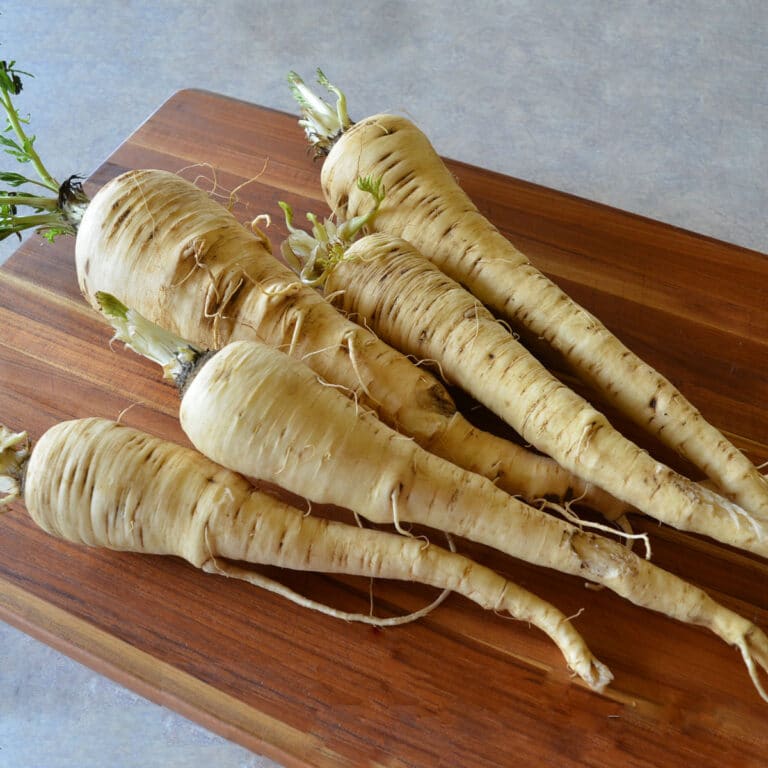
What is it?  A creature from the deep?  Captain Nemo’s worst nightmare?  Nope – just this year’s harvest of parsnips posing as a parsnip squid.

It was my intention to post this sooner, but I figured it was still worth sharing, as many of you (like me) are planting your gardens.  I’m hoping this might inspire you to give parsnips a try, if you haven’t already.

What I love best about parsnips is that they are ready to harvest when very little else is available.  I always overwinter my parsnips (i.e., leave them in the ground over winter and harvest them in the spring).  The freeze/thaw cycle converts more of their starches to sugars and makes them absolutely delicious.  Come late March/early April, the boys and I head out to where we’ve buried the plants the previous fall under a thick layer of straw.  My stepdad swore up and down that the ground wouldn’t freeze if you covered it in this much straw, but mine surely did, so we had to wait to dig until the frost was gone.

Once the straw is pulled back, you look for the first signs of greens poking out of the ground.

You want to make sure that you dig these up as soon as possible, because the goal of that root is not to feed you, but to send up a flower stalk and produce seeds.  Once more leaves become visible, chances are that the sugars stored in the root are being used up and the parsnip will become tough, woody and bland.  Parsnips can require some effort to get out of the ground, as they will send out very deep tap roots.  This year we had several that were about as large in diameter as a mason jar (see second photo above) and about 2 1/2 feet long.  The boys really had to dig to excavate these tasty treats.

I usually just saute mine in some butter or coconut oil, but if you want to get fancy you can try out Andrea Chesman’s recipes for Mapled Parsnips or Basalmic-glazed Parsnips in the Garden-Fresh Vegetable Cookbook.

Once you dig your parsnips, you can hold them in the crisper drawer in the fridge for a couple of weeks, or you can cook them all up and freeze them in meal sized portions.  They’ll hold well in the freezer for several months.  According to USA Gardener, “Parsnips are a good source of fiber, folate, magnesium, potassium, Vitamins C and E, calcium, iron, thiamin, riboflavin, niacin, and B6.”

To grow your parsnips, plant the seeds about 1/2 deep in well-loosened soil (remember – deep roots).  Keep soil moist until seedlings appear.  Parsnips are slow to germinate (they can take around three weeks to emerge), and the germination rates drop significantly as the seed ages.  If I don’t have fresh seed (even if it’s only one year old), I plant it as thick as the hair on a dog’s back and thin the seedlings to about one every three inches, if needed.  If you don’t know what a parsnip seedling looks like, take a peek at West Side Gardener for a photo.

Oh, about the rock…we’ve had the cutest little tree frog hanging around our deck and greenhouse.  He’ll come at night and catch moths on the screen door, and during the day I’ve seen him regularly just sitting – oh so still – on the deck, where he blends in famously.

This post has been added to Real Food Wednesday hosted by Kelly the Kitchen Kop and the Homestead Barn Hop at Homestead Revival.

Nov 162009
 

Sorry for not posting much lately.  We’re facing some transitions and it’s keeping me busy juggling all of the various projects and responsibilities (Candy, I’m sorry, I think I killed your sourdough starter).

On to recent projects.  November has been much drier than October, so I’ve been out in the garden doing a little more work that often doesn’t get done until spring.  The boys and I have been cleaning, mulching and fertilizing the raspberries.  To keep my paths clear in the raspberry patch, I put down a heavy layer of cardboard and/or newspaper and cover it with marsh hay or straw.  To fertilize, I usually use aged horse manure from our neighbor (thanks, Ryan), but this year in addition to the manure we’ve got some worm castings from my nephew at Whitetail Organics.

Soon it’ll be time to bring in the last of the root veggies (carrots and beets) and store them in the root cellar, but for me they hold best in the garden until it gets really cold.  I dig up a bucket or so at a time for a meal and a few in the fridge – or to ferment for yet another probiotic beverage.  I’ve still got two batches of kombucha  going strong on one corner of the counter, and I’ll post about my flavor experiments with those later, but since I have plenty of beets I figured it was time to tackle kvass.

Beets have a lot of health benefits, but I freely admit they are not my favorite vegetable.  I grow them, we eat them, just not a lot of them.  Pair that up with the fact that the mangels can easily grow to be around football size and not get fibrous, and that I grow red, golden and mangel beets, and you’ll find that we usually have plenty of “excess” beets available.

I haven’t yet invested in a juicer, but I found this article  on the health benefits of beet juice or “purple bull” as they called it, to be interesting.

Beet juice increases endurance and can help to extend time of excercise by as much as 16%, a new study says

Nitrate that reduces O2 in the human body accumulates in beets. Reducing O2 in the body, this nitrate interacts with the muscles and heart in such a way that it allows for longer exercise and greater endurance. This is the case with both moderate- and high-intensity exercise.

A recent study by scientists from the University of Exeter and Peninsula Medical School in Plymouth involving eight men between the ages of 19 and 38 found that men who drank half a liter of beet juice everyday for 6 days had significantly more endurance than the control group at the end of those six days.

The authors of the study speculate that humans may have increased endurance from beet juice due to the fact that nitrates in the body transform into nitrogen oxide and this nitrogen oxide reduces the usage of oxygen in mitochondria. The authors say that such a reduction in oxygen usage could not be made by any other known methods today.

So, I may be wrong, but I would think that you could get some of that same beety goodness from beet kvass, without the juicer and potentially in and even more readily absorbed form.

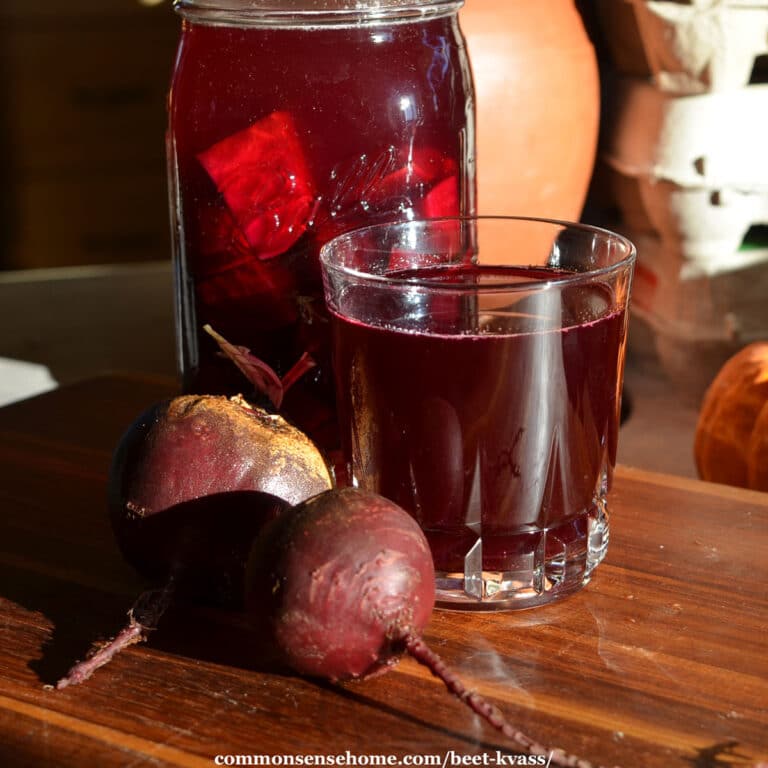
Beet Kvass (adapted from Nourishing Traditions) and featured at www.feelgoodeats.com

In Nourishing Traditions, Sally Fallon notes, “One four ounce glass in the morning and night, is an excellent blood tonic, promotes regularity, aids digestion, alkalizes the blood, cleanses the liver, and is a good treatment for kidney stones and other ailments.” (p. 610)

Ingredients:

3 medium organic beets
¼ cup whey (innoculant)
1/2 tablespoon sea salt
2 quarts filtered water*

Directions:

Slice off the beet greens and save them for another purpose (beet greens are loaded with nutrients and can be prepared like chard or kale). Slice off the bottom of the beet and thoroughly scrub and peel. Coarsely chop the beets and place in a tall glass container.

Add the filtered water, sea salt, and whey and stir to combine. Cover securely and keep at room temperature for 2 days, stirring a few times. After 2 days, strain out the beets and discard, transfer the liquid to mason jars and store in the refrigerator.

*Don’t use tap water if it is chlorinated because chlorine will inhibit the fermentation process.

Spiritual food for the New Millennium CSA has some interesting variations for beet kvass on their website.  I haven’t tried them yet, I’m still sipping on my original batch, but in case you’ve got more time or even more beets than I have, check them out and let me know how it goes.

Here’s how my own beet kvass experiment played out.  First, I needed whey.  I  dumped a carton of plain, organic, full fat yogurt in my jelly strainer and let it sit, covered with a dish towel, overnight.

This yielded about a pint of whey and some yogurt cheese.
I strained the thicker whey through a towel at the top of a jar.  The yogurt cheese I used later like ricotta to stuff some manicotti.
Once they whey was obtained, I grabbed a few beets and assembled the rest of my ingredients.  That big yellow clodhopper in the middle is a mangel, the other two are an Italian heirloom variety called Paonazza D Egitto.
 
Pack the beets in the jars.
Add whey, water and salt, cover, mix well (I gave it a good shake) and place in a quite corner for a couple of days.  To brew a second batch of kvass from the same beets, dump off part of the liquid, leaving a couple inches in the bottom, add more water, cover, shake and let sit for two more days.  (The kvass left in the bottom of the jar acts as your starter instead of just the whey and salt.)  Here’s what the jars looked like at the end of the second batch.

And here’s what I ended up with in total at the end of the week.

There are about four quarts of kvass and the leftover beets go in the compost pile.

I’d have to say that I found the taste of the second batch better than the first.  The first tasted more salty and earthy, like a really strong electrolyte drink.  The second was smoother, more fruity, and more effervescent.  They’re all living in the fridge at this point as I drink my way through them, but I’m considering putting the earlier batch out at room temp to ferment a little more.  The second batch is still quite active – I actually have to release the pressure regularly on the jars because there is so much gas buildup.

As I’ve been digging a little more on probiotics, I’ve found that not only can they help you fight off colds and flu (see my Green Sense article on this topic), they can actually improve your brain function.  I’ve seen other real food bloggers mention the GAPS diet, but hadn’t looked into it much.  I think after reading this article I’ll be adding the book to my reading list.

Here are few excerpts from the review:

Understand How Poor Digestion Affects Mental Health in the Book “Gut and Psychology Syndrome”

“Through studying the health of hundreds of patients with autism, learning disabilities, psychiatric illness and other problems, Dr. Campbell-McBride discovered that in all cases these children and adults had digestive problems, often of a severe nature. Through her research, she has determined that there is a distinct correlation between unhealthy intestinal flora, poor digestion and toxicity from chemicals created by undigested foods that can severely affect brain chemistry. She coins this as “Gut and Psychology Syndrome,” or GAPS.

Poor bacterial flora and digestion are at the heart of serious health problems. When children are born with intestinal bacterial imbalances or “gut dysbiosis” they tend to have a compromised immune system and are prone to illness. Dr. Campbell-McBride states that often the intestinal tract of children who have autism is caked with hard fecal material. This terrible condition of course would lead to enormous and serious health consequences. She brings to light the profound statements of Hippocrates (460-370 BC) that, ”All diseases begin in the gut,” and of the father of modern psychiatry, French psychiatrist Phillipe Pinel (1745-1828), that “The primary seat of insanity is the region of the stomach and intestines.”

But what exactly happens in the gut that can upset brain chemistry? Dr. Campbell-McBride provides us with a magnificent explanation of the cascade of events that can occur when digestion is not supported by a healthy gut flora. A child or adult who eats a diet that is high in difficult-to-digest carbohydrates such as grains and processed foods, will continue to encourage the underlying condition of gut dysbiosis. Dr. Campbell-McBride states that people with damaged flora will even crave the very foods that support the survival of the unhealthy bacteria often to the exclusion and refusal of others.

Where most research on poor digestion focuses on unhealthy intestinal flora, Dr. Campbell-McBride’s work uniquely points to many problems with gut flora actually beginning with an unnatural growth of the fungus, Candida Albicans, in the stomach when it is not producing enough acid. She discusses that this overgrowth interferes with the first step of digestion by causing the stomach to produce inadequate amounts of the hydrochloric acid necessary to break proteins into “peptides” before entering the small intestine. For instance, under normal circumstances, the gluteomorphine and casomorphine proteins in wheat and milk are broken down in the stomach in the presence of proper amounts of stomach acid. However, with less stomach acid, these foods in fact begin to ferment in the stomach and are not broken down into peptides before passing into the small intestine. Besides causing an inadequate digestion of foods, the pressure of the gas created from this fermentation can lead to acid reflux, esophageal problems and even hiatal hernias, which are some of the most common digestive problems that people experience.

When insufficiently digested food enters the small intestines without adequate stomach acid, the pancreas in turn does not get the signal to release adequate pancreatic juices. Because people with GAPS lack healthy bacterial flora, they also lack production of enzymes called “peptidases.” These enzymes normally are produced by the enterocytes on the microvilli of the small intestine and will further break down proteins and carbohydrates into usable nutrients. With poor flora, the mucosal lining of the intestinal tract also becomes damaged and “leaky gut syndrome” develops. Therefore, the undigested casomorphine and gluteomorphine proteins, which resemble the chemical structure of opiates like heroin and morphine, are absorbed into the bloodstream unchanged and can cause severe interference with brain and immune system function. Dr. Campbell-McBride states that “There has been a considerable amount of research in this area in patients with autism, schizophrenia, ADHD, psychosis, depression and autoimmunity, who show high levels of casomorphines and gluteomorphines in their bodies, which means that their gut wall is in no fit state to complete appropriate digestion of these substances.”

Undigested carbohydrates, poor digestion and candida overgrowth in turn result in the production of the chemicals ethanol and acetaldehyde, which have profound consequences on brain chemistry and development. With these chemicals, a person can technically be considered “drunk” after a meal of carbohydrates even though they consumed no alcohol. We all know that alcohol is extremely toxic, especially to a developing fetus or a child. Besides reduced stomach acid and pancreatic enzymes, the following are some of the effects of a prolonged presence of alcohol from an overgrowth of candida in the body: damage and inflammation to the gut lining and resulting malabsorption; nutrient deficiencies; stress to the immune system; liver damage; accumulation of toxins, old neurotransmitters and hormones that can cause abnormal behavior; brain damage that can lead to lack of self control, impaired coordination and speech development, aggression, mental retardation, loss of memory and stupor; peripheral nerve damage; muscle tissue damage and weakness; metabolic alteration of proteins, carbohydrates and lipids and pancreatic degeneration.

There’s a lot more to the review, but you get the idea.  An unhealthy digestive system leads to unhealthy brain function.  Maybe this is yet another contributing factor to the rise in autism, ADHD, depression and all the other mental health issues that are affecting our society today?  We all know that drug companies stay in business by promoting the latest miracle pill, so you’re not likely to see a lot of studies on this material, but I think it’s worthwhile for us to do a little experimenting of our own and evaluate the results.  The flavors are different than what we’re used to, so it can be a little challenging to get the family to go along with the plan, but I keep experimenting and I know eventually I’ll find options that they even enjoy.  This food journey goes on one forkful, on sip, at a time.

This post has been added to the Real Food Wednesday blog carnival, and Tuesday Twister at GNOWFGLINS.
Jun 192009
 

Now that the bulk of planting is finally done (other than adding a few things later in the season for fall and winter harvest and maybe a few more flowers – you can never have too many flowers), it’s time to settle down into regular maintenance. Weeding, mulching, thinning, staking – turn your back for a couple of days and it’s amazing how much things can change (and get out of control).

The root veggies planted from seed are coming along nicely, so they need to be thinned out so they are not overcrowded. I’ve tried planting more thinly, but then it always seem to happen that they don’t germinate well for some reason or another and I up up replanting. Thinning is easier for me. My mom never thins, and I didn’t when I first started, but the roots grow so much nicer when they have more room. The last few growing seasons have been short on rain, too, so more room equals less stress on the plants.

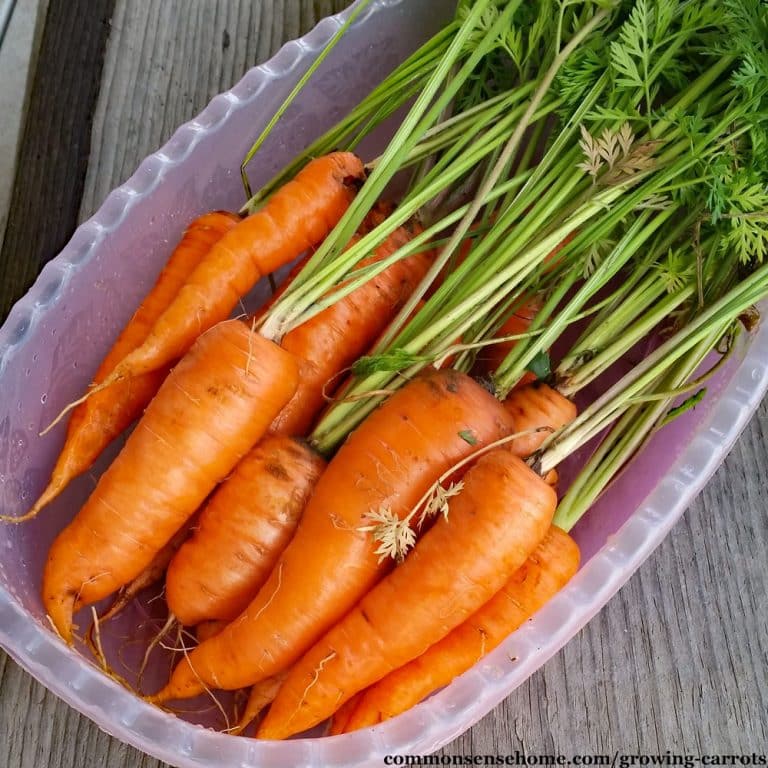
You can see in the “before” pictures that the carrots are growing in bushy little clumps without much wiggle room between plants. The goal for the first thinning is so have about an inch between them.

Here’s the after. Much easier to see individual plants. As they grow, they’ll get thinned again, and the small carrots will end up as salad fixings, and the larger carrots will be left for winter storage.

The potatoes are around a foot tall, so they are ready to be mulched or hilled to get more plant undercover to produce a better harvest. I prefer mulching, as I find it easier to move around leaves and straw than dirt. Also, if it gets rainy in fall (not a problem recently, but it does happen), you don’t end up with such a muddy mess. Given that I mulch almost all of my garden anyway, this is just a better all around solution for me.

I saved several bags of leaves from my in-laws last fall (and actually stored some of my root cellar vegetables in leaves, which worked well), so my Kennebec potatoes received a leaf mulch this year. The leaves also acidify the soil, which reduces potato scab. (Note to self – avoid planting potatoes in beds that were occupied the previous year by brassicas that were mulched with lots of composted manure, as too much nitrogen contributes to potato scab….sigh…garden rotation is not as straightforward as it seems.)