Feb 212013
 

Freezer Meals Plus Organizing and Cleaning Your Freezer @ Common Sense Homesteading

Freezer meals can be dishes made specifically for the freezer (as with Once-a-Week Cooking or Once-a-Month Cooking) or simply leftovers saved for another day.  Whichever style you prefer, keeping your freezer well stocked, clean and organized can be a great way to save time and money.  You could put these savings towards additional food storage, a rainy day fund, or necessities like health insurance.

Home made frozen meals are also healthier than prepackaged foods, since you control the ingredients.  Mass produced foods are packed full of artificial preservatives, colors and additives which are not good for the body.  With a well-stocked freezer, you’ll be less tempted to grab fast food when you don’t feel like cooking (or don’t have time to cook). Continue reading »

Jul 282012
 

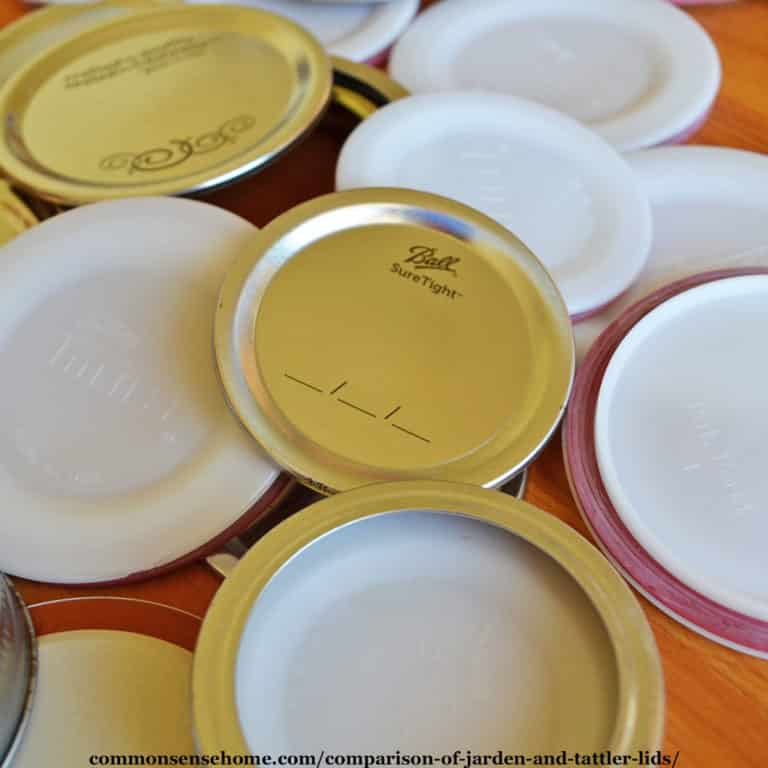
Comparison of Jarden Metal Lids and Tattler Reusable Canning Lids

I’ve never seen a full side-by-side comparison of Jarden Metal Lids and Tattler Reusable Canning lids, so I thought I’d do a little digging and see what I could find.  I know a lot of folks swear by one or the other, or use both, depending on what they’re canning (for instance, they may not use Tattlers on jars they plan to give as gifts).

Most  Tattler reviews I’ve seen give little or no technical or background information, and the metal lids have been around so long no one “reviews” them anymore, although there has been a lot of buzz in recent years about their BPA content.  I sent email questionnaires to both Jarden and Tattler.  Jarden representative Judy L. Harrold, Manager, Consumer Affairs, responded quickly, and we also arranged a phone interview.  Tattler declined to comment, so I pieced together information from their website and other online sources (as noted).  Here are the results.  My questions are in bold, responses  in plain text. Continue reading »

Feb 182012
 

Waht You Need for Dehydrating Food at Home

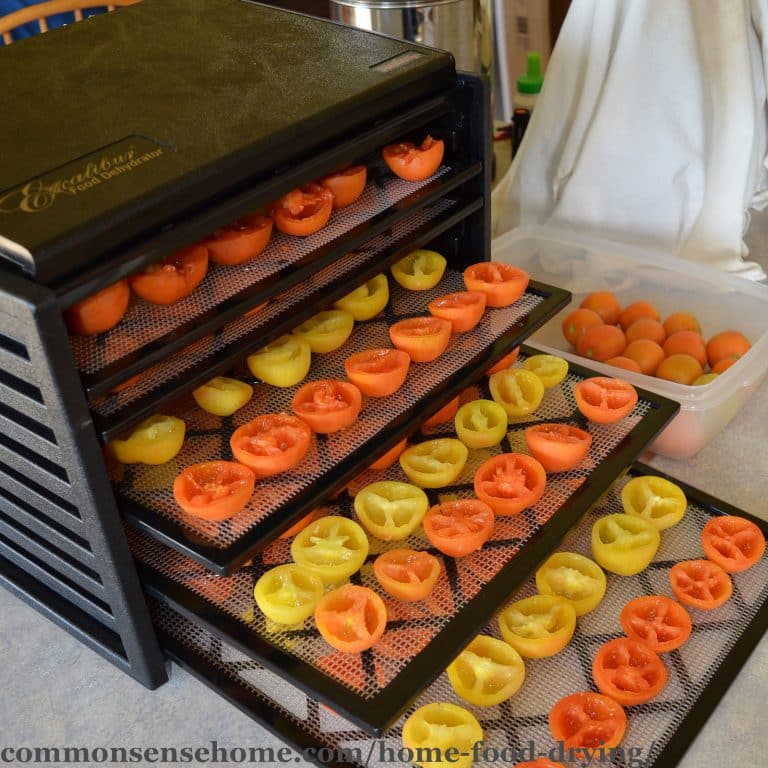
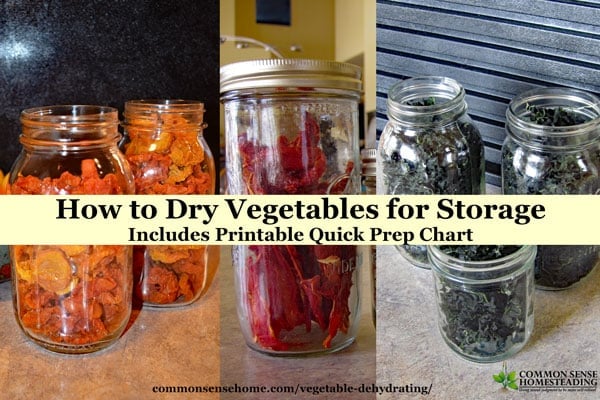
Want an easy way to store and preserve food?  Need a food storage method that doesn’t take up much space and requires very little equipment?  Want to make healthier snacks for your family to enjoy at home or on the go?  Looking for portable food for camping or backpacking?  If you answered “yes” to any of these questions, you should learn about home food drying.

What Equipment Do I Need to Dehydrate Food at Home? Continue reading »

Jun 232011
 

I had the opportunity to babysit my neighbors asparagus patch for two weeks earlier this season, and I was blessed with a bounty of asparagus like I have never seen.  The photo above was just one picking – and it kept coming!  For those who are not asparagus savvy, you need to keep the spears harvested during the production season, otherwise they will get tall and produce seed, and you will have no more asparagus to harvest.  Thus, I was over picking every two to three days to keep the plants producing.  The neighbors have a lovely 100+ year old farmhouse, and four different asparagus patches around the yard.  As I was picking, the fresh spears looked so good that I decided to try one raw for the first time.  It was really good!  It tasted very much like fresh picked green peas, without much of the stronger “asparagus” taste that puts many people off.  I ate several more.  :-)   Since there was such a bounty, I used several methods of preserving asparagus.

The first thing I decided to do with the excess asparagus was freezing.

How to Freeze Asparagus

From the Ball Blue Book of Preserving, one of my favorite preserving references, with my comments in parentheses.

Select young, tender asparagus with tightly wrapped tips.  (Check – picked them fresh myself. :-)

Wash thoroughly and sort into sizes.  (Definitely needed to do this – the size variation in homegrown asparagus is quite substantial compared to commercial asparagus.  I always went for the thinner stalks in the store, thinking they’d be more tender, but I found out while picking that they emerge from the soil at the width they will be as they grow.  Thinner stalks are not any younger than fat ones, and the fat ones were often more tender and juicy.  Don’t fear the fat asparagus, and don’t fear fat in general.)

Trim stalks by removing scales with a scarp knife.  (This is done primarily to get any trapped dirt off that may be hiding underneath the scales, so I didn’t bother, as my asparagus were grown in grassy and mulched areas.  you’ll be able to see how dirty your asparagus are.)

Cut into even lengths to fit in freezer containers.  (I skipped this, too, since I wanted to pack whole spears in vacuum bags.)

Blanch small spears 1 1/2 minutes, medium spears 2 minutes and large spears 3 minutes.  (This is where the sorting is needed.)

Cool.  (I scooped mine out and plunged them into a cold water bath to halt cooking.)

Drain.  (I first drained in a colander, and then placed them evenly space on a flour sack towel on top of an old, absorbent bath towel, to wick away as much excess moisture as possible before freezing.)

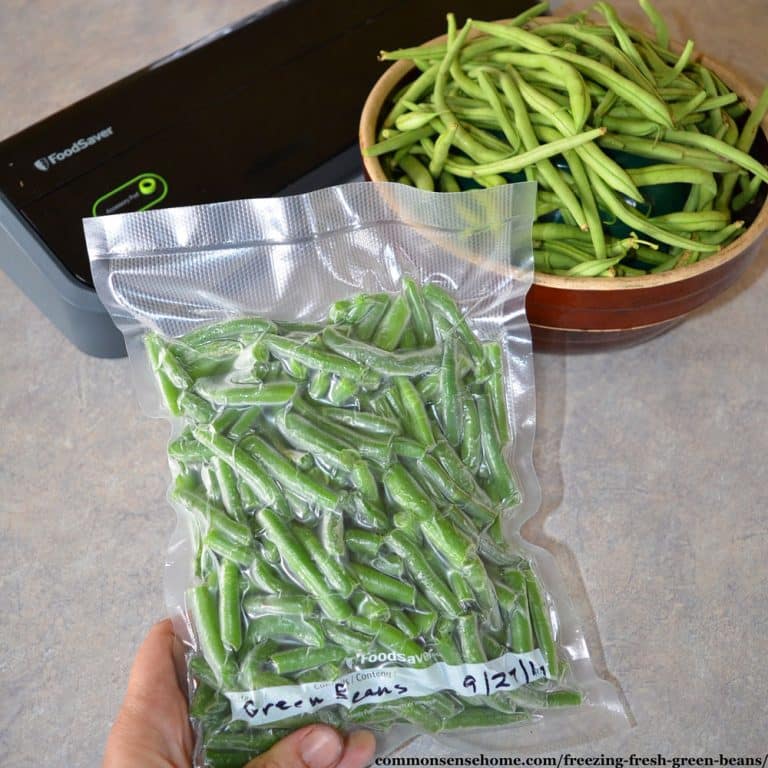
Pack asparagus into plastic freezer bags, can-or-freeze jars, plastic freezer boxes or vacuum bags.  (I chose to lay out my asparagus on cookie sheets covered with reusable parchment paper (I use that stuff for everything.) and pre-freeze them before sealing them in vacuum bags the following day.

Seal, label and freeze. (I packed the frozen spears into meal sized packages with varying amounts per package and sealed them with my vacuum sealer.  My goal was to have a product that looked as good when you brought it out of the freezer as when you put it in – no ice crystals, no mushy mass of green goo, just neat, tender spears ready to be heated in a pan with a bit of butter, salt and pepper.  If you plan to keep produce frozen for any amount of time – for instance, in this case, I probably won’t pull this out until winter, when fresh veggies are gone – the investment in a vacuum sealer and the small amount of extra time involved is well worth it in the HUGE improvement in quality of frozen veggies and fruits.)

How to Dry Asparagus
Again from the Ball Blue Book of Preserving with my comments in parentheses.

Choose young, tender stalks.  (The ones that taste like green peas. :-)

Wash and cut off tough end.  (Funny that they didn’t mention this for the freezing.  Anyway, you can trim a little bit from the bottom as needed.  With many of the younger stalks, I really didn’t need to trim at all, because there was no tough part at the bottom.)

Slice into one inch pieces.  (Note – if you have really fat asparagus stalks, you probably want to cut them in half lengthwise, too, before loading them in the dehydrator.  I didn’t do this initially, and ended up doing it at the end of the drying process to get those wider pieces to dry evenly.)

Steam blanch 3 to 4 minutes.  (I just blanched them in a pot of boiling water for about two minutes, until they were bright green.)

I started with about six cups of chopped asparagus.

Here’s the whole batch in about 8 quarts of boiling water.

After blanching, I chilled them in a cold water bath to stop the cooking.

Drain well and spread evenly on dehydrator trays.  I used the mesh inserts (the Clean-A-Screen trays) to make sure that no veggie parts fell through the screens as they dried.

Dry at 125F until brittle.  Rehydrate and serve in soups or with seasoned cream sauce.  Water content 92%.  (I put mine in at night and they were done the next morning, except for the wide bits, which I split in half and dried for a bit longer.  You want them to be very dry, so they snap easily in half, for optimum shelf life.)

Isn’t it amazing how much they shrink up?  If you’ve get very limited food storage space, dehydrating is the way to go.  Remember the six cups I started with?  After drying, it all fit into one cup sized jar.

This was labeled and stuck in the pantry.  If you want to boost shelf life even more, you can use the Foodsealer jar sealer attachment and vacuum seal the jar, too.

How to Lacto-Ferment (Pickle) Asparagus

This recipe is the love child of two different posts, one from Heartland Renaissance, and one from A Little Bit of Spain in Iowa.  Since I scored some green garlic (immature garlic) from a neighbor (thanks, Deb), I figured I’d use it in the ferment.  My neighbor, Betty, who provided me with the asparagus, had mentioned that she wanted to make some pickled asparagus.  I’m pretty sure that she had standard pickled asparagus in mind, but I’ve been experimenting more with live cultured foods, so I used lacto-fermentation.

Lacto-fermentation is the use of water, salt, spices and sometimes whey to preserve food without heat canning.  The lactobacilli bacteria that proliferate in lacto-fermented foods not only help to preserve it and give it that “pickle” flavor, they also act as little probiotic factories, making the food more digestible and increasing its nutrient value.  Lacto-fermented food is loaded with healthy bacteria.  I eat some every day, generally with every meal.

Lacto-Fermented Asparagus Recipe

For each quart jar:

1 teaspoon peppercorns
1/4 teaspoon celery seeds
1/2 teaspoon mustard seeds
1/2 teaspoon pickling spice
2 stalks green garlic, cut into 1 inch pieces
Enough asparagus to pack the jar tightly
4 tablespoons whey – If you do not have whey, add an extra tablespoon of salt to your salt water
Salt water – 2 tablespoons sea salt to one quart water, mix well to dissolve (you won’t need all of this to fill the jar, but it’s better to have a little extra than to run short)

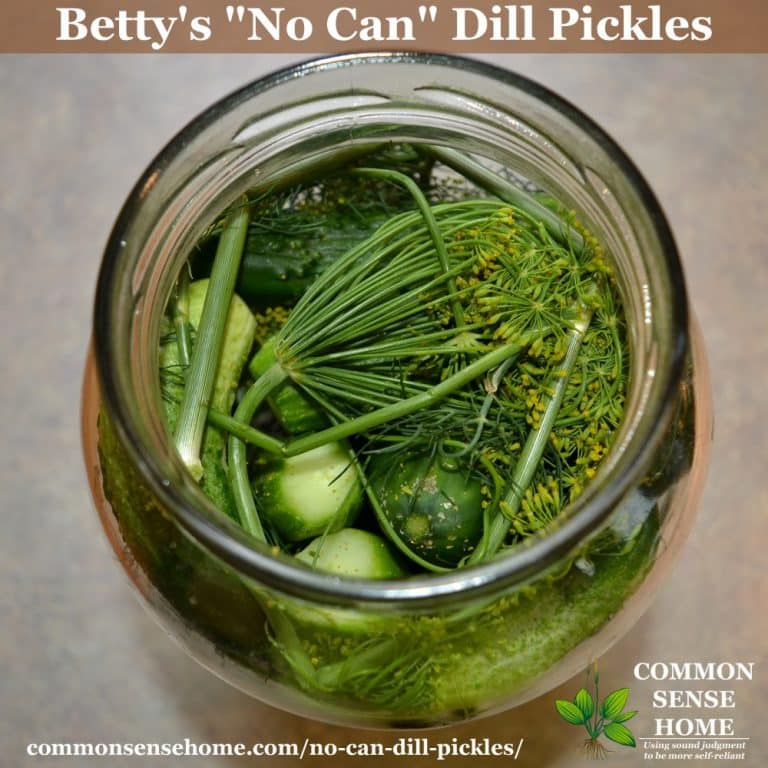
Clean and trim asparagus so the spears will fit into the jars below the neck of the jar (you want to keep them covered with liquid during fermentation.)  Put loose spices into jar, then pack asparagus into jars as tightly as possible (they will shrink during pickling and will want to float and pop up out of the liquid).  Wedge in garlic pieces as you go.  Pour in whey.  Pour in enough salt water to completely cover the asparagus, but make sure to leave one inch of head space at the top of the jar.  As it ferments, gas are produced and jar contents may expand.  I used atlas jars, which have wider shoulders but narrow mouths, to help wedge the asparagus in so it stayed below the water level.  You can also use a smaller jar with water in it nested in a wide mouth jar, or a clean stone, or other clean weight to hold the veggies under the brine.  This worked out pretty well overall.  Cultures for Health has a fermented vegetable master, which is designed to keep air out but allow gases to escape.  It’s on my wish list. :-)

Cover jars with a clean cloth (don’t seal tightly – they need to breathe), and place in a cool, dark place and allow to ferment for at least 3 days.  After three days, you can continue fermenting, or cover tightly and move to the refrigerator to slow down the fermentation process.  The flavors will get stronger and the asparagus will get softer the longer it ages at room temperatures.  Heat dramatically speeds up the fermentation process, so warm weather ferments will have shorter shelf lives.  I kept mine on the counter for three days under a dishcloth, then covered it tightly and moved it to the fridge.

One day three, I was a little freaked out when I took off the dishcloth and saw this:

At first, I thought it was mold.  Although it is generally safe to eat fermented foods with mold on the surface (just scrape off the mold and eat the product underneath, as long as the smell and taste are not foul or “off”), I was surprised that it had molded so quickly.  Upon closer examination, I found out that it was not mold, just milk solids from my whey, which could have been strained a little more finely.  After a little judicious scraping, the tops looked like this:

Much less “Fear Factor”. ;-)

My final product turned out a little cloudy, probably due to the whey and the “pickling spices”, which had some finer bits, but the taste is delicious.  Judging by the shelf life of other ferments I’ve tried, these should be good for several months – even a year – refrigerated, if they lasted that long.

I’m very grateful to have a stash of different types of asparagus that I can now enjoy for months to come.

May 282011
 

Food Storage Without Electricity - Top 10 Foods to Stockpile @ Common Sense Homesteading

Food Storage Without Electricity

More than one group of experts are talking about increased risk of soaring food prices and economic instability.  With recent droughts and other natural disasters around the world, our food production and delivery system is under a lot of of stress.  If you can, I’d highly recommend stocking up on non-perishable food items.

One question that I’ve been seeing a lot in preparedness discussions is how to make real, “living” food a part of your storage plans.  Many food storage lists include large amounts of heavily processed food items because they are cheaper, readily available, and have amazing shelf lives.

That’s all well and fine, but you’re supposed to rotate your food storage items regularly by eating out out your storage, and I am not eager to live off of MRE’s, freeze dried meals with hydrolyzed vegetable protein, and commercially canned goods that may contain mold or other questionable ingredients.  (We do keep some MREs and freeze dried meals, but they do not make up the bulk of our storage.)

So what are some of the best options for “real food” storage foods?  Here are my top ten choices for  foods that can be stored at room temperature for extended periods:

1.  Lacto-fermented vegetables/ Home Preserved Products

Large containers of properly fermented vegetables can last for months, if not over a year, in cool conditions (for instance, an unheated basement).  Captain Cook used kraut on his ships to prevent scurvy, as did other sailors.  My husband remembers my mom talking about how they would preserve large crocks (15-20 gallons or more) or kraut from season to season.  She said it would sometimes taste a little different but it was still good.  In my own experience, this past season I keep two one gallon crocks of kraut in my basement from October until May – seven months – and the quality was still acceptable at that time.  The flavor was a little more tangy/bubbly than younger kraut.  At this point I repackaged it into smaller containers and put it in the fridge and freezer.  Sauerkraut is very high in vitamin C, and is also a good source of vitamin K, which is often deficient in modern diets.

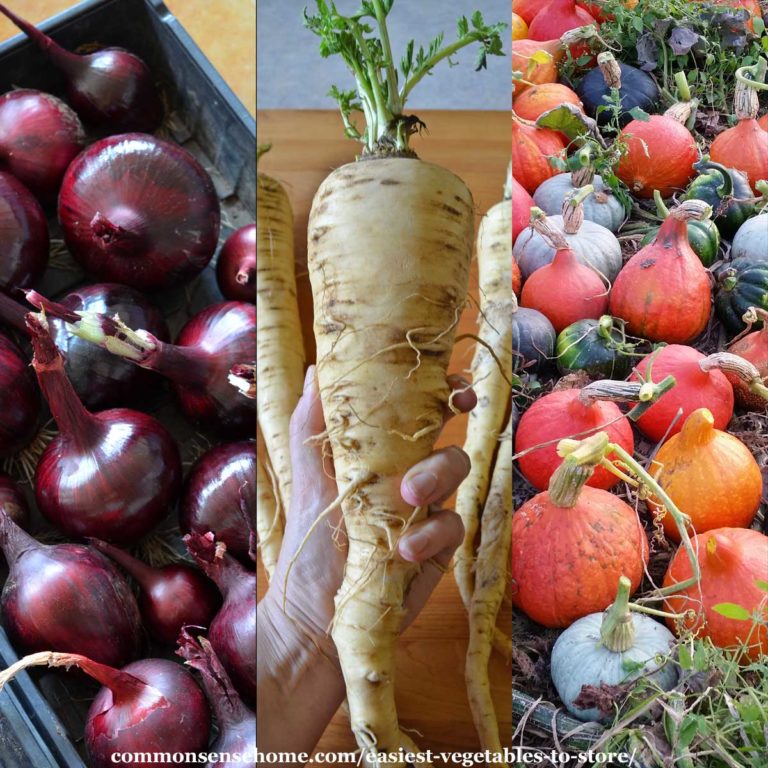
Home canned, dried or root cellared fruits, vegetables and other foods are not quite the nutritional powerhouses that lacto-fermented products are, but they are much easier to use for the bulk of a meal, or for an entire meal. I’ve been working hard this season to preserve the bounty from the garden through canning and and drying, and will soon be filling the root cellar.  If you’re unfamiliar with home food preservation, I recommend checking out the post “New to Food Preserving – Start Here“.  If you decide to purchase canned food items, make sure to buy from a reputable source.

Food Storage without Electricity @ Common Sense Homesteading

2.  Live Culture Dairy

If you keep a yogurt culture that works at room temperature (such as viili from Cultures for Health, which I use), you can use it to culture powdered milk without a yogurt maker.  While powdered milk is not ideal, it does store without refrigeration.  Culturing makes the nutrients much more digestible.  Milk kefir is also an option for a drinkable product.  Milk kefir grains can also be used to culture coconut milk, if they are are occasionally revitalized in milk.  Kefir provides protein, minerals and B vitamins.  Traditional hard cheeses (such as Parmesan) may also last for months in cool dry temps.

3.  Whole grains

Whole grains (in general) have excellent shelf lives, much longer than milled flours.  Places like Emergency Essentials (listed below) sell grains and grain mills (electric powered and hand powered).  If you keep a sourdough culture, you can use it to make many baked goods, not just bread, such as sourdough crackers.  Again, using sourdough culturing makes the nutrients in the grain more available.  Grains can also be sprouted and used to make a simple essene bread, which is very filling and nutritious.  Read about the bulk grain order I organized here.

4.  Chia seeds

Chia seeds have a shelf life of 4 to 5 years for dried seeds.  They have omega-3 and omega-6 essential fatty acids, fiber, B vitamins, calcium and protein.  They can be used to make drinks and no-cook puddings, as well as adding nutrition to baked goods and smoothies.

5. Sprouting seeds

Sprouting seeds also have a great storage life, generally 2 years or more.  They are generally high in vitamin C, and may also contain other antioxidants and essential nutrients.  They also provide fresh, growing food in a hurry when it may be in short supply.  Sprouting seeds are easy to use.  You can grow them in handy sprouting kits,  or in sprouting bags or even nylon stockings.  Mary Bell (in the Dehydrator Cookbook) suggests bringing sprouting seeds with you while camping.  She says to soak them overnight in a bag of water, and then place them in a section of nylon sock attached to your backpack.  Rinse daily, and in a few days you’ll have live, crunchy additions to your trail rations.

6.  High Quality Saturated Fat

Coconut oil, lard and tallow will all keep for at least 12-18 months (most likely longer) in sealed, airtight containers kept in a cool area.  Your body needs healthy fats.  Your brain is largely made up of fat, as is protective coating on your lungs, and many other critical body systems.  Fats are energy dense, which is also critical during emergency situations.

7.  Dried Legumes

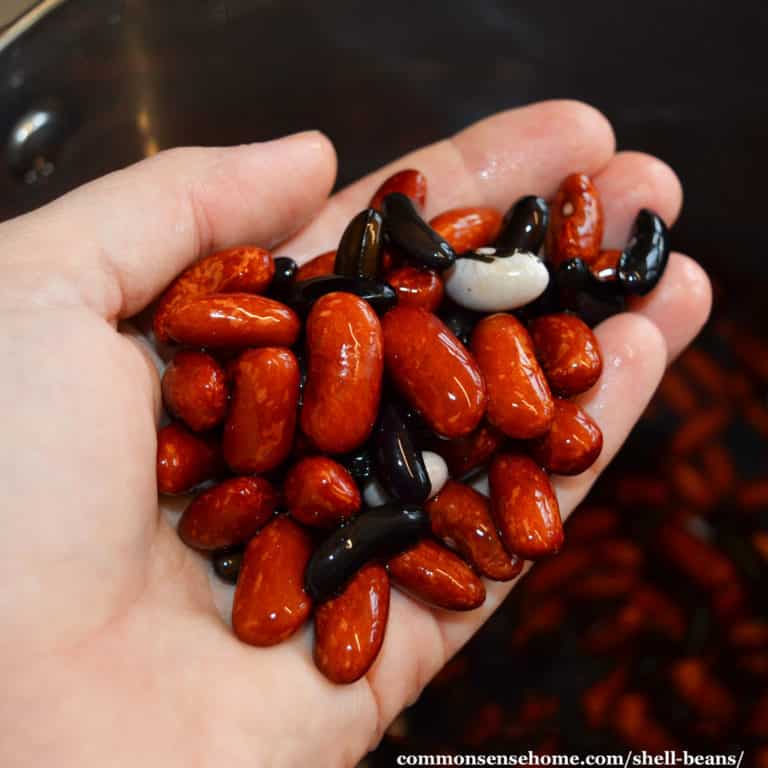
Dried beans have a great shelf.  They will keep around a year in just the plastic bags from the store, 10 to even 30 years if sealed in airtight containers with oxygen removed.  Utah State University Cooperative Extension states:  “Dry beans average about 22% protein in the seed, the highest protein content of any seed crop. They contain all essential amino acids, except methionine. Methionine can be obtained from corn, rice, or meat. Beans are an excellent source of fiber, starch, minerals and some vitamins. ”

8.  Real Salt

Unrefined salt has many trace minerals that are essential to health.  In my experience, the unrefined salts (Real Salt, grey sea salt, pink salt, etc.) have a “saltier” more robust flavor, meaning you can use less to achieve the same result.  Salt can also be used to preserve food (such as fermenting vegetables, above, and meats).  Since ancient times, salt has been also used as a valuable trade commodity.

9.  Bulk Spices, Herbs and Teas

Don’t underestimate the power of herbs and spices.  As well as being high in antioxidants and anti-inflammatories, many of them have preservative properties as well.  The New Agriculturalist explains:

“Cinnamon is just one of a large number of spices that have long been known to preserve food. Recent research has tried to find out exactly how effective the spice can be, over what time period, and in suppressing which bacteria. At Kansas State University, microbiologists have been testing the effectiveness of cinnamon and other spices in eliminating one of the most virulent bacterial causes of food poisoning, E.coli type 0157. Complications arising from the bacteria can include anaemia and kidney problems, and a serious outbreak can lead to fatalities. The Kansas researchers found that cinnamon added to apple juice that had been contaminated with E.coli, was able to kill 99.5% of the bacteria within three days, at room temperature. They also did tests on meat and sausage, and found that cinnamon, cloves and garlic all had a powerful ability to stop the growth of the bacteria. Other microbiologists in Tennessee have found that oils extracted from oregano, coriander and basil, also have strong anti-microbial properties. In future we may see more natural preservatives supplementing the synthetic compounds currently in use.”

I store my spices and herbs in glass jars out of direct light (sometimes using the sock trick).  I buy in bulk (generally from Frontier or Mountain Rose Herbs, listed on the sidebar), store a small amount in the cupboard and the rest in the bulk food storage.  Both stores sell small, inexpensive glass shaker jars to repackage your spices for easy use.  Larger spices, such as cinnamon sticks or other “chunky” spices, can be vacuumed sealed in mason jars to extend shelf life.  Under cool, dry conditions out of direct light, spices should have a shelf of two years.  They can still be used after this time, but potency will diminish.  Spices could also be used as a trade commodity.

10.  Sweeteners, Including Refined White Sugar, Raw Sugar, Honey and Maple Syrup

I’m sure some foodies will cringe at the inclusion of white sugar, but it is less expensive than the other options and has a great shelf life (white sugar will last indefinitely if kept in a sealed container in a cool, dry location).  It can be used as a preservative for fruits.  Sugar can be used to heal wounds (as can honey).  (More details on the sugar for wound healing here.)  I use sugar to brew my kombucha, too.  Raw sugar can store as well as regular sugar, but may be cost prohibitive for many.

Honey can store easily for over a year, possibly decades. They have found edible honey in tombs over 1000 years old. To store honey, Honey.com states:

Processed honey should be stored between 64-75°F (18-24°C).1 Honey can be exposed to higher temperatures for brief periods; however, heat damage is cumulative so heat exposure should be limited. It is best to minimize temperature fluctuations and avoid storing honey near heat sources.

The recommended storage  temperature for unprocessed  honey is below 50°F (10°C).  The ideal temperature for both unprocessed and processed honey is below 32°F (0°C).  Cooler temperatures best preserve the aroma, flavor and color of unprocessed honey.

Maple syrup has the shortest shelf life – around one year in glass bottles without freezing or refrigeration.

There are many other food options, but these are my top choices for foods that store a long time without refrigeration.  I’ll be covering various food preservation techniques in more detail in the coming months (it’s my thing :-) , including drying, canning, freezing, fermenting, preserving in alcohol and whatever else I can think of trying.

In addition to food, water is critical.  Learn more about water storage and water filtration in the post Emergency Water Storage – What You Need to Know.

Emergency Essentials Water Storage

What are your favorite storage foods?  Have any tips you’d like to share?  Please leave me a comment and let me know.

You may also enjoy this post on root cellar basics.  Naturally cold areas such as root cellars give you even more options for food storage without electricity.