Feb 182012
 

Waht You Need for Dehydrating Food at Home

Want an easy way to store and preserve food?  Need a food storage method that doesn’t take up much space and requires very little equipment?  Want to make healthier snacks for your family to enjoy at home or on the go?  Looking for portable food for camping or backpacking?  If you answered “yes” to any of these questions, you should learn about home food drying.

What Equipment Do I Need to Dehydrate Food at Home? Continue reading »

Sep 152011
 

Last week I got a call from my neighbor, Betty, about crabapples being ripe at another friends’ home.  (Everyone should have a neighbor like Betty.  :-)   Never one to let produce go to waste, I warned the boys that we were going to go pick crabapples.  My eldest, wanting to get done sooner, headed out to the wild trees at the border of out field.  These are normally so bug infested as to be inedible, but this year one had a bumper crop, and we were able to pick quite a few that were in nice shape.

My apple pickers.

I went picking over at the neighbor’s, too.  Our apples were smaller, firmer and greener.

There’s were larger, softer and dead ripe.  Just a bit past prime for canning whole, as they softened up and fell apart a bit during processing, but they were still delicious.

I canned the apples whole two ways – as honey cinnamon apples and and spiced apples.

How to Prepare Crabapples for Canning

Because the neighbor’s apples had been sprayed (not a lot, I was told, but still sprayed), I washed them first in water with a squirt of my non-toxic dish detergent, then rinsed them in water with white vinegar in it, them rinsed again with clean water (and took the water out after to water the flowers).  I worked from right to left, soap wash, vinegar rinse, clean rinse and into the dish drainer.

Cut out the blossom end of the apple, but leave the stem intact.  You don’t need to core the apple.  Both of these recipes could be made with sliced apples, too, if you don’t have crabapples available.  After removing the blossom end, poke the apple with a fork five times to allow even penetration of syrup.

Note:  You want to prep all your canning equipment and syrup before you start cutting out the blossom ends, so you can get the apples in the syrup right away to minimize browning.

Preparing Your Canning Equipment

Apples can be canned in a water bath canner.  For full instructions on water bath canning, I recommend the Ball Blue Book of Canning and PreservingCanning equipment includes:

  • your water bath canner
  • clean and sterilized quart jars (I run mine through the dishwasher and time it so they are hot when I’m ready to can)
  • lids and rings in hot (not boiling) water
  • jar lifter
  • tongs or lid lifter to grab rings
  • funnel
  • clean cloth to wipe jar rims
  • ladle
  • wooden spoon for stirring
  • chopstick to remove air bubbles
  •  syrup (recipe below)

Honey Cinnamon Crabapple Recipe

This recipe was inspired by the book Putting it up with Honey, where they feature instructions for apple slices canned with honey.

Ingredients

5 pounds whole crabapples (original recipe called for 15 pounds of apples, which were washed, cored, peeled and sliced)
1 1/2 quarts water
1 3/4 cup honey
3 cinnamon sticks

Directions

Prepare syrup by adding honey to water and heating until the honey is dissolved (this is a nice way to use crystallized honey straight from the jar).  Add cinnamon sticks, simmer five minutes.  Add apples (with blossom ends removed) to syrup.  Simmer five minutes (just to heat through), you don’t want to overcook them, as they will cook more during processing.  Apple skins will darken as they cook (think applesauce or baked apples).

Load hot apples into hot quart jars, fill with syrup to 1/2 inch headspace.  Run you chopstick or small non-metallic spatula between the peaches and the jar to remove air bubbles (metal may scratch the inside of the jar).  Add extra syrup if needed.  Wipe rim clean, screw on lid (not too tight – air must escape during processing).

* Note:  if using Tattler lids, use 1 inch headspace, tighten rings, then unscrew 1/4 inch.

Place jars on rack in canner.  When all apples are packed (you should have 4-5 jars), lower jars into water.  Make sure jars are covered by 1-2 inches of water.  Bring to boil, process (boil gently) 20 minutes.  (See peach post for photos of canning setup and jars in canner.)

When the cooking time is up, remove jars at once and place on a rack or on towels away from heat and away from any draft.  If using Tattler lids, tighten rings as soon as they are removed from the water bath.  This is not necessary for standard canning lids.

After 12-24 hours, check lids for seal.  Standard lids should be concave in the center and held down tightly.  Tattler lids should be snug if you try to pull them off.  I love listening to the “ping” as the jars seal.

Spiced Crabapple Recipe

This recipe is from my neighbor, Betty, who has been making it for years.

Ingredients

60-65 whole crabapples (enough to fill 5-6 quarts – I used 70 apples ~ 6.5 pounds, because my apples were small)
9 cups water
1/2 cup vinegar
6 cups white sugar
1 cup brown sugar
1 1/2 tablespoons whole cloves, placed in a spice bag

Directions

Prepare syrup by mixing all ingredients except apples and heating until the sugar is dissolved.  Boil one minute.  Add apples (with blossom ends removed) to syrup.  Simmer five minutes (just to heat through), you don’t want to overcook them, as they will cook more during processing.  Apple skins will darken as they cook (think applesauce or baked apples).

Load hot apples into hot quart jars, fill with syrup to 1/2 inch headspace.  Run you chopstick or small non-metallic spatula between the peaches and the jar to remove air bubbles (metal may scratch the inside of the jar).  Add extra syrup if needed.  Wipe rim clean, screw on lid (not too tight – air must escape during processing).

* Note:  if using Tattler lids, use 1 inch headspace, tighten rings, then unscrew 1/4 inch.

Place jars on rack in canner.  When all apples are packed (you should have 4-5 jars), lower jars into water.  Make sure jars are covered by 1-2 inches of water.  Bring to boil, process (boil gently) 20 minutes.  (See peach post for photos of canning setup and jars in canner.)

When the cooking time is up, remove jars at once and place on a rack or on towels away from heat and away from any draft.  If using Tattler lids, tighten rings as soon as they are removed from the water bath.  This is not necessary for standard canning lids.

After 12-24 hours, check lids for seal.  Standard lids should be concave in the center and held down tightly.  Tattler lids should be snug if you try to pull them off.

I finished with four quarts of honey cinnamon apples (and about eight apples I couldn’t squeeze into jar that I just put in the fridge) and six quarts of spiced apples.  Honey cinnamon apples are to the rear and spiced are in front.

I ended up using our home apples for the spiced apples and Betty’s apples for the honey cinnamon apples.  Our home apples were smaller, so more of them fit into a jar.  I noticed that while the honey cinnamon apples were processing, they became quite soft (some of them fell apart a bit), so I decided to process the balance of the very ripe apples into apple sauce and fruit leather.

How to Make Applesauce and Apple Fruit Leather

Apple sauce is super easy, especially when your apples are really ripe.  Just place clean apples in a heavy bottom pot with enough water to cover the bottom of the pan so it doesn’t burn.  Cook until mushy.  I noticed my apples had a lot of liquid, so I put them in a colander to drain off some of the juice before processing further.  (Save the juice in another bowl if you have an excess – it’s quite tasty.)

Employ child labor (if available) to turn crank on food strainer (my son loves turning the crank).  Load  the apples, turn the crank and you have applesauce.

We ended up with a big bowl of applesauce and nearly two quarts of juice.

If you don’t have a food strainer, you can peel and core apples and cook until soft, and them puree with a potato masher.  This will give a chunkier sauce.  A food mill or chinois will also work, but I really like my food strainer.  Add a pinch of salt and a bit of maple syrup if you like (my apples were really sweet and tasty, so I skipped this).

To make fruit leather, oil your dehydrator’s fruit leather sheet with coconut oil or other neutral oil. Spread sauce uniformly over sheet, between 1/8 to 1/4 inch thick.  Too thick and it will take a very long time to dry, too thin and it will be brittle instead of elastic.  Dry at 135 F until leathery.  I usually run my dehydrator overnight and it is done by morning.  When dry, simply peel it off the sheets and store in a sealed container.  You could refrigerate for longer shelf life, but it’s not necessary.  Ours usually doesn’t last very long anyway.  :-)

That’s my first experience with crabapples.  So far, so good.  The honey cinnamon apples are sweet with just a hint of spice.  I haven’t sampled the spiced apples yet, but they smelled good.  To eat the apples, you just nibble them off the stem and core.

Thanks for stopping by, and I hope you enjoyed the post.

This post has been added to Preparedness Challenge #26 at Homestead Revival,
Domestically Divine for September 20, 2011 at Far Above Rubies and
Simple Lives Thursday at A Little Bit of Spain in Iowa.

Sep 132011
 

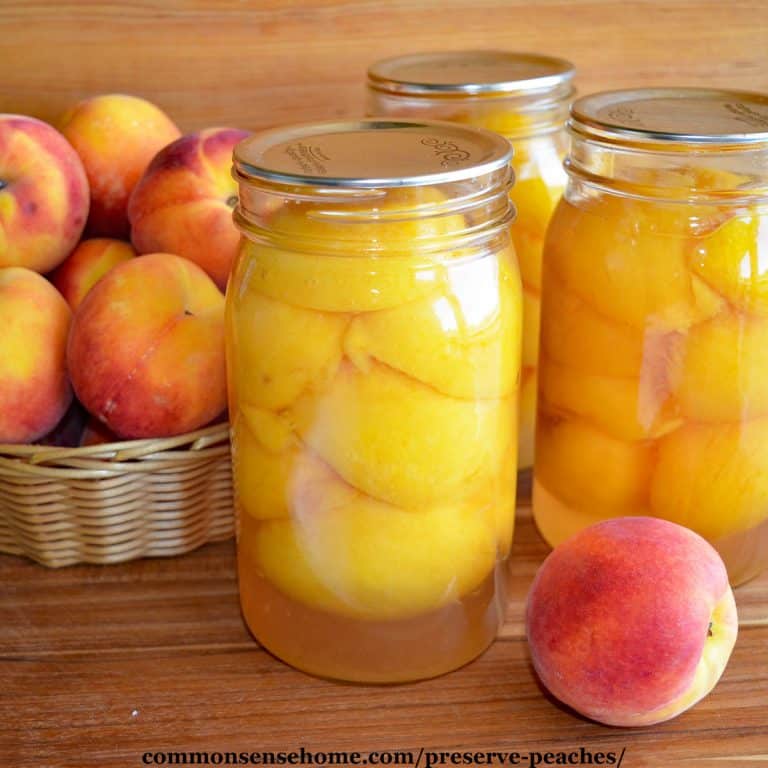
We purchased two cases of Michigan peaches so far this year – one from a local supermarket, and one from a roadside market up in Door County.  I decided to can most of them, as the boys adore canned peaches.  I also dried some in the dehydrator and make some peach jam.  For canning peaches, use those that are ripe but still firm.  I use the softer peaches for jam or drying.

How to Peel Peaches

Before canning or drying peaches, I remove the skins.  The skins get really chewy after drying, and strangely slimy after canning, so I highly recommend this step.

First, prep a large pot of boiling water, a slotted spoon or other large scoop to remove the peaches from the boiling water, a basin to place them in to move them to the chilling water, and the peaches you want to process.

Next, prep your chilling and skinning area.  I like to chill mine in my wash basin in the sink, gather the skins in an old yogurt container, and place the peeled peaches into a basin of water with a couple of tablespoons of lemon juice or a teaspoon of citric acid in the water to prevent browning.

Once the boys got going, I placed another basin of cold water in the second sink, and added additional “post peeling” bowls as well.

You may also want to prep your canning equipment at this time, including:

  • your water bath canner
  • clean and sterilized quart jars (I run mine through the dishwasher and time it so they are hot when I’m ready to can)
  • lids and rings in hot (not boiling) water
  • jar lifter
  • tongs or lid lifter to grab rings
  • funnel
  • clean cloth to wipe jar rims
  • ladle
  • wooden spoon for stirring
  • chopstick to remove air bubbles
  • Light syrup (recipe below)

Once your water is boiling, place 8-10 peaches in the boiling water for around 60 seconds, depending on the size of your pot.  You want to work quickly, so no peach is in too long, otherwise they will cook and get soft.

Remove from heat and plunge into cold water (ice is helpful, cold is required).  This stops the peach from cooking so it doesn’t get too soft, and also makes it cool enough to handle to peel.

Put child labor to work peeling peaches – lots of peaches.

The skins should slip off easily at this point.  Again, working as quickly as possible is a good thing, as the longer they sit in water, the more water they will absorb.  I usually let the boys finish peeling while I prep everything else for canning.  I remove the pits and either half or quarter the peaches, depending on the jar size (I use wide mouth quart jars for peach halves) and make sure the cut edges are exposed to the lemon water to prevent browning.

How to Can Peaches

I like to work from left to right on my stove.  Fill on the left side, process on the right, unload finished jars on a waiting cloth next to the right side of the stove.  I prefer to cold pack peaches, which means the fruit is loaded in the jars at room temperature and then boiling syrup is poured over the top.  I think the peaches stay firmer and more attractive using this method, even though they float more in the jar.

In this photo I have the rings and lids at the top, sugar syrup on the lower left, water bath canner on the right.

To prepare syrup, while heating water, add sugar slowly, stirring constantly to dissolve. Bring to a gentle boil. Fill jars while syrup is still boiling hot.  For light syrup, use 2 1/4 cup sugar per 5 1/4 cups water, which will yield 6 1/2 cups of syrup.  You may use less sugar, fruit juice or honey, but these will all give your product a shorter shelf life and quicker discoloration.  Sugar acts as a preservative by binding up free water in the fruit (see The Natural Canning Resource Book).  Note: The juice from the peaches also makes a great flavoring for homemade water kefir.

Drain peaches in a colander.  Fill jars to 1/2 inch headspace (leave fruit and syrup 1/2 inch from top of jar).  Ladle on hot syrup.  Run you chopstick or small non-metallic spatula between the peaches and the jar to remove air bubbles (metal may scratch the inside of the jar).  Add extra syrup if needed.  Wipe rim clean, screw on lid (not too tight – air must escape during processing).

* Note:  if using Tattler lids, use 1 inch headspace, tighten rings, then unscrew 1/4 inch.

Place jars on rack in canner.  When canner is full, lower jars into water.  Make sure jars are covered by 1-2 inches of water.  Bring to boil, process (boil gently) pints 20 minutes, quarts 25 minutes.

When the cooking time is up, remove jars at once and place on a rack or on towels away from heat and away from any draft.  If using Tattler lids, tighten rings as soon as they are removed from the water bath.  This is not necessary for standard canning lids.

After 12-24 hours, check lids for seal.  Standard lids should be concave in the center and held down tightly.  Tattler lids should be snug if you try to pull them off.  I love listening to the “ping” as the jars seal.

Here’s round one of peaches the next day, wiped off ready to be labeled with date on contents on the lid with a Sharpie marker.

How to Dry Peaches in a Dehydrator

Drying peaches is super easy. I often dry whatever I can’t easily fit in the canner, or peaches that are too soft to can or marked up a bit.  Thinly slice your peeled peaches, dip them in the lemon water to prevent browning, then drain the slices in a strainer.  Place slices on dehydrator tray or Clean a Screen insert on dehydrator tray, or equivalent mesh insert on other dehydrators.  Dry at around 135-140 degrees F until leathery or crisp, depending on thickness of slices.  I usually dry mine overnight.

I highly recommend using the mesh inserts, as the peaches are very sticky and like to stick to the trays.  With the inserts, you just bend them and the dried fruit pops right off.

Store in an airtight container out of direct sunlight.  If I have a lot of a particular dried fruit, I vacuum seal it in mason jars with the vacuum sealer attachment.  These make great snacks and can also be added to homemade granola or fruit and nut mixes.  If you’ve got a LOT of dried fruit, Mary Bell’s Dehydrator cookbook has some good recipes for pies and other baked goods using dried fruit.

So there you go!  Peachy goodness to enjoy all year long.  If you’ve enjoyed this post, please consider passing it along.

Jul 222011
 
Preserving Strawberries Four Ways - Freezing, Drying, Fruit Leather and Kombucha

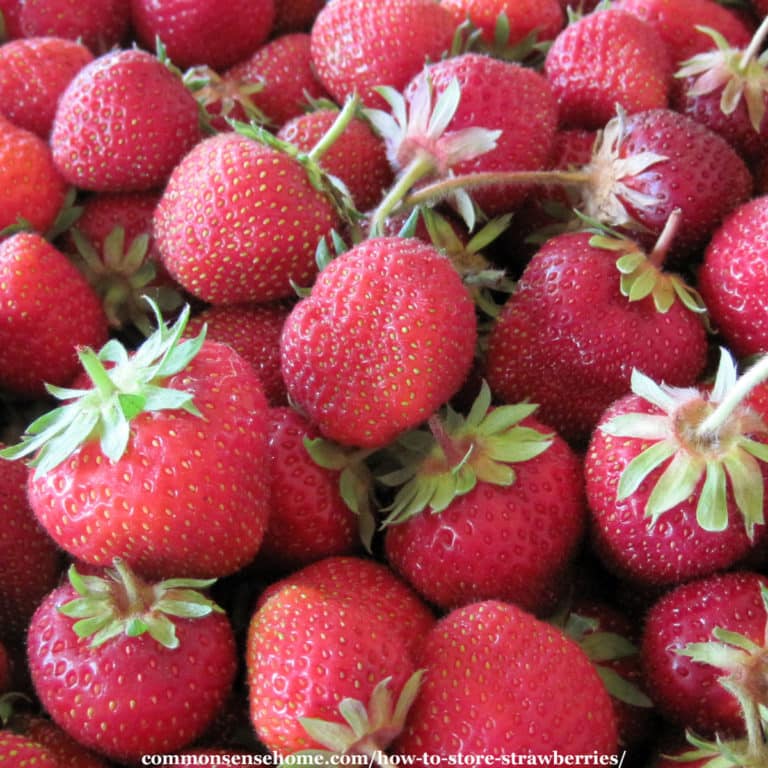
The boys and I went strawberry picking twice this season, and came home with two trays of berries each time.  To put away some of these beautiful berries to enjoy for the rest of the year, we made two batches of low sugar jam (strawberry and strawberry-banana).  We also used four other methods of preserving strawberries – freezing, drying, making fruit leather and flavoring kombucha. Continue reading »

Jun 232011
 

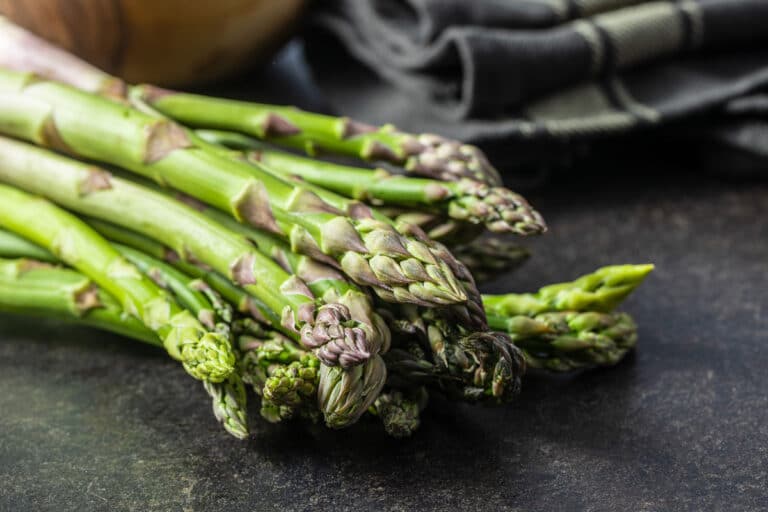
I had the opportunity to babysit my neighbors asparagus patch for two weeks earlier this season, and I was blessed with a bounty of asparagus like I have never seen.  The photo above was just one picking – and it kept coming!  For those who are not asparagus savvy, you need to keep the spears harvested during the production season, otherwise they will get tall and produce seed, and you will have no more asparagus to harvest.  Thus, I was over picking every two to three days to keep the plants producing.  The neighbors have a lovely 100+ year old farmhouse, and four different asparagus patches around the yard.  As I was picking, the fresh spears looked so good that I decided to try one raw for the first time.  It was really good!  It tasted very much like fresh picked green peas, without much of the stronger “asparagus” taste that puts many people off.  I ate several more.  :-)   Since there was such a bounty, I used several methods of preserving asparagus.

The first thing I decided to do with the excess asparagus was freezing.

How to Freeze Asparagus

From the Ball Blue Book of Preserving, one of my favorite preserving references, with my comments in parentheses.

Select young, tender asparagus with tightly wrapped tips.  (Check – picked them fresh myself. :-)

Wash thoroughly and sort into sizes.  (Definitely needed to do this – the size variation in homegrown asparagus is quite substantial compared to commercial asparagus.  I always went for the thinner stalks in the store, thinking they’d be more tender, but I found out while picking that they emerge from the soil at the width they will be as they grow.  Thinner stalks are not any younger than fat ones, and the fat ones were often more tender and juicy.  Don’t fear the fat asparagus, and don’t fear fat in general.)

Trim stalks by removing scales with a scarp knife.  (This is done primarily to get any trapped dirt off that may be hiding underneath the scales, so I didn’t bother, as my asparagus were grown in grassy and mulched areas.  you’ll be able to see how dirty your asparagus are.)

Cut into even lengths to fit in freezer containers.  (I skipped this, too, since I wanted to pack whole spears in vacuum bags.)

Blanch small spears 1 1/2 minutes, medium spears 2 minutes and large spears 3 minutes.  (This is where the sorting is needed.)

Cool.  (I scooped mine out and plunged them into a cold water bath to halt cooking.)

Drain.  (I first drained in a colander, and then placed them evenly space on a flour sack towel on top of an old, absorbent bath towel, to wick away as much excess moisture as possible before freezing.)

Pack asparagus into plastic freezer bags, can-or-freeze jars, plastic freezer boxes or vacuum bags.  (I chose to lay out my asparagus on cookie sheets covered with reusable parchment paper (I use that stuff for everything.) and pre-freeze them before sealing them in vacuum bags the following day.

Seal, label and freeze. (I packed the frozen spears into meal sized packages with varying amounts per package and sealed them with my vacuum sealer.  My goal was to have a product that looked as good when you brought it out of the freezer as when you put it in – no ice crystals, no mushy mass of green goo, just neat, tender spears ready to be heated in a pan with a bit of butter, salt and pepper.  If you plan to keep produce frozen for any amount of time – for instance, in this case, I probably won’t pull this out until winter, when fresh veggies are gone – the investment in a vacuum sealer and the small amount of extra time involved is well worth it in the HUGE improvement in quality of frozen veggies and fruits.)

How to Dry Asparagus
Again from the Ball Blue Book of Preserving with my comments in parentheses.

Choose young, tender stalks.  (The ones that taste like green peas. :-)

Wash and cut off tough end.  (Funny that they didn’t mention this for the freezing.  Anyway, you can trim a little bit from the bottom as needed.  With many of the younger stalks, I really didn’t need to trim at all, because there was no tough part at the bottom.)

Slice into one inch pieces.  (Note – if you have really fat asparagus stalks, you probably want to cut them in half lengthwise, too, before loading them in the dehydrator.  I didn’t do this initially, and ended up doing it at the end of the drying process to get those wider pieces to dry evenly.)

Steam blanch 3 to 4 minutes.  (I just blanched them in a pot of boiling water for about two minutes, until they were bright green.)

I started with about six cups of chopped asparagus.

Here’s the whole batch in about 8 quarts of boiling water.

After blanching, I chilled them in a cold water bath to stop the cooking.

Drain well and spread evenly on dehydrator trays.  I used the mesh inserts (the Clean-A-Screen trays) to make sure that no veggie parts fell through the screens as they dried.

Dry at 125F until brittle.  Rehydrate and serve in soups or with seasoned cream sauce.  Water content 92%.  (I put mine in at night and they were done the next morning, except for the wide bits, which I split in half and dried for a bit longer.  You want them to be very dry, so they snap easily in half, for optimum shelf life.)

Isn’t it amazing how much they shrink up?  If you’ve get very limited food storage space, dehydrating is the way to go.  Remember the six cups I started with?  After drying, it all fit into one cup sized jar.

This was labeled and stuck in the pantry.  If you want to boost shelf life even more, you can use the Foodsealer jar sealer attachment and vacuum seal the jar, too.

How to Lacto-Ferment (Pickle) Asparagus

This recipe is the love child of two different posts, one from Heartland Renaissance, and one from A Little Bit of Spain in Iowa.  Since I scored some green garlic (immature garlic) from a neighbor (thanks, Deb), I figured I’d use it in the ferment.  My neighbor, Betty, who provided me with the asparagus, had mentioned that she wanted to make some pickled asparagus.  I’m pretty sure that she had standard pickled asparagus in mind, but I’ve been experimenting more with live cultured foods, so I used lacto-fermentation.

Lacto-fermentation is the use of water, salt, spices and sometimes whey to preserve food without heat canning.  The lactobacilli bacteria that proliferate in lacto-fermented foods not only help to preserve it and give it that “pickle” flavor, they also act as little probiotic factories, making the food more digestible and increasing its nutrient value.  Lacto-fermented food is loaded with healthy bacteria.  I eat some every day, generally with every meal.

Lacto-Fermented Asparagus Recipe

For each quart jar:

1 teaspoon peppercorns
1/4 teaspoon celery seeds
1/2 teaspoon mustard seeds
1/2 teaspoon pickling spice
2 stalks green garlic, cut into 1 inch pieces
Enough asparagus to pack the jar tightly
4 tablespoons whey – If you do not have whey, add an extra tablespoon of salt to your salt water
Salt water – 2 tablespoons sea salt to one quart water, mix well to dissolve (you won’t need all of this to fill the jar, but it’s better to have a little extra than to run short)

Clean and trim asparagus so the spears will fit into the jars below the neck of the jar (you want to keep them covered with liquid during fermentation.)  Put loose spices into jar, then pack asparagus into jars as tightly as possible (they will shrink during pickling and will want to float and pop up out of the liquid).  Wedge in garlic pieces as you go.  Pour in whey.  Pour in enough salt water to completely cover the asparagus, but make sure to leave one inch of head space at the top of the jar.  As it ferments, gas are produced and jar contents may expand.  I used atlas jars, which have wider shoulders but narrow mouths, to help wedge the asparagus in so it stayed below the water level.  You can also use a smaller jar with water in it nested in a wide mouth jar, or a clean stone, or other clean weight to hold the veggies under the brine.  This worked out pretty well overall.  Cultures for Health has a fermented vegetable master, which is designed to keep air out but allow gases to escape.  It’s on my wish list. :-)

Cover jars with a clean cloth (don’t seal tightly – they need to breathe), and place in a cool, dark place and allow to ferment for at least 3 days.  After three days, you can continue fermenting, or cover tightly and move to the refrigerator to slow down the fermentation process.  The flavors will get stronger and the asparagus will get softer the longer it ages at room temperatures.  Heat dramatically speeds up the fermentation process, so warm weather ferments will have shorter shelf lives.  I kept mine on the counter for three days under a dishcloth, then covered it tightly and moved it to the fridge.

One day three, I was a little freaked out when I took off the dishcloth and saw this:

At first, I thought it was mold.  Although it is generally safe to eat fermented foods with mold on the surface (just scrape off the mold and eat the product underneath, as long as the smell and taste are not foul or “off”), I was surprised that it had molded so quickly.  Upon closer examination, I found out that it was not mold, just milk solids from my whey, which could have been strained a little more finely.  After a little judicious scraping, the tops looked like this:

Much less “Fear Factor”. ;-)

My final product turned out a little cloudy, probably due to the whey and the “pickling spices”, which had some finer bits, but the taste is delicious.  Judging by the shelf life of other ferments I’ve tried, these should be good for several months – even a year – refrigerated, if they lasted that long.

I’m very grateful to have a stash of different types of asparagus that I can now enjoy for months to come.