Last week I got a call from my neighbor, Betty, about crabapples being ripe at another friends’ home. (Everyone should have a neighbor like Betty.
Never one to let produce go to waste, I warned the boys that we were going to go pick crabapples. My eldest, wanting to get done sooner, headed out to the wild trees at the border of out field. These are normally so bug infested as to be inedible, but this year one had a bumper crop, and we were able to pick quite a few that were in nice shape.
My apple pickers.
I went picking over at the neighbor’s, too. Our apples were smaller, firmer and greener.
There’s were larger, softer and dead ripe. Just a bit past prime for canning whole, as they softened up and fell apart a bit during processing, but they were still delicious.
I canned the apples whole two ways – as honey cinnamon apples and and spiced apples.
How to Prepare Crabapples for Canning
Because the neighbor’s apples had been sprayed (not a lot, I was told, but still sprayed), I washed them first in water with a squirt of my non-toxic dish detergent, then rinsed them in water with white vinegar in it, them rinsed again with clean water (and took the water out after to water the flowers). I worked from right to left, soap wash, vinegar rinse, clean rinse and into the dish drainer.
Cut out the blossom end of the apple, but leave the stem intact. You don’t need to core the apple. Both of these recipes could be made with sliced apples, too, if you don’t have crabapples available. After removing the blossom end, poke the apple with a fork five times to allow even penetration of syrup.
Note: You want to prep all your canning equipment and syrup before you start cutting out the blossom ends, so you can get the apples in the syrup right away to minimize browning.
Preparing Your Canning Equipment
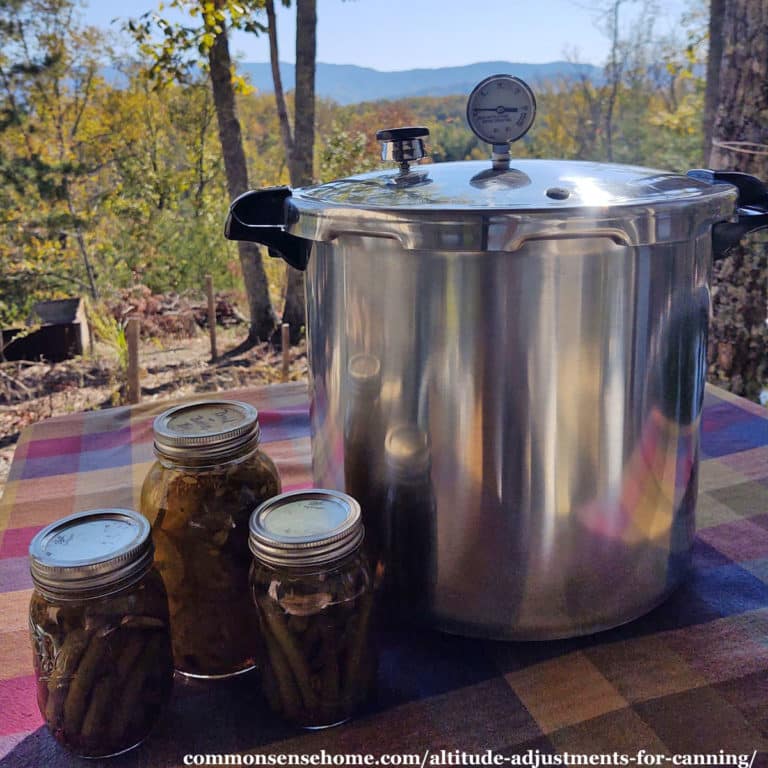
Apples can be canned in a water bath canner. For full instructions on water bath canning, I recommend the Ball Blue Book of Canning and Preserving. Canning equipment includes:
- your water bath canner
- clean and sterilized quart jars (I run mine through the dishwasher and time it so they are hot when I’m ready to can)
- lids and rings in hot (not boiling) water
- jar lifter
- tongs or lid lifter to grab rings
- funnel
- clean cloth to wipe jar rims
- ladle
- wooden spoon for stirring
- chopstick to remove air bubbles
- syrup (recipe below)
Honey Cinnamon Crabapple Recipe
This recipe was inspired by the book Putting it up with Honey, where they feature instructions for apple slices canned with honey.
Ingredients
5 pounds whole crabapples (original recipe called for 15 pounds of apples, which were washed, cored, peeled and sliced)
1 1/2 quarts water
1 3/4 cup honey
3 cinnamon sticks
Directions
Prepare syrup by adding honey to water and heating until the honey is dissolved (this is a nice way to use crystallized honey straight from the jar). Add cinnamon sticks, simmer five minutes. Add apples (with blossom ends removed) to syrup. Simmer five minutes (just to heat through), you don’t want to overcook them, as they will cook more during processing. Apple skins will darken as they cook (think applesauce or baked apples).
Load hot apples into hot quart jars, fill with syrup to 1/2 inch headspace. Run you chopstick or small non-metallic spatula between the peaches and the jar to remove air bubbles (metal may scratch the inside of the jar). Add extra syrup if needed. Wipe rim clean, screw on lid (not too tight – air must escape during processing).
* Note: if using Tattler lids
, use 1 inch headspace, tighten rings, then unscrew 1/4 inch.
Place jars on rack in canner. When all apples are packed (you should have 4-5 jars), lower jars into water. Make sure jars are covered by 1-2 inches of water. Bring to boil, process (boil gently) 20 minutes. (See peach post for photos of canning setup and jars in canner.)
When the cooking time is up, remove jars at once and place on a rack or on towels away from heat and away from any draft. If using Tattler lids, tighten rings as soon as they are removed from the water bath. This is not necessary for standard canning lids.
After 12-24 hours, check lids for seal. Standard lids should be concave in the center and held down tightly. Tattler lids should be snug if you try to pull them off. I love listening to the “ping” as the jars seal.
Spiced Crabapple Recipe
This recipe is from my neighbor, Betty, who has been making it for years.
Ingredients
60-65 whole crabapples (enough to fill 5-6 quarts – I used 70 apples ~ 6.5 pounds, because my apples were small)
9 cups water
1/2 cup vinegar
6 cups white sugar
1 cup brown sugar
1 1/2 tablespoons whole cloves, placed in a spice bag
Directions
Prepare syrup by mixing all ingredients except apples and heating until the sugar is dissolved. Boil one minute. Add apples (with blossom ends removed) to syrup. Simmer five minutes (just to heat through), you don’t want to overcook them, as they will cook more during processing. Apple skins will darken as they cook (think applesauce or baked apples).
Load hot apples into hot quart jars, fill with syrup to 1/2 inch headspace. Run you chopstick or small non-metallic spatula between the peaches and the jar to remove air bubbles (metal may scratch the inside of the jar). Add extra syrup if needed. Wipe rim clean, screw on lid (not too tight – air must escape during processing).
* Note: if using Tattler lids
, use 1 inch headspace, tighten rings, then unscrew 1/4 inch.
Place jars on rack in canner. When all apples are packed (you should have 4-5 jars), lower jars into water. Make sure jars are covered by 1-2 inches of water. Bring to boil, process (boil gently) 20 minutes. (See peach post for photos of canning setup and jars in canner.)
When the cooking time is up, remove jars at once and place on a rack or on towels away from heat and away from any draft. If using Tattler lids, tighten rings as soon as they are removed from the water bath. This is not necessary for standard canning lids.
After 12-24 hours, check lids for seal. Standard lids should be concave in the center and held down tightly. Tattler lids should be snug if you try to pull them off.
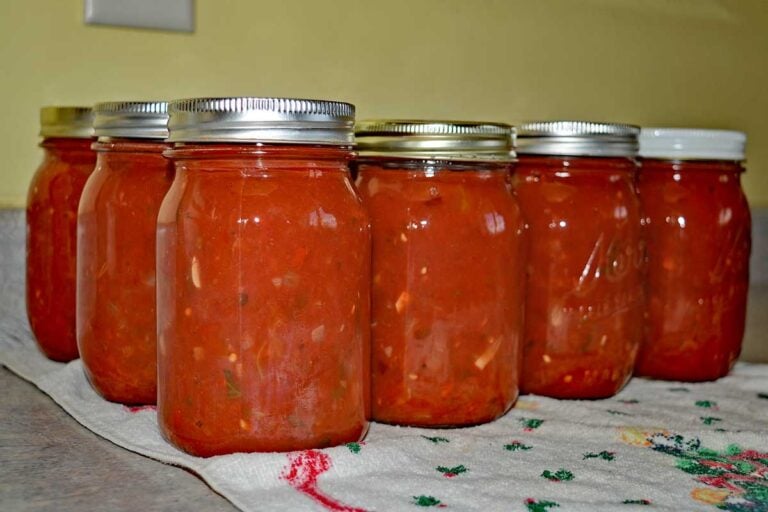
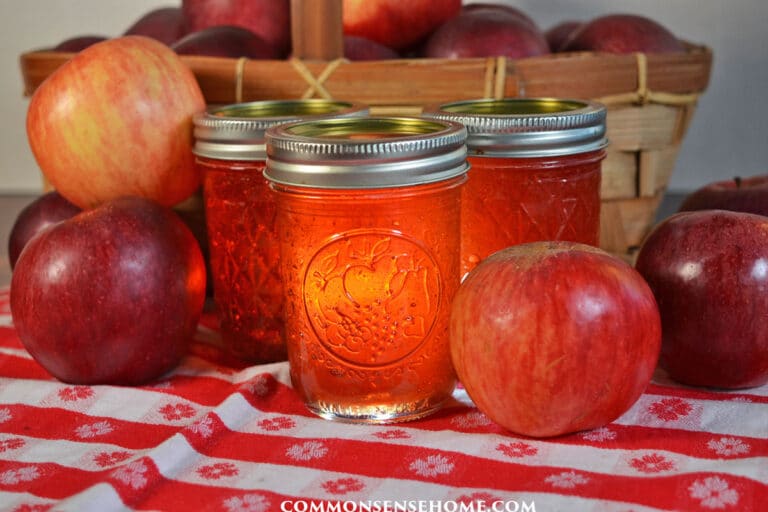
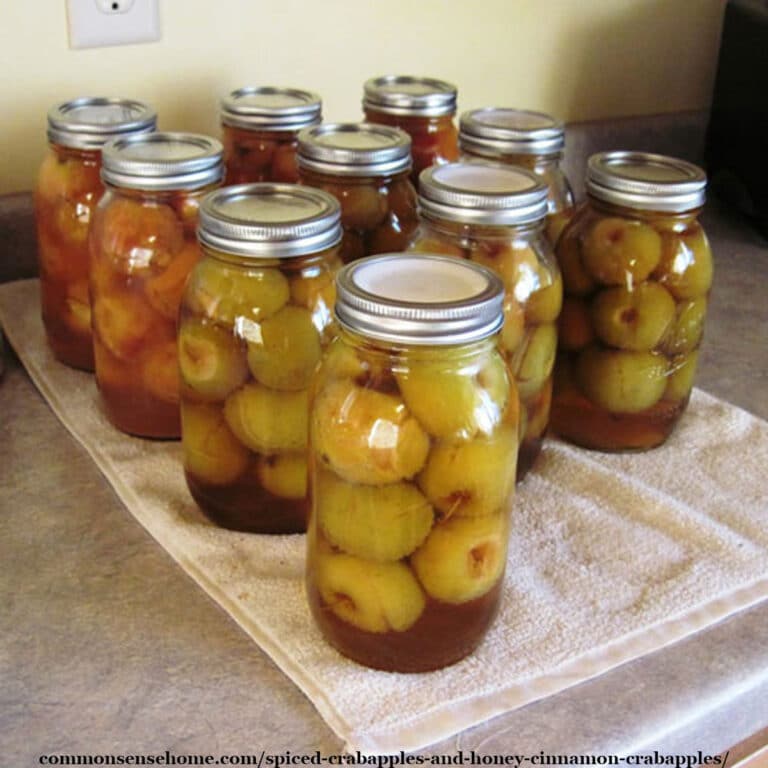
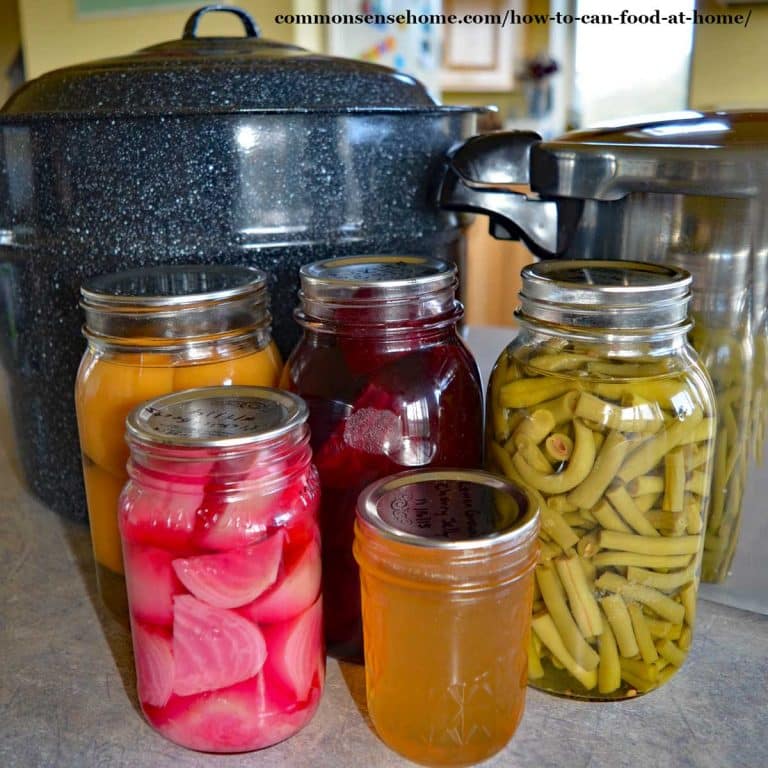
I finished with four quarts of honey cinnamon apples (and about eight apples I couldn’t squeeze into jar that I just put in the fridge) and six quarts of spiced apples. Honey cinnamon apples are to the rear and spiced are in front.
I ended up using our home apples for the spiced apples and Betty’s apples for the honey cinnamon apples. Our home apples were smaller, so more of them fit into a jar. I noticed that while the honey cinnamon apples were processing, they became quite soft (some of them fell apart a bit), so I decided to process the balance of the very ripe apples into apple sauce and fruit leather.
How to Make Applesauce and Apple Fruit Leather
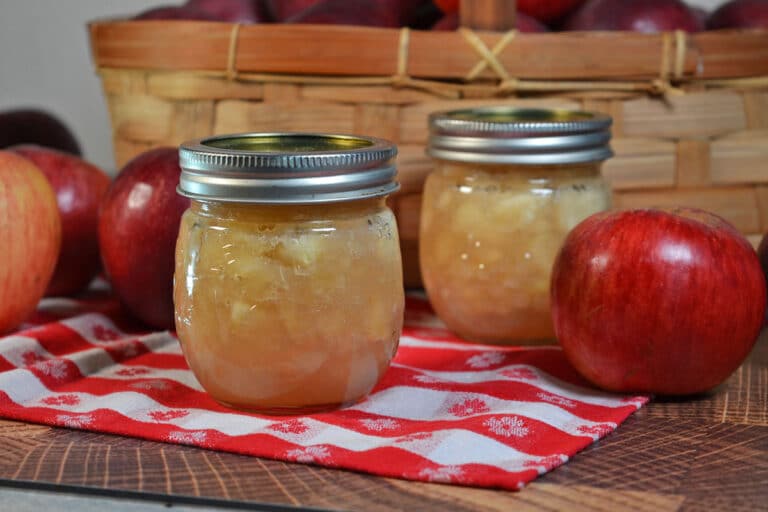
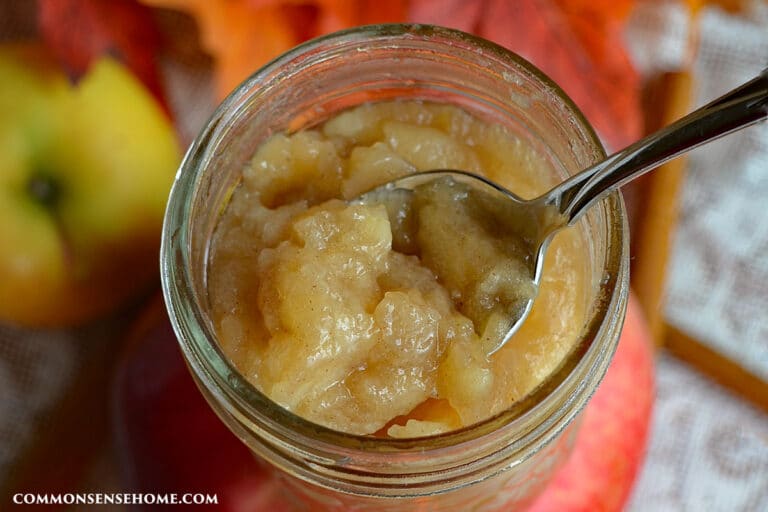
Apple sauce is super easy, especially when your apples are really ripe. Just place clean apples in a heavy bottom pot with enough water to cover the bottom of the pan so it doesn’t burn. Cook until mushy. I noticed my apples had a lot of liquid, so I put them in a colander to drain off some of the juice before processing further. (Save the juice in another bowl if you have an excess – it’s quite tasty.)
Employ child labor (if available) to turn crank on food strainer (my son loves turning the crank). Load the apples, turn the crank and you have applesauce.
We ended up with a big bowl of applesauce and nearly two quarts of juice.
If you don’t have a food strainer, you can peel and core apples and cook until soft, and them puree with a potato masher. This will give a chunkier sauce. A food mill or chinois will also work, but I really like my food strainer. Add a pinch of salt and a bit of maple syrup if you like (my apples were really sweet and tasty, so I skipped this).
To make fruit leather, oil your dehydrator’s fruit leather sheet with coconut oil or other neutral oil. Spread sauce uniformly over sheet, between 1/8 to 1/4 inch thick. Too thick and it will take a very long time to dry, too thin and it will be brittle instead of elastic. Dry at 135 F until leathery. I usually run my dehydrator overnight and it is done by morning. When dry, simply peel it off the sheets and store in a sealed container. You could refrigerate for longer shelf life, but it’s not necessary. Ours usually doesn’t last very long anyway.
That’s my first experience with crabapples. So far, so good. The honey cinnamon apples are sweet with just a hint of spice. I haven’t sampled the spiced apples yet, but they smelled good. To eat the apples, you just nibble them off the stem and core.
Thanks for stopping by, and I hope you enjoyed the post.