Dec 152012
 

Growing Asparagus and Rhubarb @ Common Sense Homesteading

It’s that time of year – no, not Christmas, it the time when the seed catalogs start coming in the mail! While you brainstorm next year’s plantings, consider growing asparagus and rhubarb.  Because these perennials live for years, they are worth the time investment.  They often provide the first garden harvest of the year.  You may not even need to plant asparagus, as it grows wild in some places.

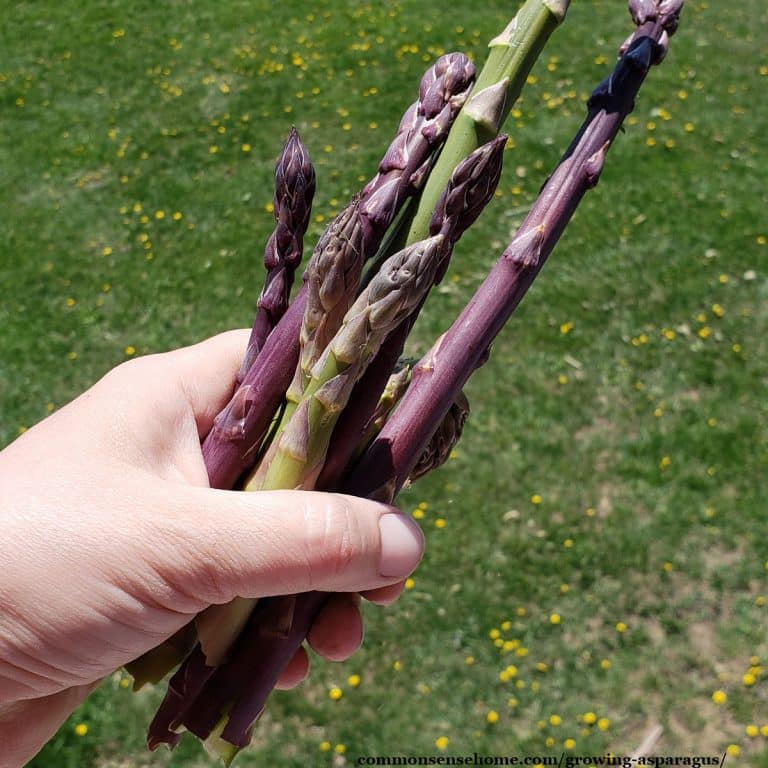
If you’ve never had fresh picked asparagus  – steamed, stir fried, or even raw – you’ve missed how good asparagus can be.  I would say the flavor is kind of like snap peas, but different in a good way. Here in northwest Wisconsin it grows wild in places, along fence lines and under power lines where birds plant the seeds after they eat the fruit during the summer. The mature plants are the easiest to spot along roads and walking sunny fence lines. You can map them out and then come back in the spring. This is what last year’s mature plants look like: Continue reading »

Jun 232011
 

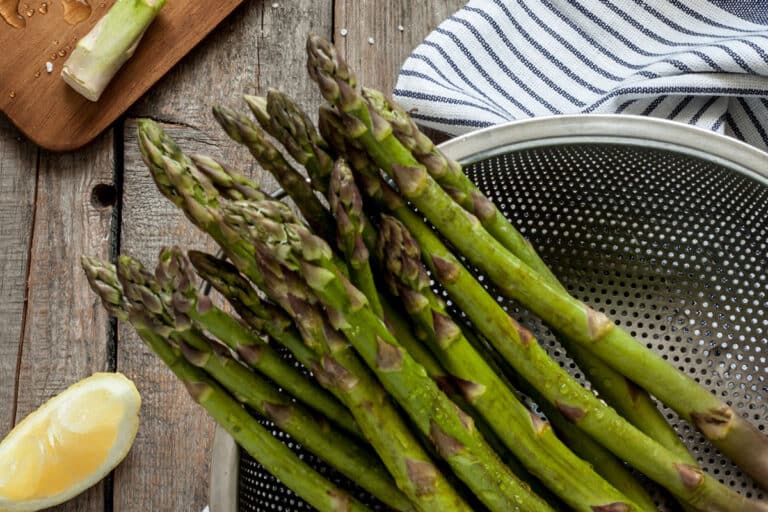
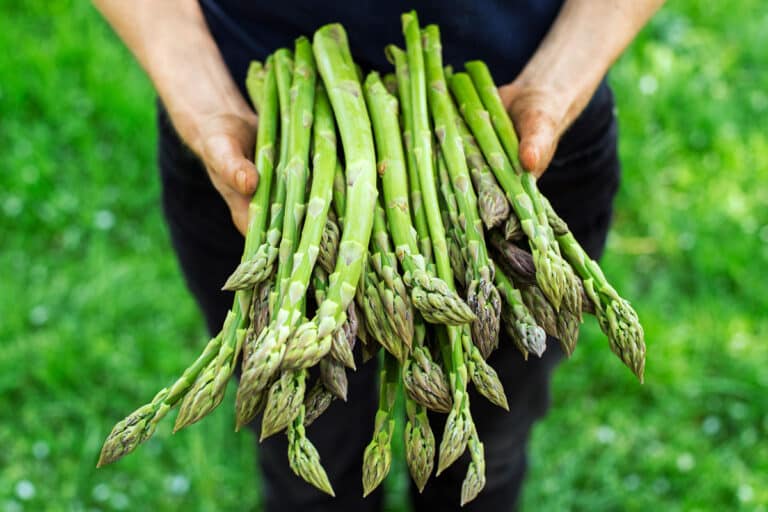
I had the opportunity to babysit my neighbors asparagus patch for two weeks earlier this season, and I was blessed with a bounty of asparagus like I have never seen.  The photo above was just one picking – and it kept coming!  For those who are not asparagus savvy, you need to keep the spears harvested during the production season, otherwise they will get tall and produce seed, and you will have no more asparagus to harvest.  Thus, I was over picking every two to three days to keep the plants producing.  The neighbors have a lovely 100+ year old farmhouse, and four different asparagus patches around the yard.  As I was picking, the fresh spears looked so good that I decided to try one raw for the first time.  It was really good!  It tasted very much like fresh picked green peas, without much of the stronger “asparagus” taste that puts many people off.  I ate several more.  :-)   Since there was such a bounty, I used several methods of preserving asparagus.

The first thing I decided to do with the excess asparagus was freezing.

How to Freeze Asparagus

From the Ball Blue Book of Preserving, one of my favorite preserving references, with my comments in parentheses.

Select young, tender asparagus with tightly wrapped tips.  (Check – picked them fresh myself. :-)

Wash thoroughly and sort into sizes.  (Definitely needed to do this – the size variation in homegrown asparagus is quite substantial compared to commercial asparagus.  I always went for the thinner stalks in the store, thinking they’d be more tender, but I found out while picking that they emerge from the soil at the width they will be as they grow.  Thinner stalks are not any younger than fat ones, and the fat ones were often more tender and juicy.  Don’t fear the fat asparagus, and don’t fear fat in general.)

Trim stalks by removing scales with a scarp knife.  (This is done primarily to get any trapped dirt off that may be hiding underneath the scales, so I didn’t bother, as my asparagus were grown in grassy and mulched areas.  you’ll be able to see how dirty your asparagus are.)

Cut into even lengths to fit in freezer containers.  (I skipped this, too, since I wanted to pack whole spears in vacuum bags.)

Blanch small spears 1 1/2 minutes, medium spears 2 minutes and large spears 3 minutes.  (This is where the sorting is needed.)

Cool.  (I scooped mine out and plunged them into a cold water bath to halt cooking.)

Drain.  (I first drained in a colander, and then placed them evenly space on a flour sack towel on top of an old, absorbent bath towel, to wick away as much excess moisture as possible before freezing.)

Pack asparagus into plastic freezer bags, can-or-freeze jars, plastic freezer boxes or vacuum bags.  (I chose to lay out my asparagus on cookie sheets covered with reusable parchment paper (I use that stuff for everything.) and pre-freeze them before sealing them in vacuum bags the following day.

Seal, label and freeze. (I packed the frozen spears into meal sized packages with varying amounts per package and sealed them with my vacuum sealer.  My goal was to have a product that looked as good when you brought it out of the freezer as when you put it in – no ice crystals, no mushy mass of green goo, just neat, tender spears ready to be heated in a pan with a bit of butter, salt and pepper.  If you plan to keep produce frozen for any amount of time – for instance, in this case, I probably won’t pull this out until winter, when fresh veggies are gone – the investment in a vacuum sealer and the small amount of extra time involved is well worth it in the HUGE improvement in quality of frozen veggies and fruits.)

How to Dry Asparagus
Again from the Ball Blue Book of Preserving with my comments in parentheses.

Choose young, tender stalks.  (The ones that taste like green peas. :-)

Wash and cut off tough end.  (Funny that they didn’t mention this for the freezing.  Anyway, you can trim a little bit from the bottom as needed.  With many of the younger stalks, I really didn’t need to trim at all, because there was no tough part at the bottom.)

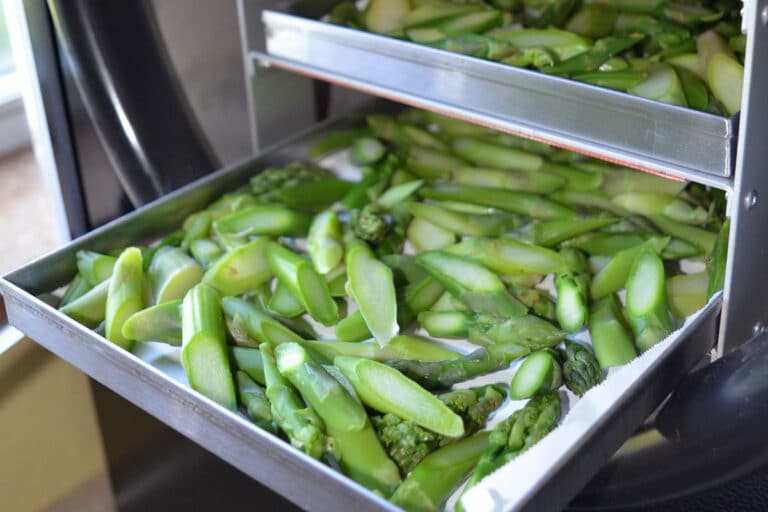
Slice into one inch pieces.  (Note – if you have really fat asparagus stalks, you probably want to cut them in half lengthwise, too, before loading them in the dehydrator.  I didn’t do this initially, and ended up doing it at the end of the drying process to get those wider pieces to dry evenly.)

Steam blanch 3 to 4 minutes.  (I just blanched them in a pot of boiling water for about two minutes, until they were bright green.)

I started with about six cups of chopped asparagus.

Here’s the whole batch in about 8 quarts of boiling water.

After blanching, I chilled them in a cold water bath to stop the cooking.

Drain well and spread evenly on dehydrator trays.  I used the mesh inserts (the Clean-A-Screen trays) to make sure that no veggie parts fell through the screens as they dried.

Dry at 125F until brittle.  Rehydrate and serve in soups or with seasoned cream sauce.  Water content 92%.  (I put mine in at night and they were done the next morning, except for the wide bits, which I split in half and dried for a bit longer.  You want them to be very dry, so they snap easily in half, for optimum shelf life.)

Isn’t it amazing how much they shrink up?  If you’ve get very limited food storage space, dehydrating is the way to go.  Remember the six cups I started with?  After drying, it all fit into one cup sized jar.

This was labeled and stuck in the pantry.  If you want to boost shelf life even more, you can use the Foodsealer jar sealer attachment and vacuum seal the jar, too.

How to Lacto-Ferment (Pickle) Asparagus

This recipe is the love child of two different posts, one from Heartland Renaissance, and one from A Little Bit of Spain in Iowa.  Since I scored some green garlic (immature garlic) from a neighbor (thanks, Deb), I figured I’d use it in the ferment.  My neighbor, Betty, who provided me with the asparagus, had mentioned that she wanted to make some pickled asparagus.  I’m pretty sure that she had standard pickled asparagus in mind, but I’ve been experimenting more with live cultured foods, so I used lacto-fermentation.

Lacto-fermentation is the use of water, salt, spices and sometimes whey to preserve food without heat canning.  The lactobacilli bacteria that proliferate in lacto-fermented foods not only help to preserve it and give it that “pickle” flavor, they also act as little probiotic factories, making the food more digestible and increasing its nutrient value.  Lacto-fermented food is loaded with healthy bacteria.  I eat some every day, generally with every meal.

Lacto-Fermented Asparagus Recipe

For each quart jar:

1 teaspoon peppercorns
1/4 teaspoon celery seeds
1/2 teaspoon mustard seeds
1/2 teaspoon pickling spice
2 stalks green garlic, cut into 1 inch pieces
Enough asparagus to pack the jar tightly
4 tablespoons whey – If you do not have whey, add an extra tablespoon of salt to your salt water
Salt water – 2 tablespoons sea salt to one quart water, mix well to dissolve (you won’t need all of this to fill the jar, but it’s better to have a little extra than to run short)

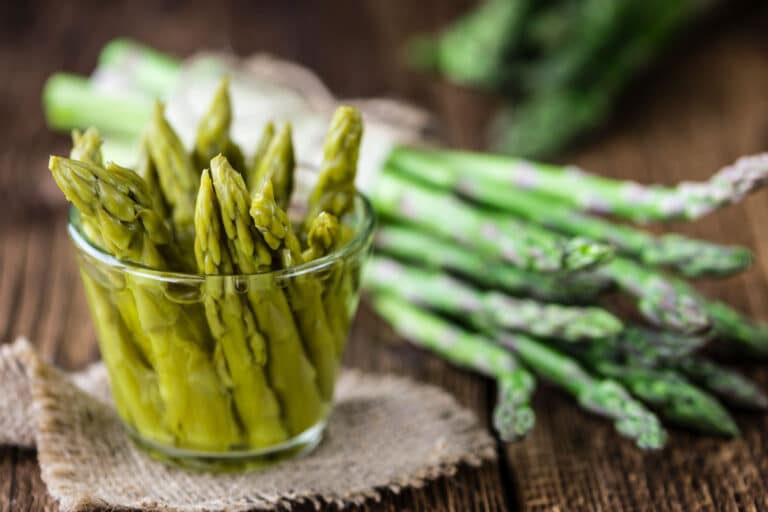
Clean and trim asparagus so the spears will fit into the jars below the neck of the jar (you want to keep them covered with liquid during fermentation.)  Put loose spices into jar, then pack asparagus into jars as tightly as possible (they will shrink during pickling and will want to float and pop up out of the liquid).  Wedge in garlic pieces as you go.  Pour in whey.  Pour in enough salt water to completely cover the asparagus, but make sure to leave one inch of head space at the top of the jar.  As it ferments, gas are produced and jar contents may expand.  I used atlas jars, which have wider shoulders but narrow mouths, to help wedge the asparagus in so it stayed below the water level.  You can also use a smaller jar with water in it nested in a wide mouth jar, or a clean stone, or other clean weight to hold the veggies under the brine.  This worked out pretty well overall.  Cultures for Health has a fermented vegetable master, which is designed to keep air out but allow gases to escape.  It’s on my wish list. :-)

Cover jars with a clean cloth (don’t seal tightly – they need to breathe), and place in a cool, dark place and allow to ferment for at least 3 days.  After three days, you can continue fermenting, or cover tightly and move to the refrigerator to slow down the fermentation process.  The flavors will get stronger and the asparagus will get softer the longer it ages at room temperatures.  Heat dramatically speeds up the fermentation process, so warm weather ferments will have shorter shelf lives.  I kept mine on the counter for three days under a dishcloth, then covered it tightly and moved it to the fridge.

One day three, I was a little freaked out when I took off the dishcloth and saw this:

At first, I thought it was mold.  Although it is generally safe to eat fermented foods with mold on the surface (just scrape off the mold and eat the product underneath, as long as the smell and taste are not foul or “off”), I was surprised that it had molded so quickly.  Upon closer examination, I found out that it was not mold, just milk solids from my whey, which could have been strained a little more finely.  After a little judicious scraping, the tops looked like this:

Much less “Fear Factor”. ;-)

My final product turned out a little cloudy, probably due to the whey and the “pickling spices”, which had some finer bits, but the taste is delicious.  Judging by the shelf life of other ferments I’ve tried, these should be good for several months – even a year – refrigerated, if they lasted that long.

I’m very grateful to have a stash of different types of asparagus that I can now enjoy for months to come.

Jun 092009
 

In spite of our cool weather, spring-bearing perennials have been producing tasty edibles. The rhubarb patches are largely unhampered by the cold. We don’t have a patch at our current location, but the neighbors are always happy to share. Once a patch is well-established, I have yet to meet anyone who has been interested in using up their entire patch production. I enjoy the tartness combined with some sweetness, and sometimes some dairy. Mine usually goes into sauce (lovely on toast or ice cream), muffins (these freeze well and stay nice and moist) or desserts (I have a rhubarb custard recipe that everyone in the family likes).

Asparagus is also in season, but the cold has slowed it down significantly. I’m garden tending for neighbors who are traveling for a couple of weeks, and part of my job is to find the asparagus spikes (they have patches scattered around the yard) and harvest them so they don’t go to seed too early. Most sources I’ve seen suggest harvesting for around three weeks before allowing the spikes to grow out and flower to put energy into the roots for the following season. With the dry May we had, some of the first spikes harvested were a little bitter, and they were few and far between in the patch. Since the rain, growth has picked up and the flavor has sweetened back to normal.

Fresh local asparagus is an entirely different vegetable than the store bundles shipped from across the country. If you’ve never been an asparagus fan, you need to try fresh, locally grown. The taste is more like garden peas with just hint of asparagus “wildness”. Good and good for you, I hope you’ll have the opportunity to enjoy these spring treats.

Pork with Rhubarb Sauce recipe 
 from www.rhubarbinfo.com

Ingredients:
3 lb Pork loin center rib roast (8 ribs)
1/4 teaspoon Salt
1/4 teaspoon Pepper; coarsely ground
1/2 lb Rhubarb, fresh; chopped (2 cups)
1/4 cup Apple juice concentrate; thawed
2 Tablespoon Honey
Nutmeg, ground
2 Tablespoon Water
1 teaspoon Cornstarch

Directions:
Have the butcher loosen the pork roast backbone, if possible, for easier carving. Rub the roast with salt and pepper. Place bone side down in a small, shallow roasting pan. Insert a meat thermometer into the thickest portion of the roast; make sure bulb doesn’t touch bone, fat, or the pan. Roast, uncovered, at 325 F. until the thermometer reads 150 F., about 75 to 90 minutes.
For the sauce, in a medium saucepan stir together the rhubarb, apple juice concentrate, honey, and nutmeg. Bring to a boil; reduce the heat, cover, and simmer ten minutes or until the rhubarb is very tender. Mix the water and cornstarch; stir into the rhubarb mixture. Cook and stir until the sauce is thickened and bubbly. Continue cooking for two minutes more.
When the meat thermometer registers 150 F., spoon some of the sauce over the roast. Continue roasting until the thermometer reads 170 F., about 30 to 45 minutes more. Spoon on additional sauce occasionally. Let the roast stand 15 minutes before carving. Heat any remaining sauce and pass with the roast.

Cream of Asparagus Soup recipe
from allrecipes.com

Ingredients:
1/4 cup butter
1 onion, chopped
3 stalks celery, chopped
3 tablespoons all-purpose flour
4 cups water
1 (10.5 ounce) can condensed chicken broth or homemade chicken broth
4 tablespoons chicken bouillon powder

1 potato, peeled and diced
1 pound fresh asparagus, trimmed and
coarsely chopped
3/4 cup half-and-half
1 tablespoon soy sauce
1/4 teaspoon ground black pepper
1/4 teaspoon ground white pepper
Directions:
1. Melt butter or margarine in a heavy cooking pot. Add onions and chopped celery; saute until tender, about 4 minutes. Stir in flour, mixing well. Cook for about 1 minute, stirring constantly. Do not burn, or let it go lumpy. Add water, chicken broth, and chicken soup base; stir until smooth. Bring to a boil. Add diced potatoes and chopped asparagus. Reduce heat, and simmer for about 20 minutes.
2. Puree soup in a food processor or blender in batches. Return to pot.
3. Stir in half and half cream, soy sauce, and black and white pepper. Bring soup just to boil. Adjust seasonings to taste. Serve hot.

Ready In: 1 Hour
Servings: 6