May 212011
 

Homegrown Medicinals @ Common Sense Homesteading

While I’m out working in the garden, I’m not just tending standard food crops, I’m also tending herbs and “weeds”.  Some I use for culinary purposes, some for medicinal, some for both.  (Don’t you love it when you can get multiple uses from one item?)  With many medicinal herbs now being outlawed in Europe, and increasing odds that the US is likely to follow Europe’s lead (thank you, Big Pharma), I’ve been learning more about plants that I can grow in my own yard for medicinal purposes.  You’d be surprised at how useful “weeds” can be.

I dry an assortment of plants over the course of the season.  Most of them live in my pantry in glass jars covered with my husband’s old mismatched dress socks to keep out the light.  I cut each sock in half so it can cover two jars.  The socks are elasticized so they grip the jars nicely.  I always hated throwing one sock out when the other got worn through – now I have a use for them.  The food in front of them is kept in bins that can be easily pulled out to access the herbs.  You can see part of a bin on the right hand side of the photo.

covered herb storage

Here’s a shot of the naked jars.  I use whatever I have handy, from canning jars to empty jars from other foods, so they are a hodgepodge of sizes. I labeled them by writing with a sharpie marker on masking tape, including the contents and date stored. It’s cheap and easy.

uncovered herb storage

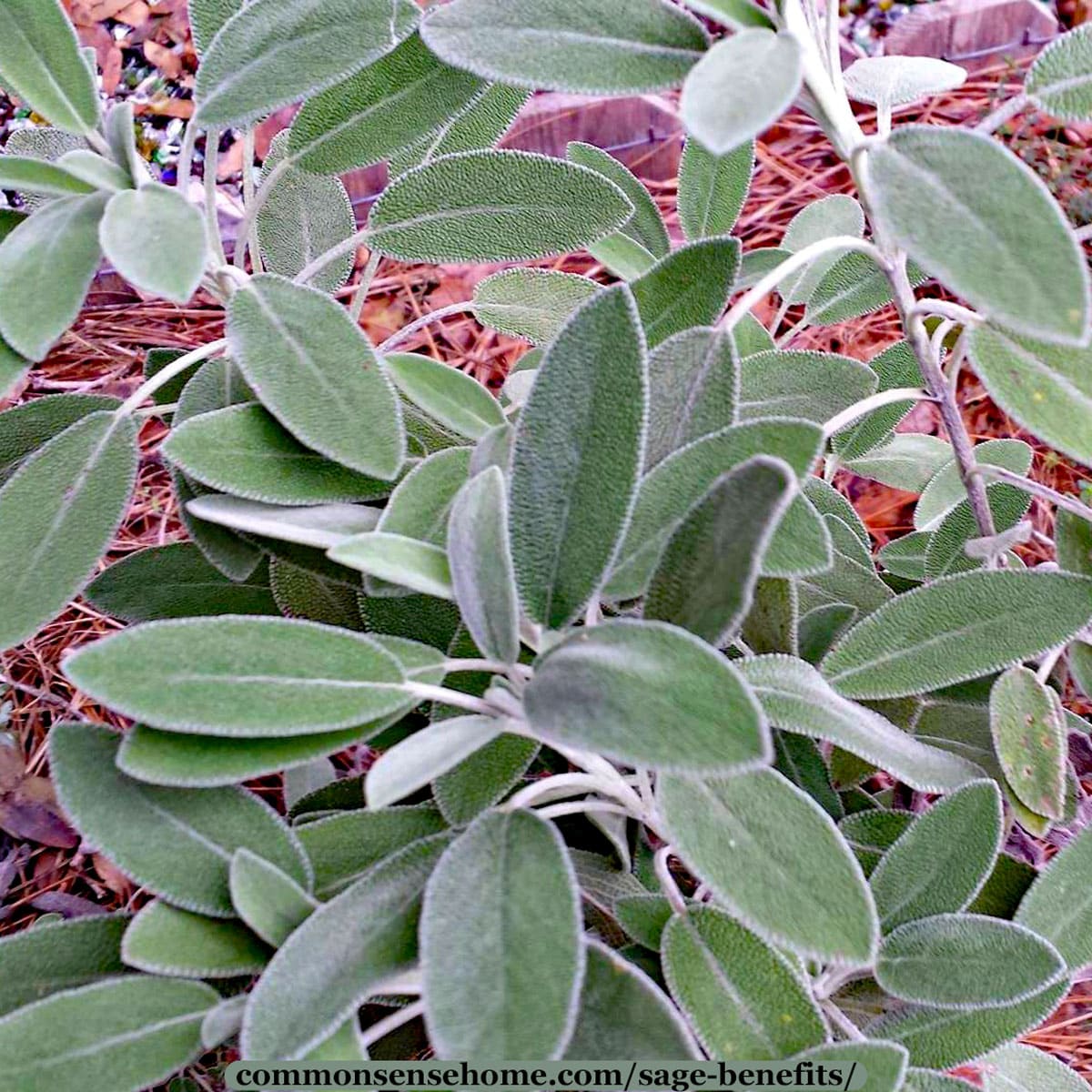
From left to right we have chocolate mint, mullein blossoms, lemon balm, red clover blossoms, yarrow, catnip, chamomile, raspberry leaf, hyssop, and mullein leaves.  That’s a bundle of sage in the corner.

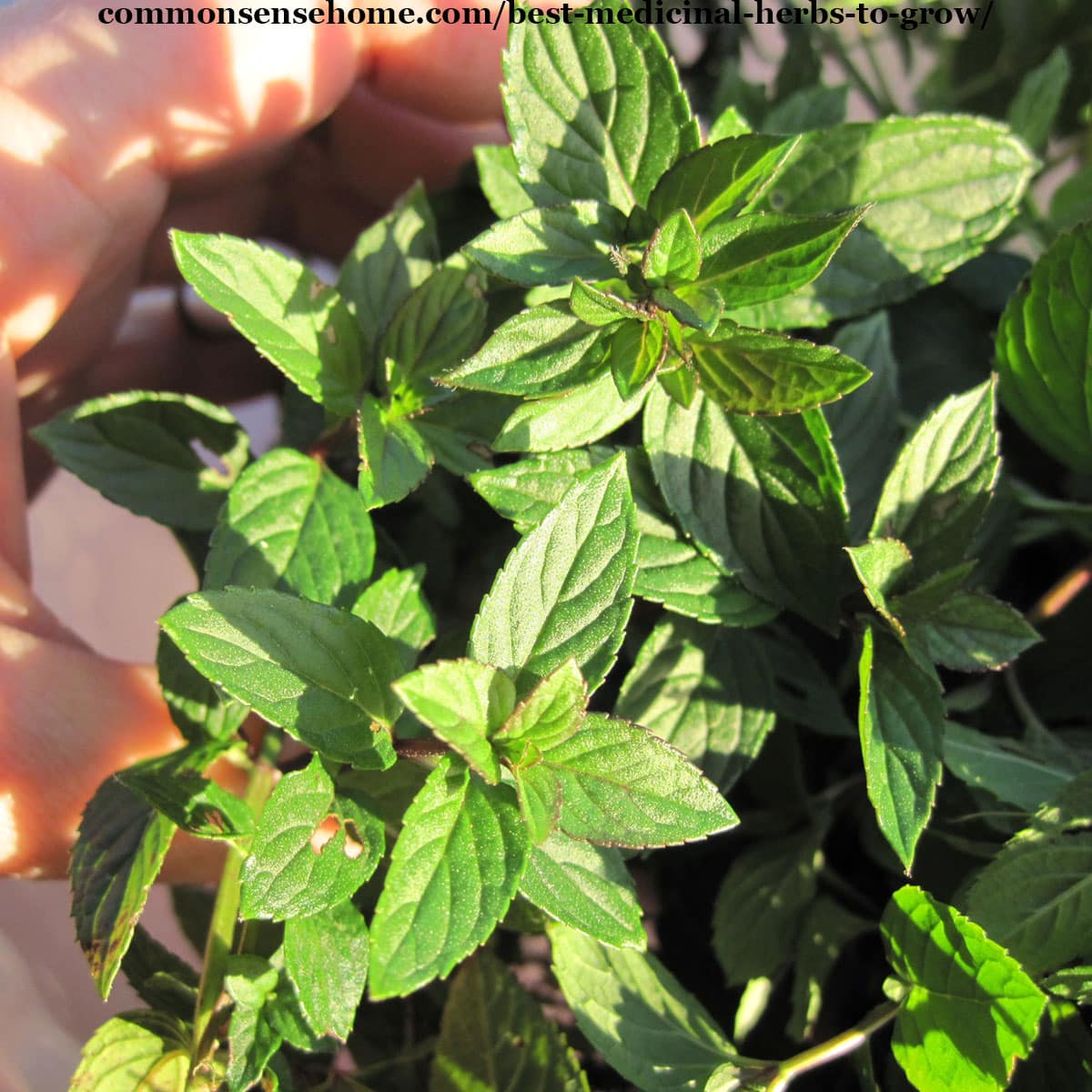
The mints (chocolate mint, lemon balm, catnip) make lovely teas.  They are also good for soothing stomach troubles – cramping, gas, indigestion, vomiting, upset stomach, and colic in babies.  I drank mint tea during my pregnancy to help settle my stomach.

Mullein is used externally for treating ear ailments, and internally for treating congestion.  It helps to loosen mucus so it can be expelled from the body.  This post provides more detailed information on harvesting, drying and use of mullein.  Both the blossoms and the leaves can be used.

Red clover has an assortment of uses, many related to women’s health, including breast health, and helping with hot flashes and osteoporosis.  More details on red clover in Wildcrafting 101.

Yarrow is used against colds, cramps, fevers, kidney disorders, toothaches, skin irritations, and hemorrhages, and to regulate menses, stimulate the flow of bile, and purify the blood.  (More information in the post Real Healing Potions.) It’s a real powerhouse, but the taste leaves a lot to be desired.  Still, I keep it on hand, because you never know when you might need it.  Also, it grows abundantly (almost too abundantly) in my garden.  Be warned – it can spread like crazy.  I allow some of it to wander around, because it is supposed to help increase the essential oil content of herbs it is grown near and boost other plant’s disease resistance.

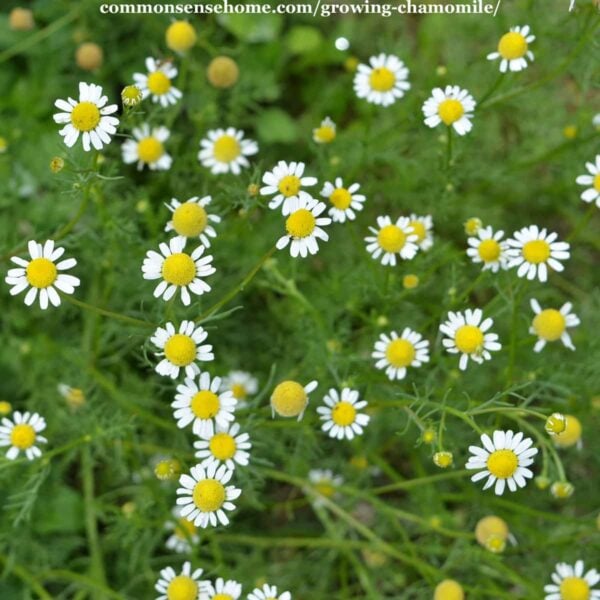
Chamomile is a general relaxant.  It makes a soothing tea, and can also be used in the bath.  To make a chamomile bath bomb, take a fabric scrap or old towel or hanky, place about 1/4 cup of dried chamomile in the center, tie with a ribbon and hang in the water stream as you fill your tub for a bath.  This can be dried and reused 2-3 times.

Raspberry leaf helps with many women’s health challenges, assisting from pregnancy to menopause.  It may also aid adrenal gland function.

Anise hyssop has a licorice taste that is often added to teas.  it was also used by Native Americans to treat coughs.

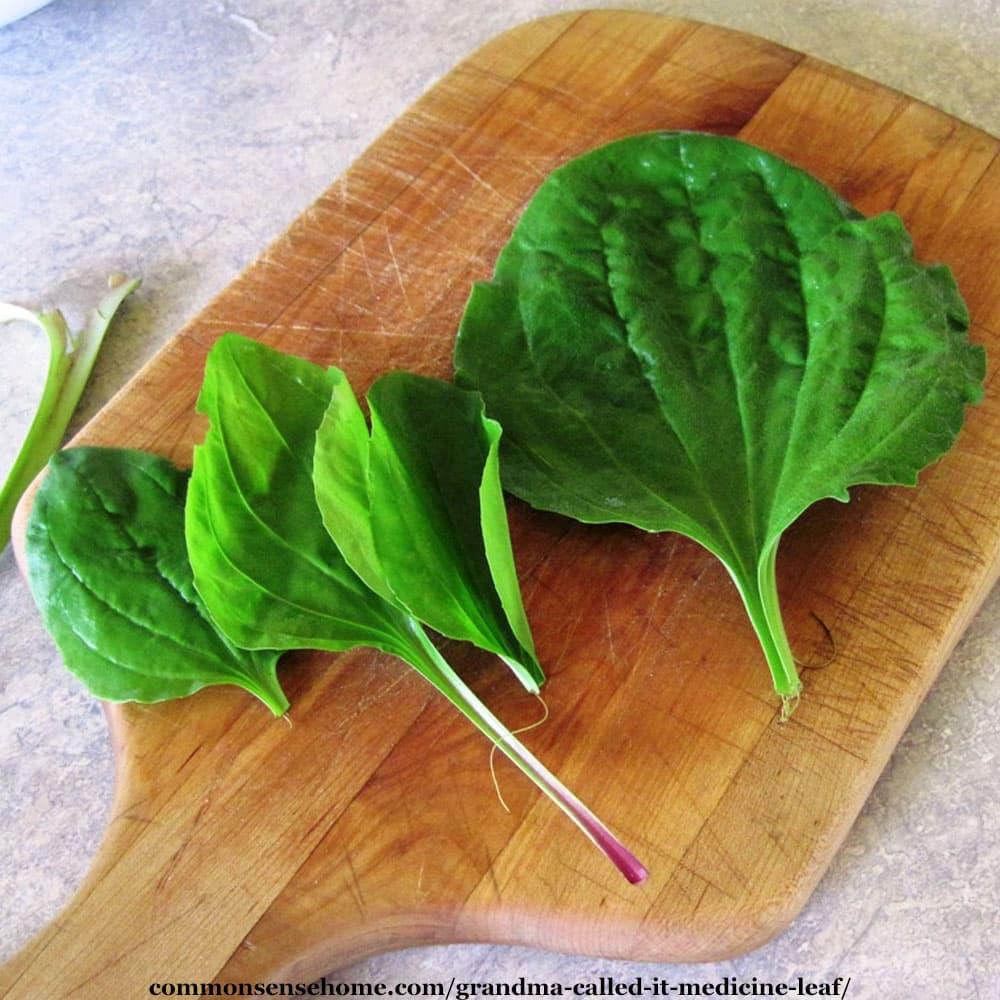
Another herb/weed that I use regularly that is not pictured here is plantain.  I use it most for skin irritations like mosquito bites and bee stings.  The results are nothing short of amazing.  For me, it works better than anythign else I’ve tried, including Benedryl spray.  In the post “Grandma Called it Medicine Leaf“, I describe harvesting plantain, using plantain fresh, and infusing plantain in oil.  I give instructions on “How to Make a Salve With Infused Oils“.  I like to keep the salve on hand for smaller spots like bug bites, and use the oil for larger areas like sunburns.

If you don’t grow or wildcraft your own herbal medicines, you may order seed and dried plant material from Mountain Rose Herbs (see link below).

Mountain Rose Herbs. A herbs, health and harmony c

There are dozens of weeds and herbs that are available to most of us.  I know I feel like I am barely scratching the surface.  This season I want to do more with nettles, dandelion, yellow dock, chickweed, shepherd’s purse, wild lettuce and who knows what else will present itself.  My favorite resource for herbal medicine thus far is the Holistic Herbal.  It has a photo with every herb description, and gives basic instructions for identification and use, as well as any concerns about use.  It’s sorted by herb and also by ailment, so you can search by whichever is most convenient for you.  Many of the herbs can be grown in my climate.  (I find it frustrating to read herbals where everything is imported from the far corners of the planet.)  It’s been a real eye opener for me just how many culinary herbs and weeds have medicinal properties.  I hope you’ll consider adding herbs and “weeds” to your preparedness storage, too.

Learn more about herbs, weeds and wildcrafting on the Herbs and Wildcrafting page.

This post has been added to Preparedness Challenge #9 and Domestically Divine.

  27 Responses to “Preparedness – Homegrown Medicinals”

  1. This is an excellent post, Laurie! I am so glad that I found your site. I'm putting Holistic Herbal on my Amazon list now. (I'll try to remember to come back and buy it thru your link when I'm ready to purchase it.)

  2. Thanks, Mary. I enjoy reading your blog, too. I really like the book – highly recommend it.

  3. Great post Laurie! I like your idea of putting socks over the jars. It beats trying to find dark bottles or jars. Good choice of plants, I use several of them as well, some as herbs and some as essential oils.

    I haven't had the opportunity to do much since we moved to Texas. I can't wait until the day when I am in place that I know I'm staying in permanently.I have to follow your blog and plan for the future.

  4. Wow thank you! I have been wanting to go in this direction for awhile now. This will be a great resource for me (I will add it to my favorites)
    I use alot of essential oils in my massage therapy practice.
    Thanks again for this great post!
    Allison

  5. Thanks Jo and Allison. I use some essential oils, but I like the herbs because I can grow them myself. I definitely make room for both in my herbal apothecary. :-)

  6. Fantastic post! We're new to self-sufficiency and herbal medicinals have always been my go-to… I have a *slight* distrust of Big Pharma, so you've given me some great ideas that I hadn't thought of yet! Gotta go make a list :)

    Dusti
    http://www.wheresdusti.blogspot.com

  7. Thanks, Dusti. Remember – just because you're paranoid, it doesn't always mean you're wrong. ;-)

  8. You listed mullein and I just love that you did! Several years ago I learned about this wonderful plant and got busy collecting the blossoms and leaves from here and there, not taking all from any specific area, drying the leaves and using the blossom to make an oil. We use the oil inside our dog's ear's for ear mites and if we have minor cuts and scrapes. If the adults among us get congested, we smoke the dried leaf. As a matter of fact, my mother came down with the flu and got so congested, I introduced her to smoking the leaf and after weeks of having that awful cough, it was gone within days. I've bottled some of the oil up and given it to family for their children's ear aches. Two springs ago I learned that blackberry leaf is good as a tea and went on a picking spree out in the country around here and it makes the most tasteful iced tea. Leaves are best when picked in the spring and used fresh – after they've dried and if they're stored, they tend to loose their taste. However, I'm not sure if they loose their medicinal value. Also, have you tried wild bergamot? It's an incredible flavor, we just love it and it doesn't loose it's strength when dried and stored, either the leaves or blossoms.

  9. For some reason I'm unable to log on to my account with Freedom Gardens to copy and paste it to my comment URL for this blog.

    Have you ever tried Clover Jelly? It's a very mild jelly, but wonderful anyway!

    Sandra Petty
    Freedom Gardens

  10. We don't have wild bergamot around here, and my garden monarda is not happy with its location, so I haven't had a chance to try that yet, but I'll keep it in mind.

    Sandra – not sure about the log on – my goal is to switch to WordPress, but I've been having issues with my potential host. I haven't tried clover jelly, but I bet it's lovely.

  11. [...] Place the jar in a sunny window or other warm location for 2-3 weeks ( a little longer is fine).  Strain out the plant material and pour oil into a dark glass container.  Label with contents and date.  Store in a cool location out of direct light to maximize shelf life.  ( I cover the jars with my husband’s old mismatched socks – see “Homegrown Medicinals“.) [...]

  12. Ok, so your going to laugh, but I am still learning. I found some plantain in my yard and I was so excited. I am not sure what to do with it. Should I let it grow or bring it in and dehydrate it? Sounds like a great thing to have around. Thanks so much for your wonderful blog!! I am learning a ton and I can’t wait to learn more!!

  13. Stumbled onto your site through a link from Facebook, and I’m so glad I did! I’m pretty good and canning and making jams and jellies, but I don’t have much of a green thumb (family and friends call me the “Plant Killer”, and will not let me own plants), but I am going to give some of these herbs and ‘weeds’ a try. Cross your fingers for me!

  14. I just discovered your site from Frugally Sustainable blog hop (i think? Maybe Facebook) anyway I love it! Our interests are so aligned. I have all those herbs in my “medicine chest” too except for mullein. I have not gotten into that one so much yet. One of my other “must have” herbs is nettle leaf. I drink nettle tea almost every day for the rich nutrient content, hormone balancing effects, and gentle cleansing properties. This is what is in my “medicine cabinet”. I love making new herbey friends ;)

    http://www.naturallivingmamma.com/2012/02/22/what-is-in-my-medicine-cabinet/

  15. [...] keep a stock of dried clover blossoms and other homegrown/wildcrafted medicinals in my pantry for regular use.  You can also eat the young leaves and blossoms fresh in salad.  [...]

  16. [...] Frankly folks, their list is pretty lightweight.  I haven’t had that few medical options I my house since I became a mom.  Along with all the more standard off-the-shelf items you can see above, I also keep (and grow) and assortment of medicinal herbs. [...]

  17. wild lettuce is great for pains. used it for years but have to be careful cause after 5 to 6 yrs of contiinued use the body may become immune.

  18. Love this post so informative!! Thank you

  19. I made pasta with Stinging Nettle. It was BEAUTIFUL…..spotty with dark green leaves and the pasta had a light green color. And it didn’t have any kind of taste other than regular old pasta. I made a thicker noodle. It was a big hit with friends. I plan on making lots more and drying it this summer. Recipe can be found online. It isn’t hard to make.

    • Mangia Bene pasta has a wonderful array of homemade pasta recipes at http://www.mangiabenepasta.com/dough.html

      Their basic pasta dough is as follows:

      Basic Egg Pasta Dough
      “Pasta al’ Uovo”

      To make about 1/2 pound (2 servings):
      3/4 cup all-purpose flour
      1 egg
      1/4 teaspoon salt
      1/2 tablespoon olive oil
      1/4 tablespoon lukewarm water

      To make about 3/4 pound (3 to 4 servings):
      1-1/2 cups all-purpose flour
      2 eggs
      1/2 teaspoon salt
      3/4 tablespoon olive oil
      3/4 tablespoons lukewarm water

      To make about 1 pound (5 to 6 servings):
      2-1/4 cups all-purpose flour
      3 eggs
      3/4 teaspoon salt
      1 tablespoon olive oil
      1 tablespoon lukewarm water

      Place the flour on a large floured surface.
      Make a well in the center. Break the eggs into the well.
      Add the salt, oil, and water. Beat the mixture in the well with a fork.
      Using a fork, gently start to work the flour into the liquid.
      Continue until the dough becomes sticky and difficult to work with the fork.
      Use your hands to form the rough dough into a ball.
      Transfer the dough to a lightly floured surface.
      Knead the dough until it is smooth and elastic, about 10 minutes.
      Cover with a bowl or towel and let rest for 10 to 15 minutes.
      Proceed with rolling and cutting the pasta according to your recipe.

      To flavor with basil, they suggest 1/4 cup dried herbs for 1 lb of dough. I would think other herbs would be similar, depending on the flavor profile you are looking for.

  20. [...] How To Make Your Own Homegrown Medicinals [...]

  21. [...] Mama) Organic Super Cleansing Tonic (True Earth Mama) Homemade Chewable Vitamins (Wellness Mama) Homegrown Medicinals (Common Sense Homesteading) Acid/Alkaline Balance: Key To Good Health (Real Food Forager) Oil [...]

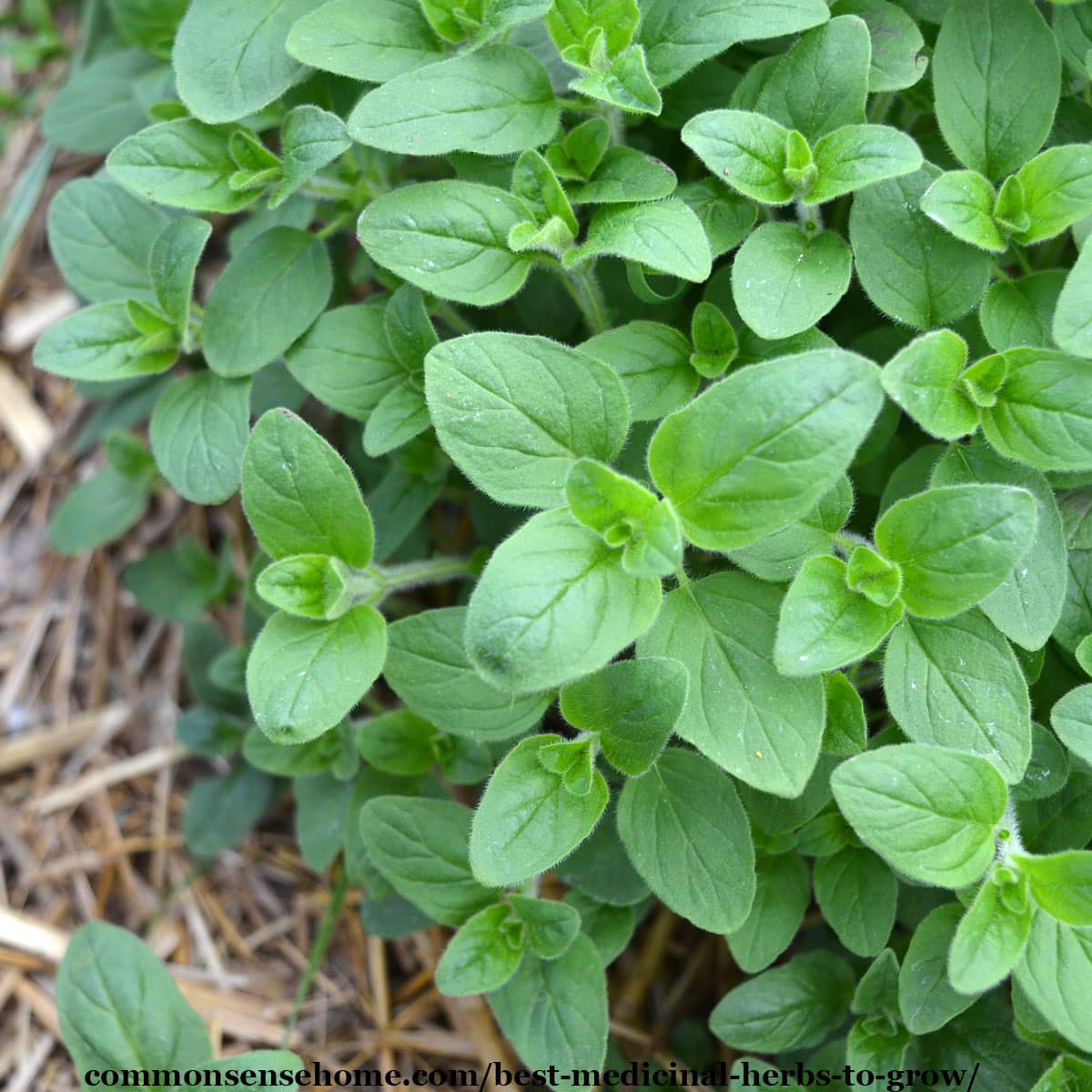
  22. This is a great starter list for medicinal herbs. Also, Peppermint works great in preventing colds, especially in summer and late summer when it’s still warm outside, and it’s great for throat-related issues. Others that are fairly easy to grow and work well are Echinacea (flowers and roots are used – great natural flu shot during times of high flu or cold activity), Ginger (great for flus, colds, stomach issues), sage (antibiotic and great for sore throats as a gargle or tea), and most of the culinary herbs like oregano (great in preventing flu and colds), rosemary, thyme (great for coughs), etc. work on supporting healthy digestion, so adding those to the food you cook will help add flavor without salt and make sure the food gets digested properly. Herbs like Lemon Balm and Lemon Verbena are great in calming nerves and counteracting anxiety.

Sorry, the comment form is closed at this time.