
ICF Construction: Lessons From Over 2 Decades in an ICF Home

This post may contain affiliate links. Read my full disclosure here.

When we were researching our “forever home”, we chose Insulated Concrete Form (ICF) construction for a number of reasons. It’s tough, energy efficient and designed to last a lifetime with minimal upkeep.
After living in our ICF home for over 20 years, I can confidently say it was one of the best decisions we made.
Would you like to save this?
Table of Contents
What is ICF (Insulated Concrete Forms)?
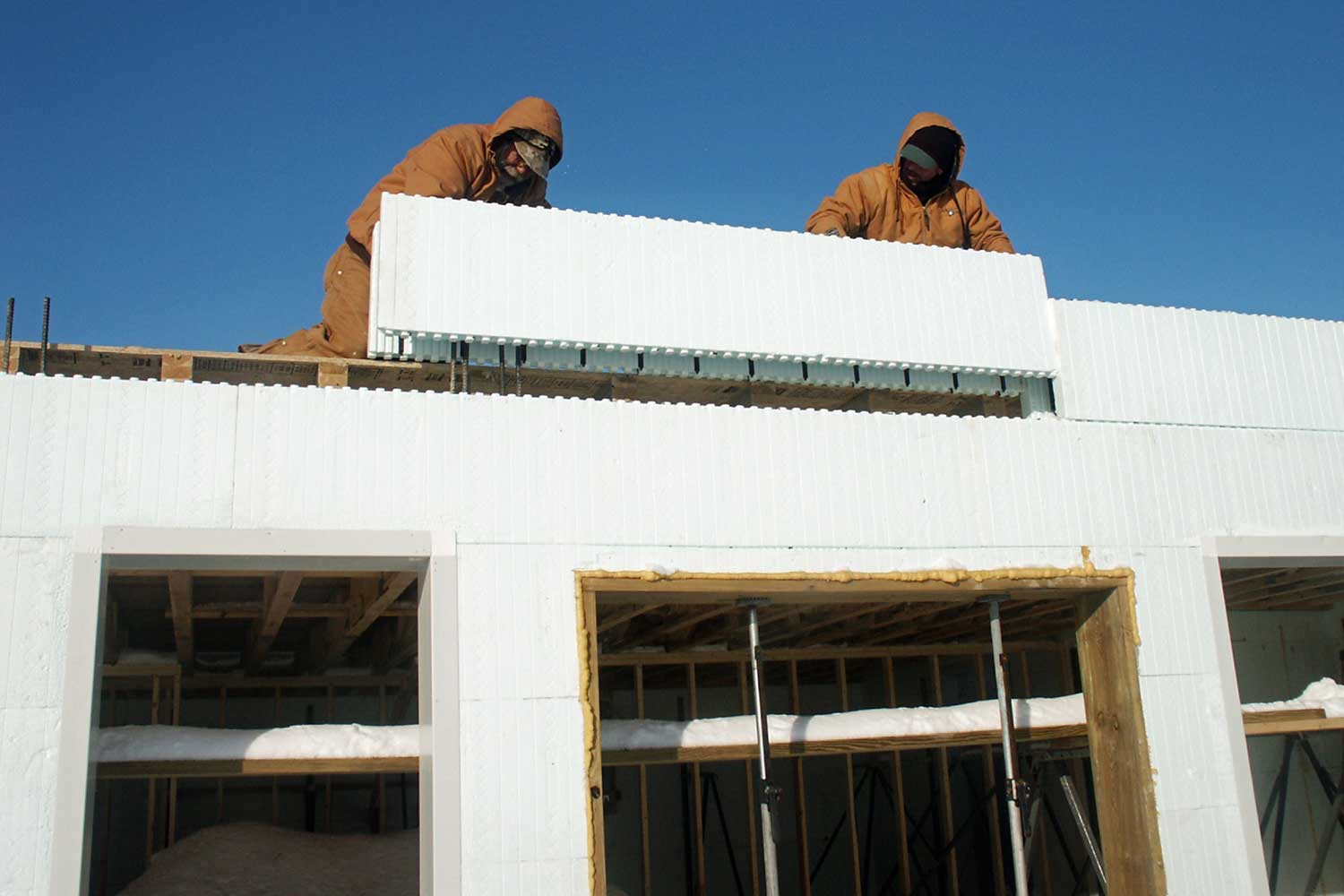
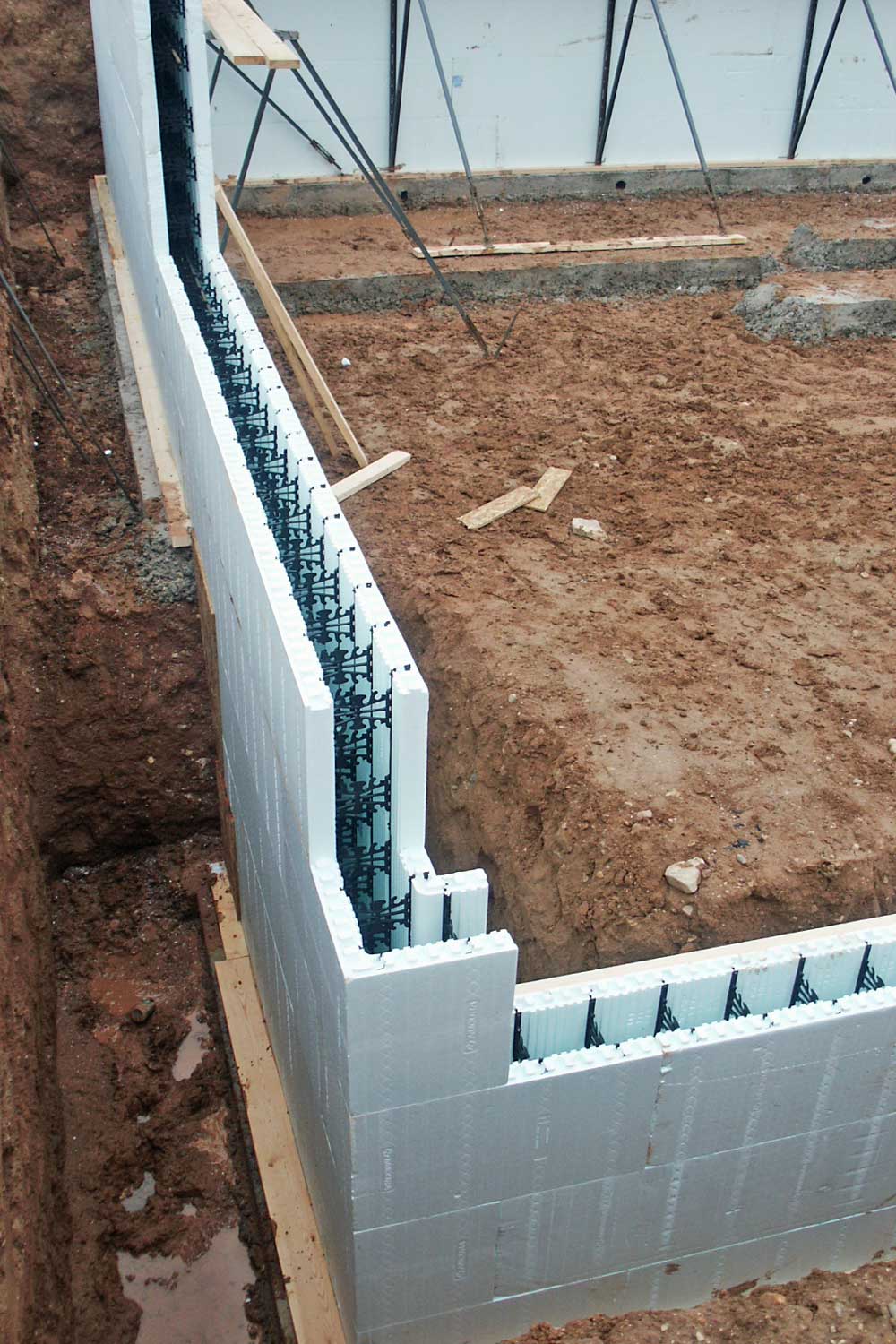
Insulated concrete forms (ICF) are a building system made from interlocking foam blocks—often called ICF blocks. They are stacked like Legos to form walls, reinforced with steel rebar, and then filled with concrete.
Think of it as a high-performance wall system:
- Foam insulation on both sides
- Reinforced concrete core in the middle
- Continuous insulation with minimal gaps
This creates a solid concrete wall that is dramatically different from a typical wood frame home. Instead of studs and cavities, you get a continuous structure with:
- Reinforced concrete strength
- Excellent insulation
- Very low air infiltration
The result is an ICF house that behaves differently—in a good way.
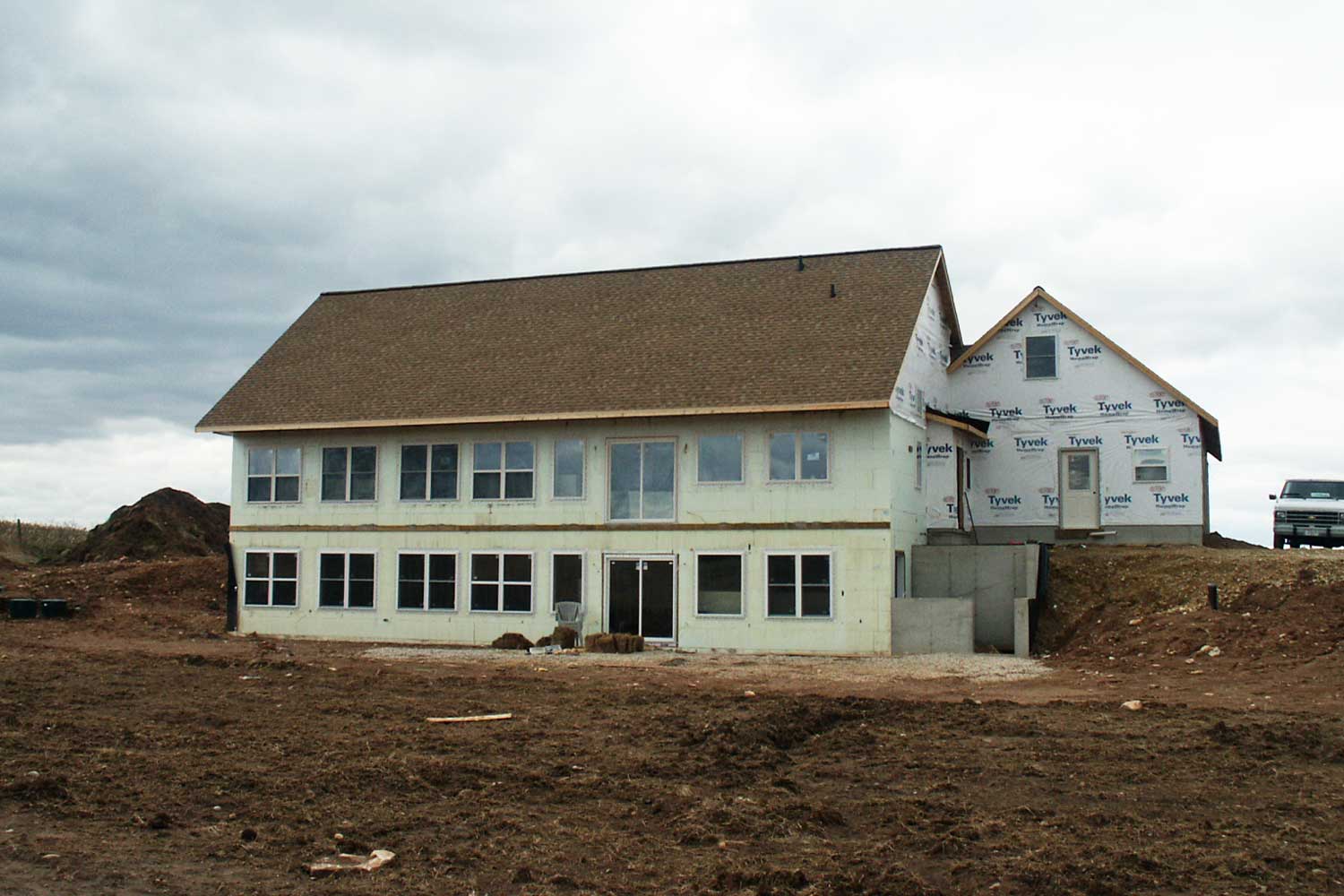
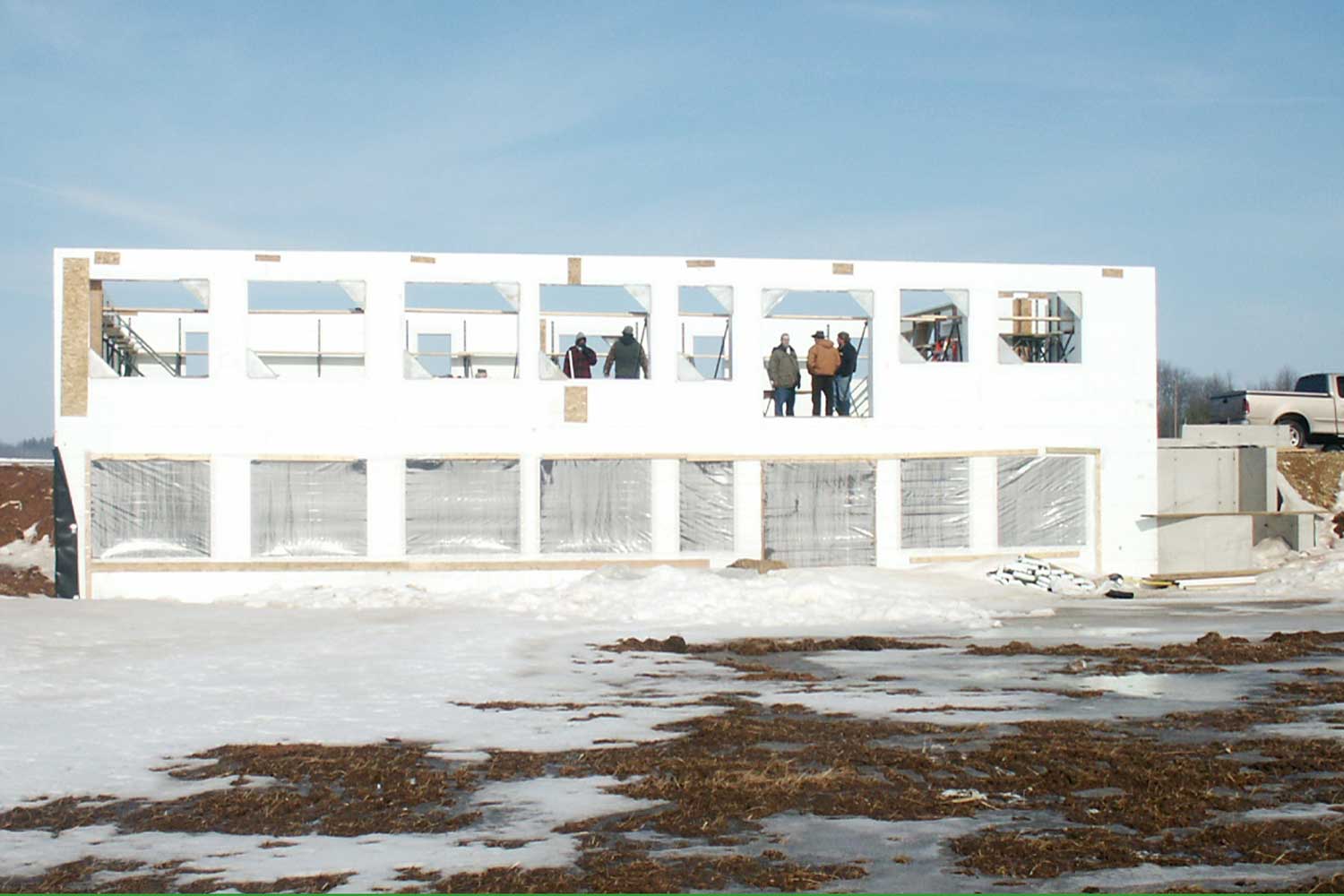
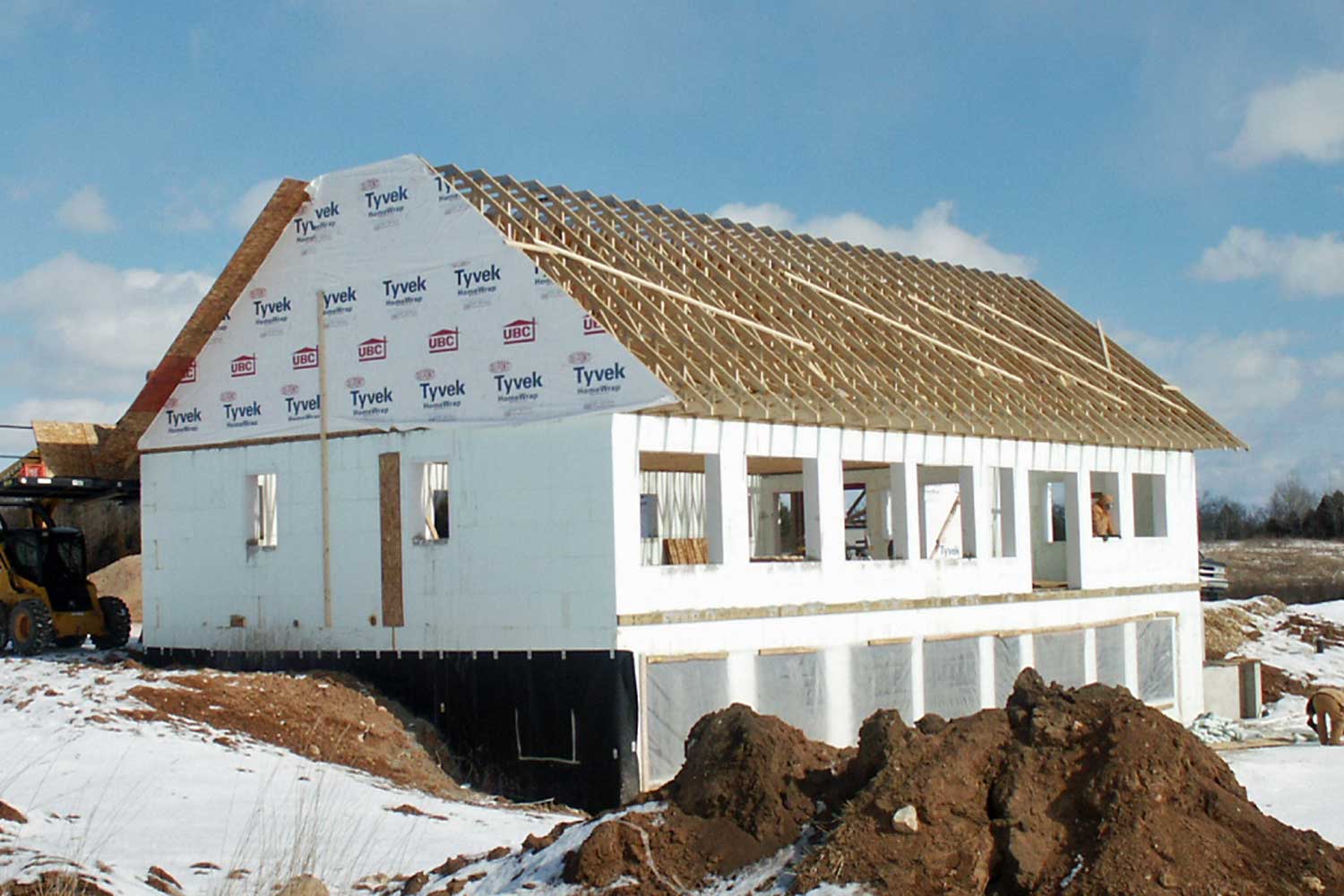
ICF can be used for basements, underground homes or entire multi-story homes. They can start at the foundation and go all the way to the roofline, as in our construction. Some builders use only insulated concrete foundation forms and combine them with other building methods above ground.
ICF vs. Wood Frame Construction
Most homes in the U.S. use traditional wood frame construction, which relies on studs spaced throughout the wall. Those studs create thermal bridges—areas where heat moves more easily through the wall. With ICF walls, you don’t have those interruptions.
Key differences:
Wood Frame:
- Insulation interrupted by studs
- More air leakage
- Lower overall efficiency
ICF Building:
- Continuous insulation
- Minimal air infiltration
- Reduced thermal bridging
- Higher overall performance
Even well-built wood homes struggle to match the real-world performance of an ICF structure.
ICF Energy Efficiency & Thermal Performance
One of the biggest advantages of ICF building is energy efficiency. Because the insulation is continuous and the structure is airtight:
- You avoid drafts and temperature swings
- Walls stay consistent—no hot or cold spots
- Heating and cooling systems work less
The concrete core also adds thermal mass, which helps stabilize indoor temperatures. When we fill the house with cool night air in the summer and close it up during the day, and it stays cool.
What that means in real life:
- Heat the home once → it stays warm
- Cool it down → it holds that cool longer
A study found that homes with ICF walls used ~44% less energy for heating and ~32% less for cooling compared to wood-frame homes.
This works great with our passive solar heating. There is an overhang on the south side of the house to block summer sun, but let winter sun in. We have windows at the east and west ends of the home to take advantage of winds off Lake Michigan.
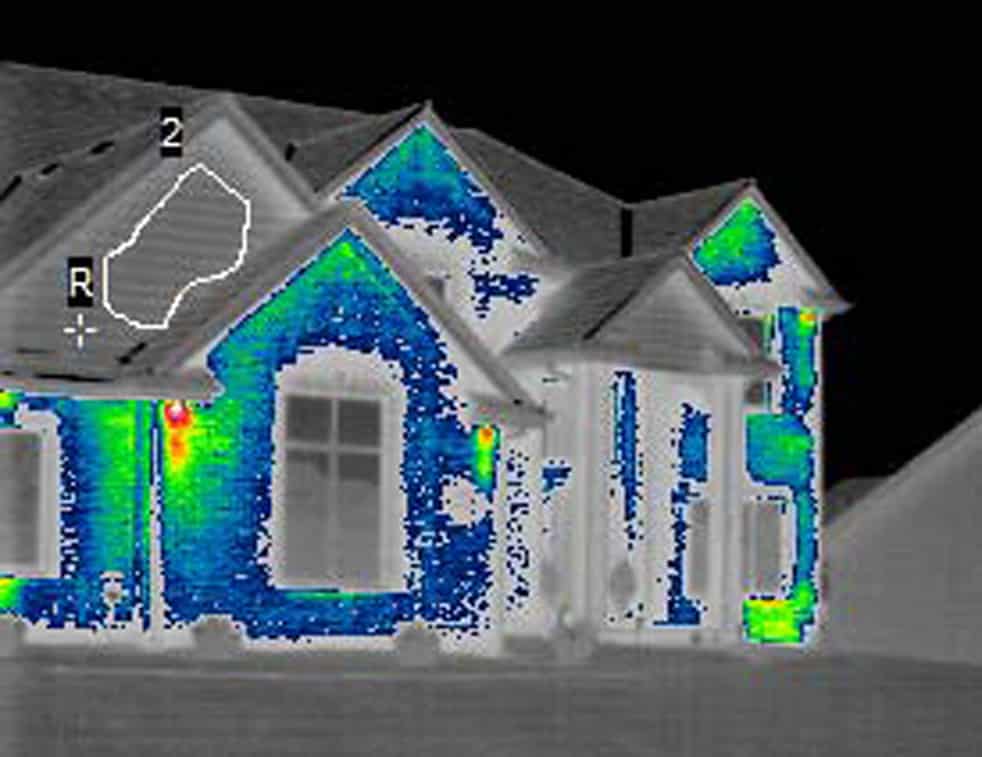
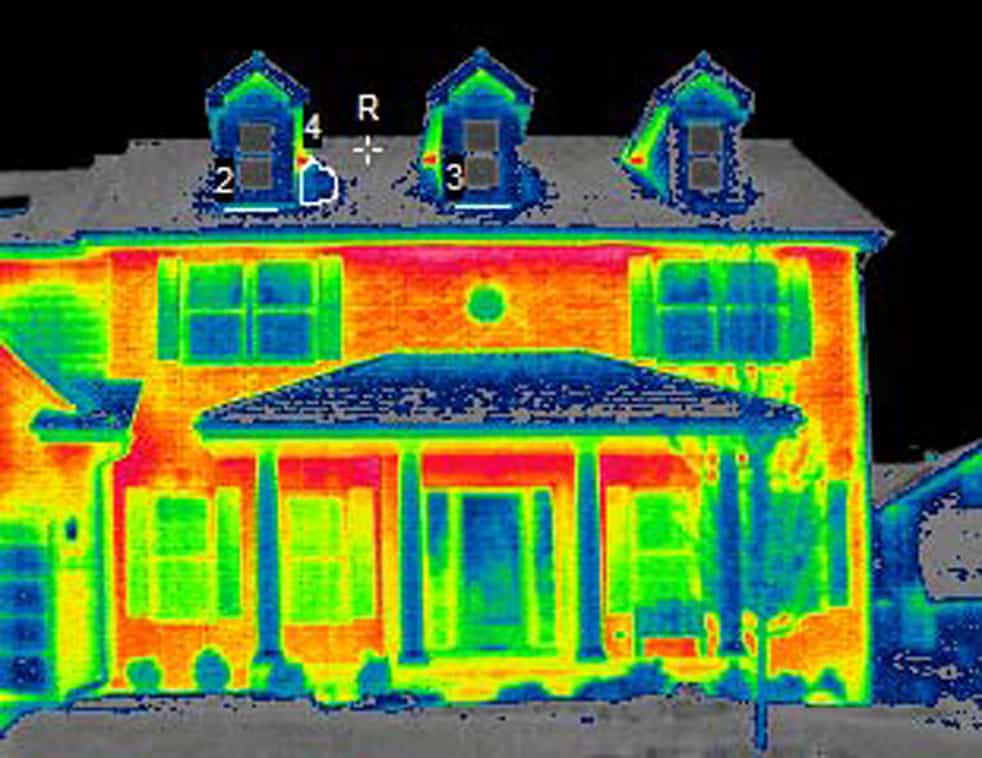
Thermal images courtesy of Reward Wall Systems.
Our Real-World Heating & Cooling Experience
I’ve crunched the numbers, and our home ranks in the top 5% of homes for energy efficiency per square foot.
For heating, our rough breakdown is:
- ~10% passive solar
- ~40% wood heat
- ~50% propane (radiant floor system)
We are able to heat the entire home with a relatively small system—something that would be difficult in a standard wood frame house. The air conditioning system is also smaller than the typical system needed for a wood frame home.
Because they are so airtight, ICF homes require planned ventilation. We use ceiling fans to keep air moving, and have a whole house fan that we run at night. We installed an HRV (heat recovery ventilator) to bring in fresh air if it’s too cold or hot to open windows.
ICF Durability
This is where ICF construction really stands apart. You’re not just building a house—you’re building a reinforced concrete structure.
Storm Resistance
ICF homes are well known for standing up to:
- Tornadoes
- Hurricanes
- Severe storms
We had a tornado pass within five miles of our home—and barely noticed anything unusual inside. An online search of “ICF hurricane proof” will yield dozens of images of ICF homes left intact where surrounding homes were leveled.
Fire Resistance
While the contents of the home are still flammable, the ICF wall system itself is highly fire resistant. You have no chance of an electrical fire being concealed inside a concrete wall.
Pest Protection
ICF construction is pest resistant – nothing eats concrete. Termites and rodents can get through the foam, so in termite prone areas, use pre-treated forms. Sealing near ground and around windows and doors is important.
Radiation & Seismic Activity
Concrete can stop all kinds of radiation, including alpha, beta and gamma rays. There’s a reason that nuclear containment vessels are built out of concrete.
With appropriate reinforcement, ICF construction is highly resistant to earthquakes and other shifts.
Longevity
A properly built ICF home can last for generations with minimal structural degradation. There’s no rot, no warping, and far fewer failure points compared to traditional wood construction.
Cost of ICF Construction
ICF construction cost about 5–10% more than a comparable wood-frame home.
Factors that influence cost:
- Material prices
- Labor (especially experienced ICF crews)
- Concrete pumping (multiple lifts required)
That said, long-term savings often offset the upfront cost:
- Lower energy bills and potentially lower insurance costs
- Reduced maintenance
- Increased durability
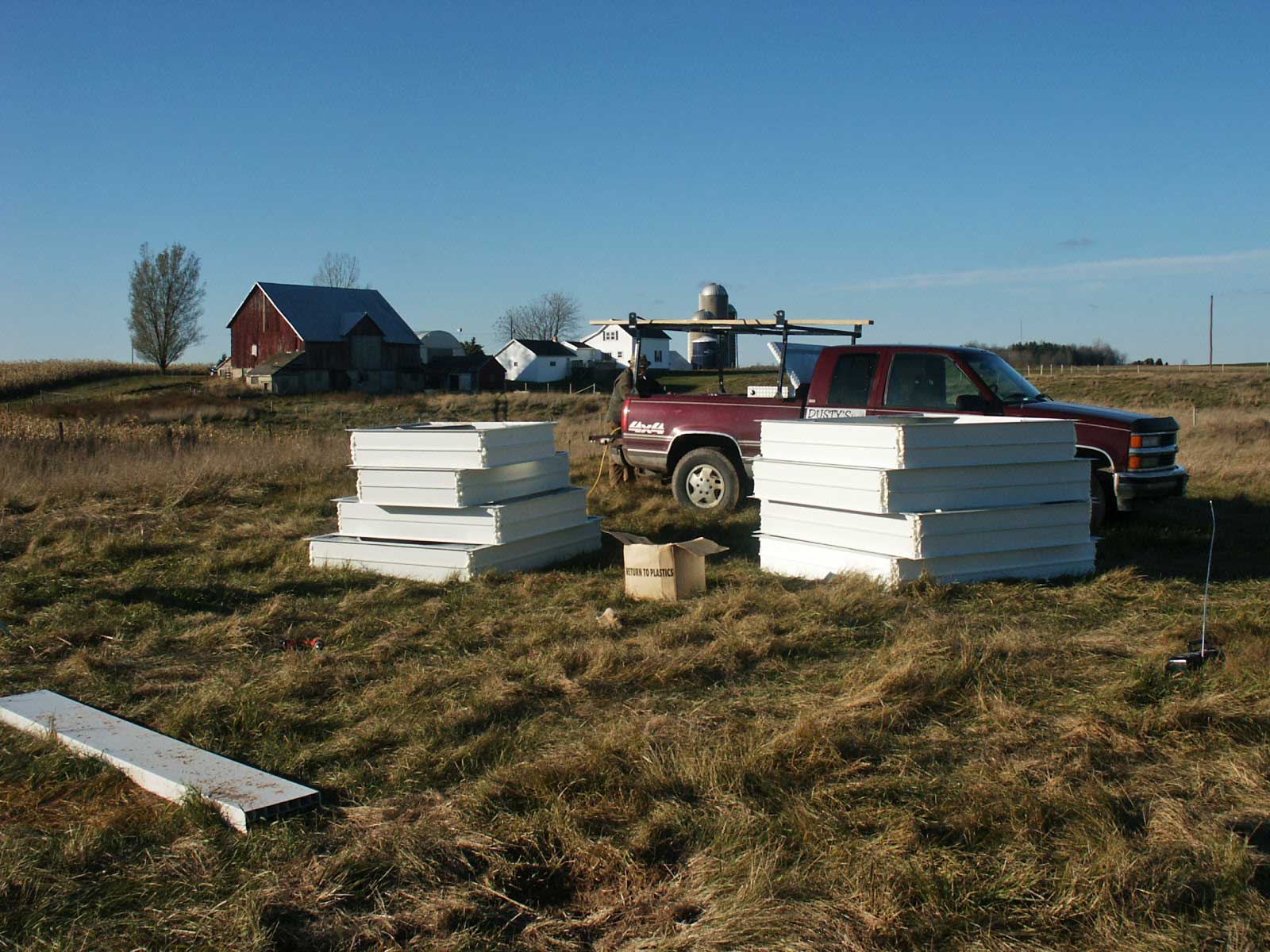
How ICF Walls Are Built
The wall construction process looks like this:
- Assemble wall framework with ICF blocks and V-buck openings
- Add rebar reinforcement
- Install bracing to hold walls straight
- Pour concrete in stages (“lifts”)
- Repeat until full wall height is reached
Pouring in lifts is critical—too much at once can cause a blowout. Once cured, you have a solid reinforced concrete wall system with insulation built in.
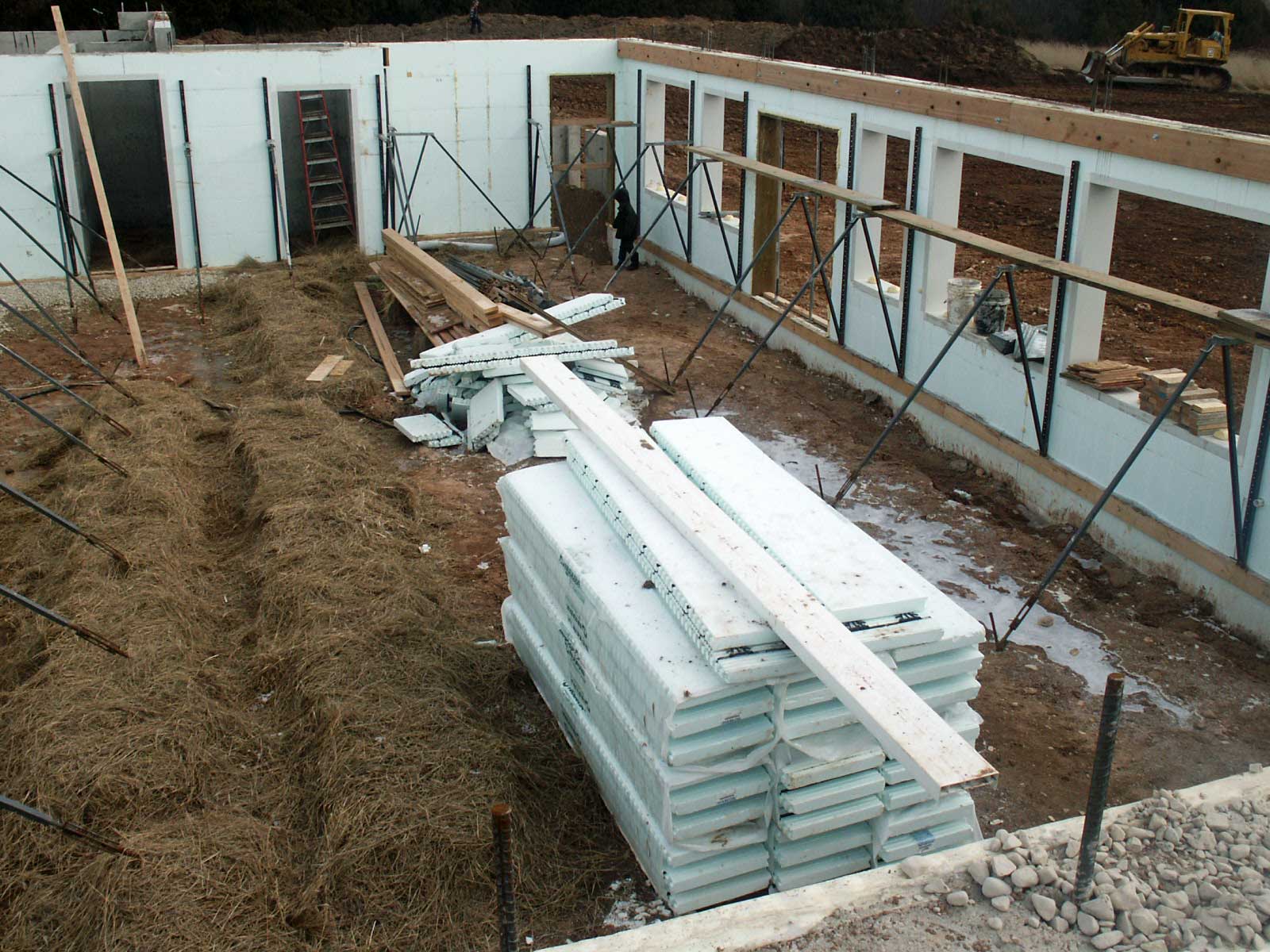
Our home uses these forms from the foundation to the roofline. Other options are basement/foundation only, or for a safe room. Windows and doors use “bucks” (box outs that create a frame for a window to fit inside).
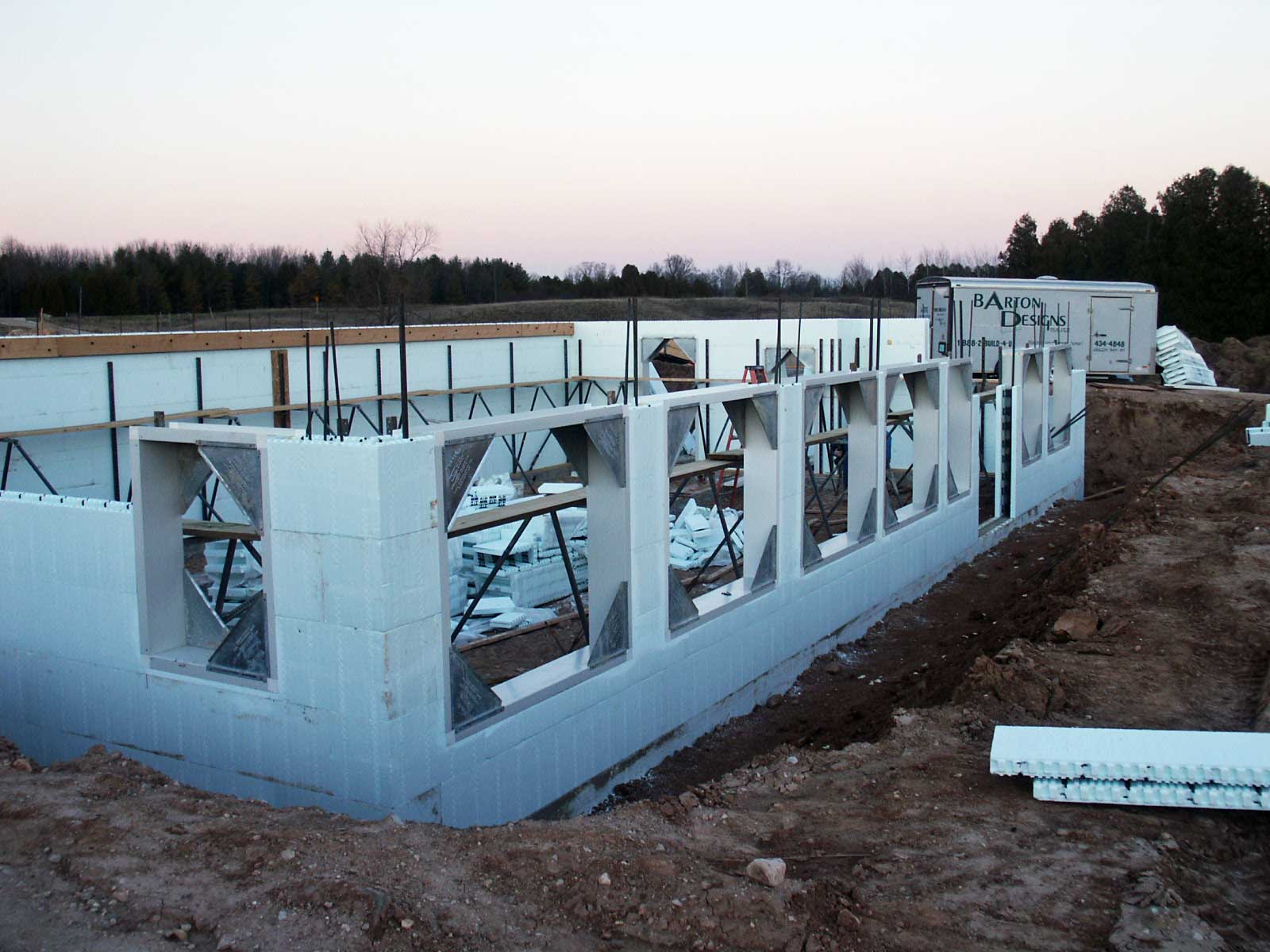
Because of the need to use lifts, the concrete pumper truck must visit multiple times (once per lift). The multiple concrete pump truck visits are a big part of the cost, along with the rebar labor. (It’s a lot tougher to lace rebar through walls than to just lay it in a flat slab.)
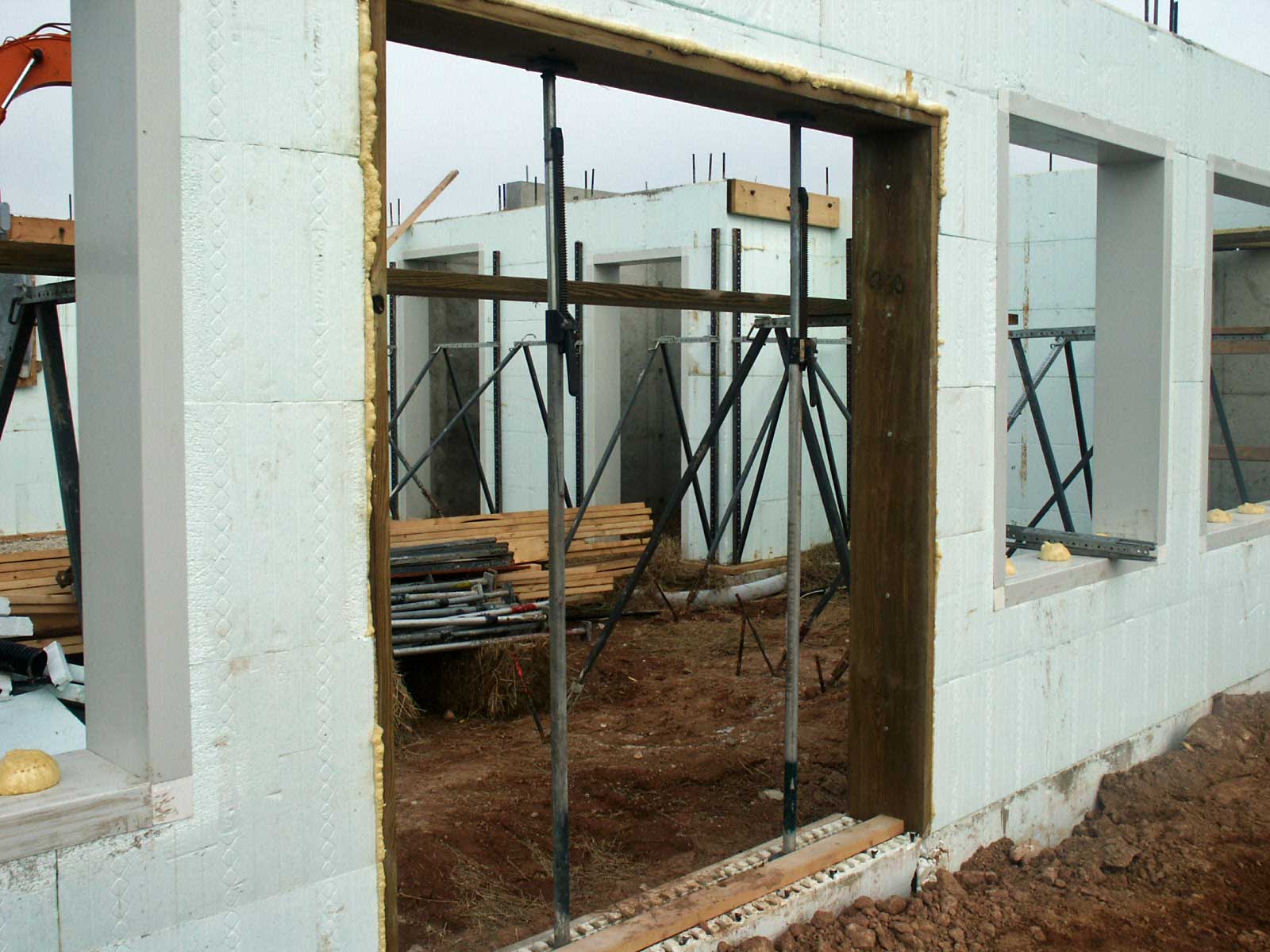
The builders add layers until they reach “floor” height. Then they add a header/hanger to support inside trusses. At the roofline, they add hurricane ties for the roof trusses.
Plumbing and Electrical in ICF Construction
Plan all wall penetrations in advance. Unlike wood frame homes, you can’t easily modify walls later.
- Electrical is run by cutting channels into the foam
- Wiring is placed and sealed with spray foam
- Plumbing in exterior walls is minimized when possible
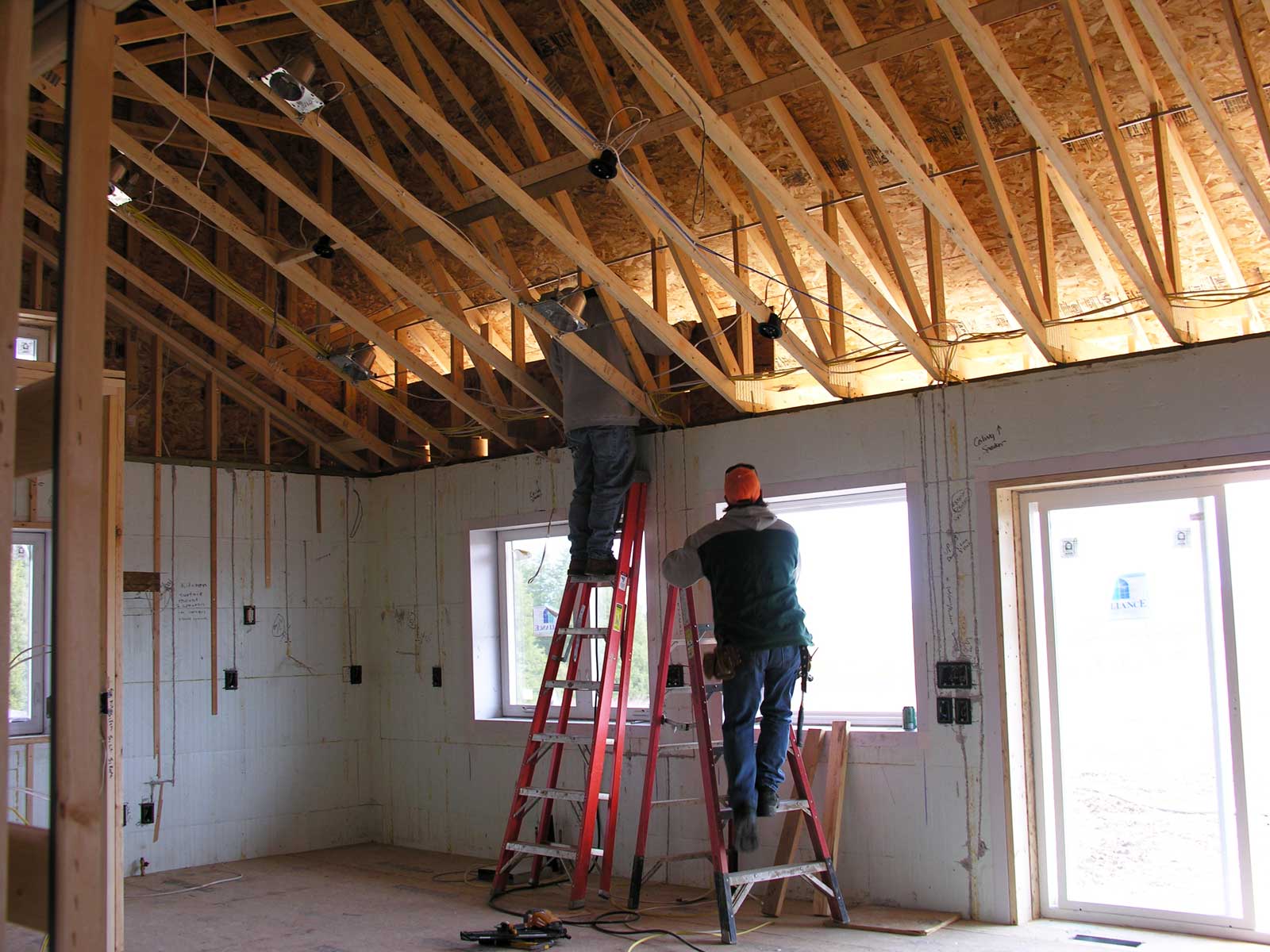
Finishing an ICF Home
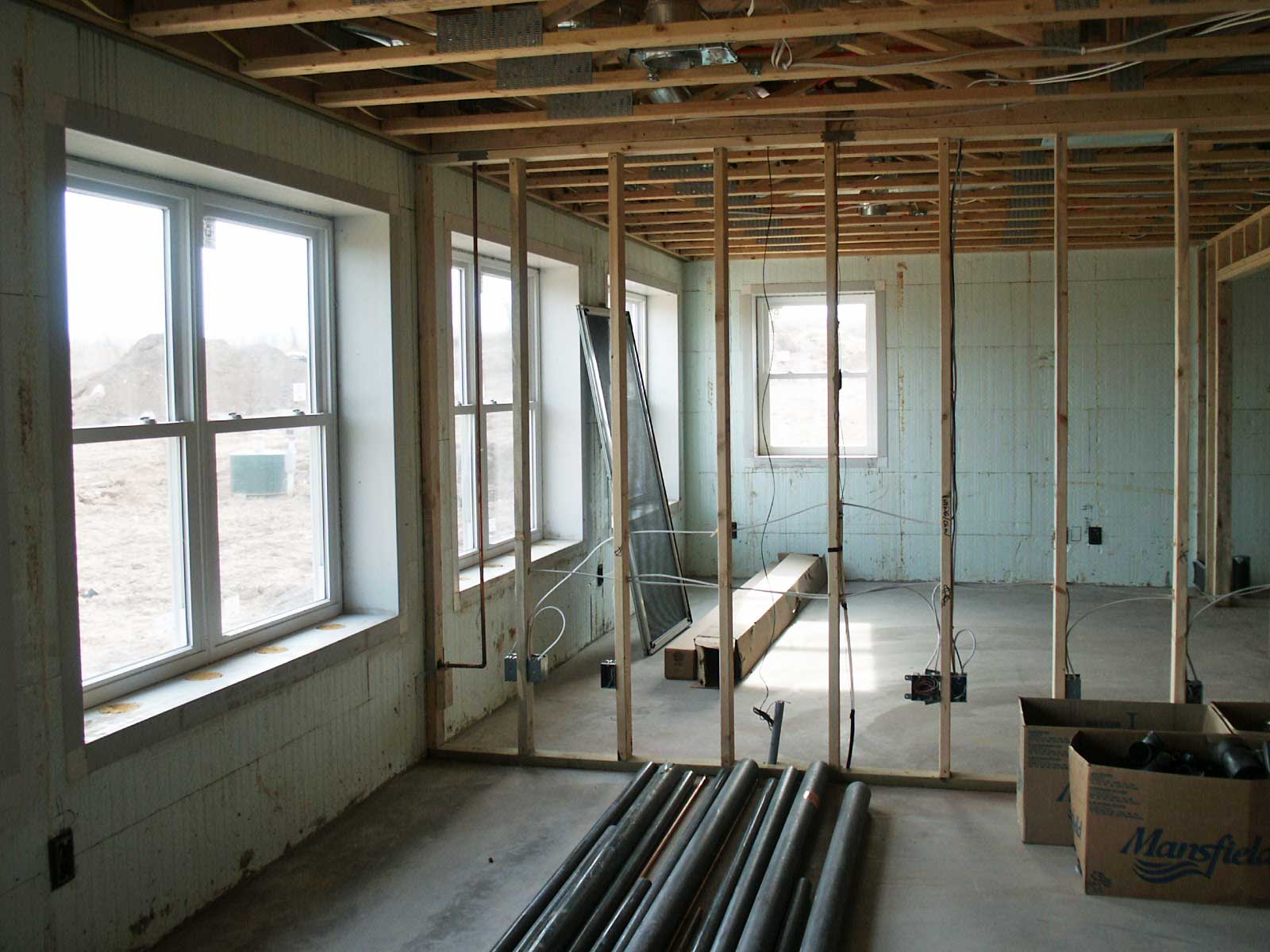
Inside and out, an ICF house looks like a normal home.
- Drywall attaches to built-in fastening strips
- Exterior can be siding, brick, or stucco
- Interior finishes are the same as conventional construction
The biggest visible difference? Deep window wells and thicker walls.
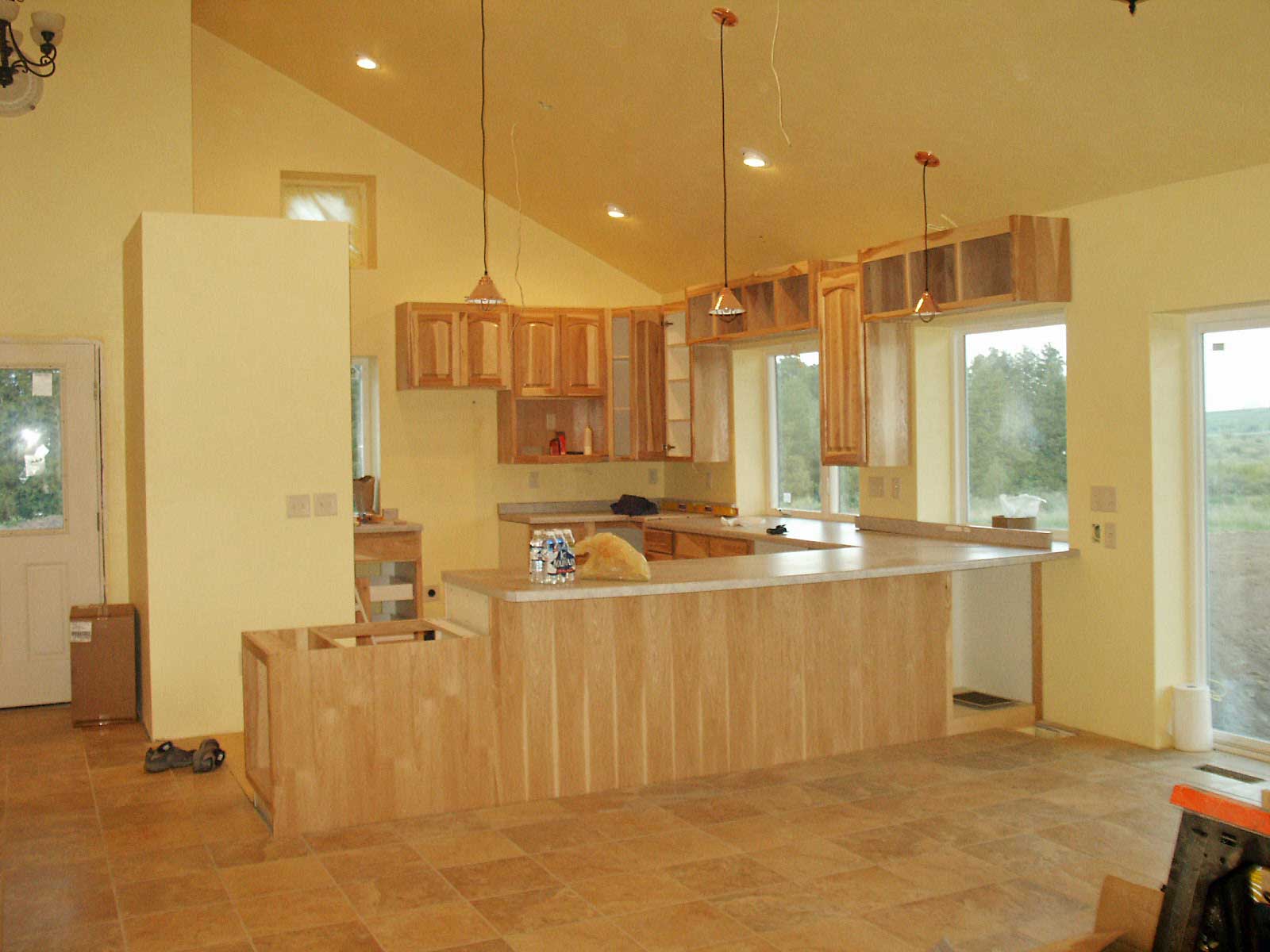
About the only thing that is a little tricky is hanging things on the exterior walls. There are no studs and the stripping is hard to find under the paint and drywall. I use removable adhesive tabs instead.
Living in an ICF Home – What We’ve Noticed
After more than two decades, a few things stand out:
- Extremely quiet – outside noise is dramatically reduced
- Stable temperatures – fewer swings day to night
- Low utility bills – even in a cold climate
- Solid feel – the house feels anchored and secure
Visitors often comment that the home feels different, even if they can’t immediately explain why. Several people who’ve come to our open house note that the home doesn’t look its age.
ICF Lessons & Recommendations
Our first home was stick built, our second is ICF. If you’re considering ICF building, here are a few key takeaways:
Plan for Ventilation. These homes are tight. Use spot ventilation (bathrooms, kitchen) and install an HRV or ERV system.
Use an Experienced ICF Builder. This is not the same as wood frame construction. Mistakes are hard to fix after the pour.
Choose Durable Windows & Sills. Tile or waterproof sills are a smart choice. Our existing window frames are vinyl to reduce heat loss from the home and prevent rot. ICF homes can have larger temperature differences within the window well, leading to condensation.
Plan All Penetrations Early. Running new lines later through a concrete wall is difficult. Leave extra conduit paths if you expect to need to go through a wall in the future.
Seal Carefully at Ground Level. We had one small gap during construction—and mice found it.
Is ICF Construction Worth It?
For us, absolutely. Compared to our previous wood frame home, the difference is significant:
- Better efficiency
- Greater durability and safety
- More comfort
- Lower long-term costs
If your goal is a high performance home that’s built to last, ICF construction is well worth considering.


Related Links

This article was written by Laurie Neverman. Laurie has a masters degree in mechanical engineering with an emphasis in renewable energy. She helped to operate and maintain the world largest flat plate collector solar water heating system. Her family’s home use three types of solar systems and is Energy Star and Wisconsin Green Built certified.
Originally published in 2012, last updated in 2026.
Did you write your book? I really appreciate all the above information! We will be building an ICF in the next few months.
Hi Deb.
We started, but haven’t been able to find enough hours in the day with August working full time at his main job, all the work here on the homestead, and online work. Hopefully still on the “someday” list, but I’m not sure when.
I hope your build goes smoothly.
I built my house out of ICF, about 25 years ago. I live just outside of Northfield, MN. About 5 years ago, over 24 F0 and F1 tornados went through this area. I was watching the news on the TV, in the living room. And an F1 went just over my neighbor’s house. Then took out about a 1/4 mile of wooded land. And it headed straight for my house.
Because of the construction of this house, I did not know this until the tornado was hitting my house. It then sounded like I was standing behind a big jet plane. After bouncing off of my house, it took out most of the trees in my back yard. Then pushed a lot of trees onto my pole barn. That needed a lot of work to fix the one side of the pole barn. Then the tornado lifted back up. As for the damage to my house, the vinyl house siding had lots of little holes in it. And there was one pane of one window that was broken. That’s it. I like this house.
Wow! Thank you for sharing your story.
I am late to the post, but the claim that concrete will stop radiation is true, but only to a point. Please research how much concrete you need to have for a fallout shelter.
To clarify, a typical ICF home is not a fallout shelter, but will offer some protection from radiation.
Fallout shelter walls below grade should be at least 10 inches thick. Above ground, 1 to 3 feet thick concrete is suggested for actual blast/fallout shelters.
Do you think ICF is an owner/builder friendly product? Our client asked us to engineer an ICF house. It was a frustrating process – as much because the client was still learning about how to build, but more so because the engineering design tools just aren’t as polished as they should be (yet).`
If someone already has quite a bit of experience building, they may be able to manage it. For most people, I’d highly recommend working with a builder who has experience building with ICF forms, as their are some unique challenges to using them.
Hello! We are right no building an ICF home in Salmon, Idaho. Your blog has been most helpful in answering some of my questions. We have a wonderful Contractor who is very experienced with this type of build.
With the risng cost of wood we made out pretty good by going with ICF. After reading all of this I am so happy we did!
Thanks again for all of your time and the effort you have put into this blog….wonderful!!
You’re welcome, and I hope your home building goes smoothly.