
How to Remove Hard Water Buildup From Faucets and Showerheads

This post may contain affiliate links. Read my full disclosure here.
In many parts of the country, having to remove hard water buildup is a necessity. Our well water is hard (it has a lot of calcium and magnesium in it), plus it has rust and particulates. Even with a softener and whole house particulate filter, over time deposits build up in the faucets and shower heads. I noticed recently that the kitchen and bathroom faucets and the shower head had reduced flow, plus a lot of the water was spraying the wrong direction. It was time for a good cleaning.
How to Remove Hard Water Buildup on Your Faucets and Showerheads
Note: This treatment is not suitable for iron or nickel fixtures, which may break down if soaked in vinegar. If you’re not sure if your fixtures are iron or nickel, test some diluted vinegar (1 part vinegar:4 parts water) on a very small area (apply with a cotton swab) and see if the metal rubs off along with the hard water buildup.
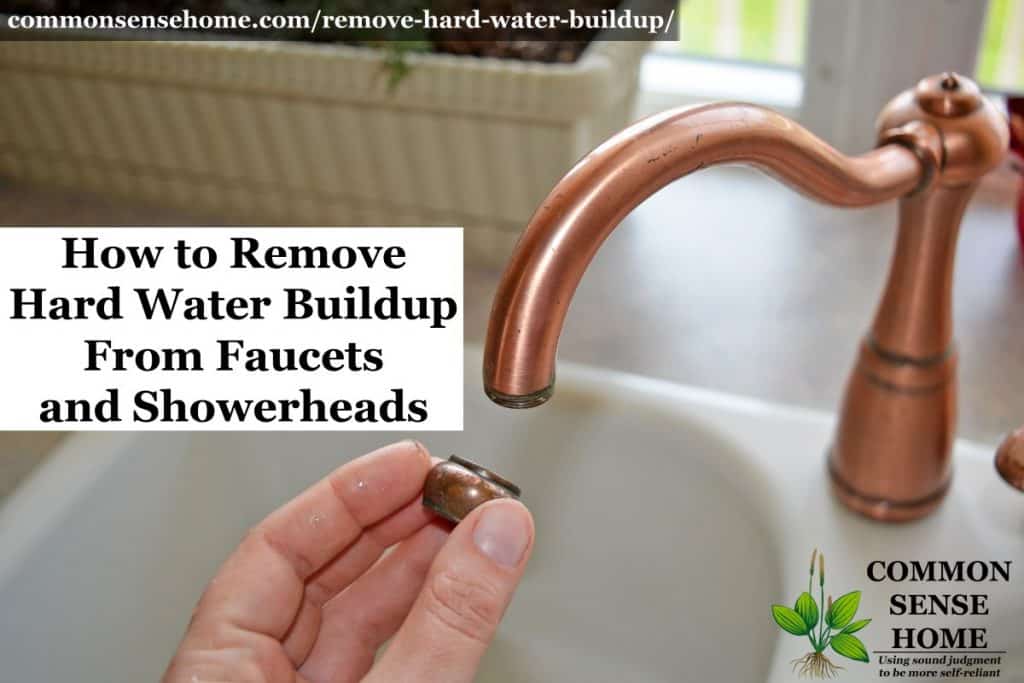
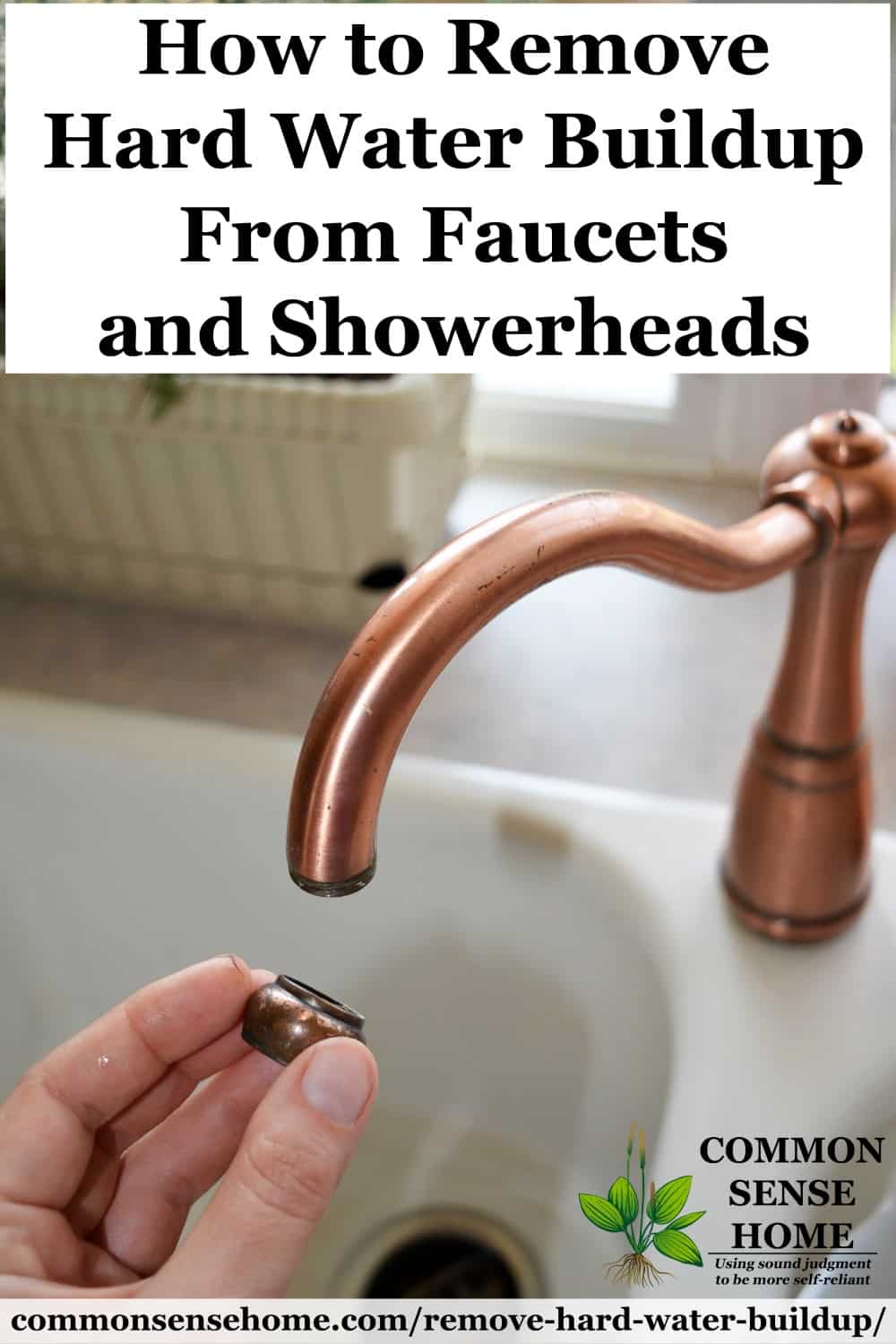
To remove hard water deposits from your faucet, start by unscrewing the end of the faucet (see above). This is our kitchen sink faucet, but all faucets should have a small, removable filter at the end.
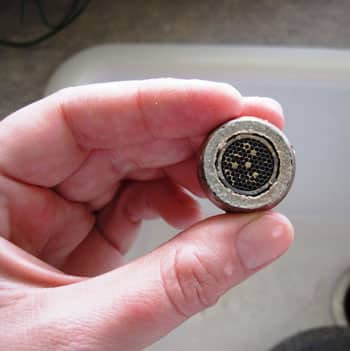
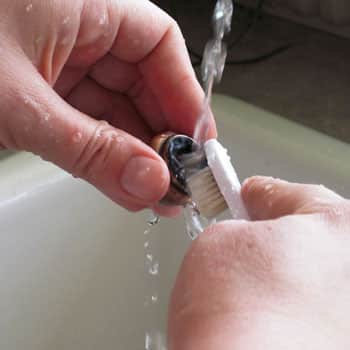
As you can see, there’s a lot of buildup on this one. Remove any rubber gaskets (don’t lose the pieces and pay attention to what order they assemble in the unit). Manually give the filter a good scrub with an old toothbrush under running water. This will remove loose surface deposits.
Here’s the secret for removing the calcium and rust in a hurry. Because calcium is an alkaline earth metal (meaning it has two valence electrons in its outer shell), it’s highly reactive with acids, like vinegar. If we apply a little more kitchen chemistry, you’ll remember that chemical reactions require energy, so heat up enough vinegar (I usually use white vinegar for cleaning) to fully submerge the faucet filter. Get it hot enough so that it’s uncomfortable to stick your finger in it, but not boiling. Place the faucet filter in the hot vinegar, and watch it go to work. See all those little bubbles?
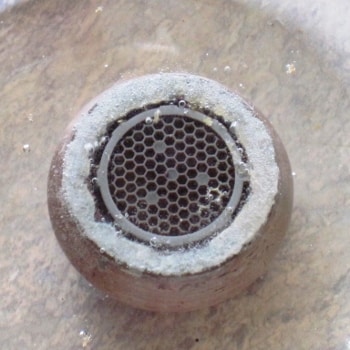
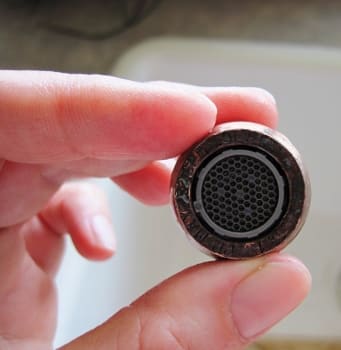
Let it sit until it stops bubbling (I left mine in for an hour or so while I went and worked on other things). Give it a good rinse and scrub with the toothbrush, and it looks almost like new.
Would you like to save this?
The water flows the way it’s supposed to again, too.
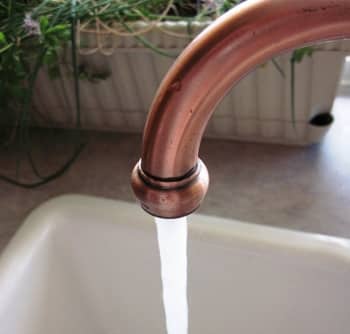
Note: We don’t just have a copper faucet because it looks pretty. Copper also naturally anti-bacterial, so it fights germs and may reduce illness.
If you have a chrome faucet that’s in really bad shape, you can also get replacement aerators and just swap out the end of the faucet.
The showerhead was in much the same state.
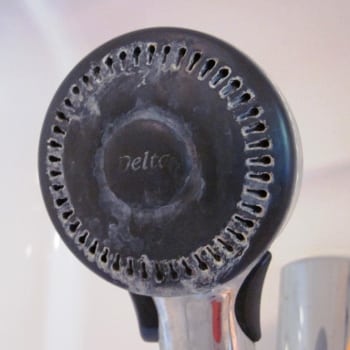
Because we have hand-held showerheads, I just placed the shower head in a basin on the shower floor.
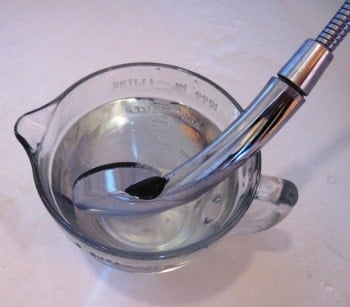
If you don’t have a hand-held showerhead, you can use a plastic bag and a rubber band to secure the vinegar around the showerhead for soaking.
Scrub and rinse, and ta-da! Much better! Now the shower doesn’t spray sideways past the shower curtain any more. 🙂
Recommended posts:
- Natural Stove Cleaners
- How to Get Rid of Mice in Your Home and Garage
- Natural Mosquito Repellents That Work
Originally published in 2011, updated in 2016.
I am so excited to try this. We also live in the midwest and I’ve wanted to tackle this cleaning problem but wasn’t sure how. Thank you.
So vinegar should be safe to use on bronze and matte black faucets? I’ll test a small area first but I’m finding mixed reviews about using vinegar on bronze. Thanks!
I suspect you’re finding mixed reviews because the quality of bronze faucets varies. I think the matte black coating is electroplated on, so it should be stable, but please test both on a small area before doing a larger area soak.