Category Archives: tomatoes

Tomato Mania – Seed Starting, Transplanting and Troubleshooting

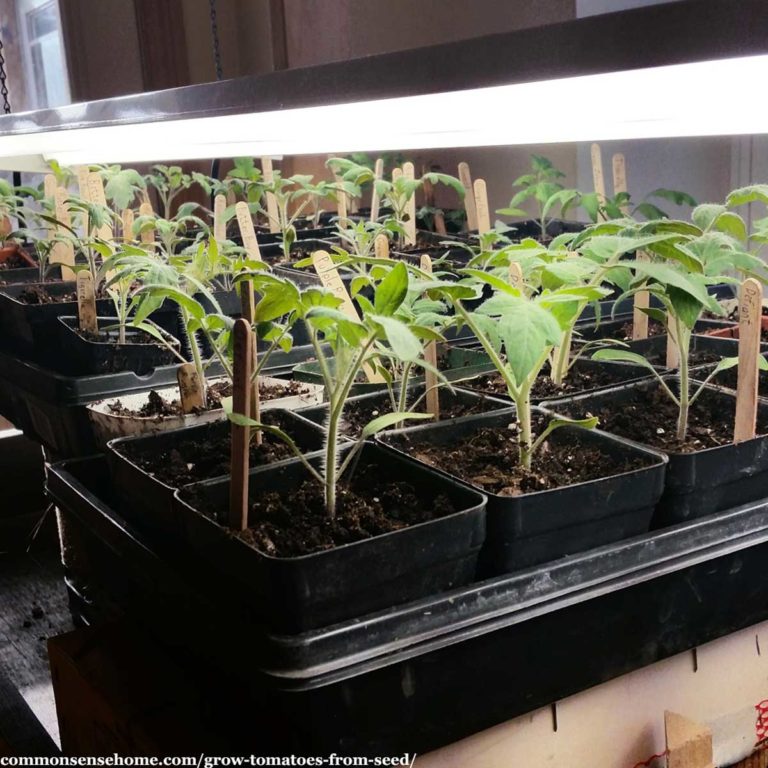
I started my tomato seeds back in March, but I’ll do a quick recap here.  I like to use a mix of potting soil and worm castings (3:1 ratio), in individual cell packs.  (I save those black plastic containers that you get plants in from the greenhouse.)  As a rule of thumb, you want to plant seeds roughly three times as deep as the seed is wide, so tiny seeds stay on or near the surface, and larger seeds go a little deeper.  You can do a germination test or pre-sprout the tomato seeds in a coffee filter, but I usually don’t bother.  (Pre-sprouting is discussed in more detail in the comments of this post.)  You may want to do a quick soil test on your potting mix before you start, as many on the market are lacking in key nutrients and/or overloaded with other nutrients.  I like to mark my seeds using popsicle sticks broken in half.  I write the name of the variety on both sides of the stick with a ball point pen (in case it gets it gets wet, which it will, generally one side remains readable).  The popsicle sticks are cheap and reasonably durable, and also compostable.

Cover the seeds with a clear plastic cover, and put them in a well lit location.  I like to give them a little jump start with a heating pad underneath.  I put the heating pad and the lights on a timer, leaving them on for about 16 hours a day and off for the remaining time.   If you’d like some more photos of my planting bench and seed starting setup, take a peek at this post.

Because I plant so many varieties, I end up with leftover seed from year to year.  Tomato seeds generally store quite well (I have some from 2001 that are still viable), but the germination rates decrease over time.  I made up a simple spreadsheet in Excel where I track date planted, variety, seed source, number of seeds planted, date of first seedling appearance and final number of seedlings.  This allows me to compensate for the reduction in germination rates over time.  Of course, some seeds keep better or worse than I anticipate (mostly better), which is how I ended up with over 100 tomato plants this year.  I’ll have extras ready to sell to the locals by next week.

Once you get seedlings popping up, uncover them within the first 24 hours. Keeping them covered can lead to damping off.  Damping off results from fungal infection.  It generally comes from keeping your seedlings too wet.  One day they’ll look fine – then WHAM!  The seedlings are laying there dead.  Generally the stem shrinks up near ground level, and the soil is very wet.  Sometimes here will be mold or fuzz growing on the surface of the soil.  (Yes, I have made this mistake – it’s not pretty.)  A sprinkle of cinnamon  or a spritz of chamomile tea may help save the remaining seedlings, but once a plant has keeled over, it’s a goner.

If the color of your seedlings is off – check moisture levels.  You want damp soil, not too wet or too dry.  If the moisture level seems fine, try a soil test.  As I mentioned above, some soil mixes are just not right.

If your seedlings are really tall, skinny and floppy (also known as “being leggy”) – chances are your lighting is inadequate.  Try a different location or more artificial lighting.   Putting a fan on a timer and having it blow on the seedlings off and on through the day will also help toughen up stems (and prevent damping off and other diseases – ever wonder why they have those fans running all the time in commercial greenhouses?).  Alternatively, you can run your hands lightly across the tops of the seedlings from time to time during the day.  Proper lighting is the first step, but movement will help, too.  If you start your tomato plants early and they need to be transplanted into bigger pots one or more times before being planted in the garden, you can plant them deeper than they were previously growing.  (More on this below.)

If you’ve got leaf tips that are pinched together by a seed that didn’t fall off, like this (this plant is an eggplant, not a tomato, but you get the idea):

It is okay to gently remove the stuck seed.  Try not to tear the leaf.  This will go a little easier if the seed is moist.

As the tomatoes get larger, they can be moved into a greenhouse or cold frame – just make sure to keep them from freezing (preferably between 50-80F).

If you come into your greenhouse and find this:

Plus an empty shelf above:

And muddy smeared cat footprints at the scene of the crime (because you left the door to the house open to keep the plants from freezing), try not to cry when you see this:

Or this:

Yes, the tops and bottoms of these tomatoes have been parted, never to be whole again.  Thankfully, most of the varieties killed were ones that I had in excess.

If you end up trying to determine varieties from a scrambled mess of plant material and dirt, here is a comparison of the main types of tomato foliage.  In terms of leaf shape, you have regular leaf (RL) plants and potato leaf (PL) plants.  Growth-wise, you have determinate and indeterminate.

From left to right, we have RL indeterminate, PL indeterminate, and RL determinate.

You can see the RL determinate plant on the left has more, smaller, branched leaves, while the PL determinate plant has fewer, larger leaves.

Comparing indeterminate to determinate, the indeterminate on the left is taller and leggier, while the determinate plant is smaller and stockier.

Indeterminate plants will continue to grow larger and set fruit until frost – mine commonly reach six feet or more in height.  As the end of the season approaches, you may wish to pinch off new growth to focus their energy on maturing existing fruit.  Determinate plants will grow to a more modest size (they often don’t require staking, and thus are generally preferred by commercial growers).  They set all their fruit at roughly the same time and are ready for harvest during a narrow window of time.  Most heirloom varieties are indeterminate, while most modern hybrids are determinate.

This post is already pretty long, but bear with me.  I know my readers can skim and grab the info they want.  :-)

Transplanting

I start my seeds in the cell packs with openings that are roughly 1 inch square.  As they grow, I transplant them into larger containers.  First, I’ll move them to two inch containers, then up to three or four inch, depending on how fast they’re growing and how long until I can get them in the garden.

Here’s a cellpack of tomatoes that’s more than ready for transplant.  You can see they’re a bit overcrowded and leggy.  You can generally transplant any time after they get their first “true” leaves (the leaves that look like tomato leaves, not the first little oblong leaves that appear).  I confess, my plants can get a little overgrown before I get to them.

I have seen some gardening gurus recommend cutting off the excess seedlings in each cell at ground level with a scissors and keeping only the strongest, but I just can’t bring myself to kill healthy little plants.

Gently pry a group of seedlings out of their cell, pushing up from below as you pull from the base of the plant above.  Ease the roots apart, trying to keep as much soil as possible on the roots.

If you encounter a severely stunted plant (like in the bottom left corner of the photo below).  Don’t bother trying to save it – it won’t grow.  Trust me on this.

Transplant seedlings as deep as possible in their new container.  This will help support the stems.  Yes, it’s okay if bottom leaves are covered.

In a few weeks, I graduate the plants to the larger pots.

When it’s getting close to the time to plant them outside, I start hardening them off.  “Hardening off” plants is the process of gently introducing them to the outside elements to toughen them up enough to survive in the garden.  You want to take it slow, or you’ll end up killing all your little seedlings (again, trust me on this).  I prefer to harden them off over 3-4 days, starting them out with no more than an hour or two of direct sun the first day and increasing exposure each day.  Make sure they are protected from the wind and adequately watered when you set them out.  A little extra TLC at this point goes a long way.

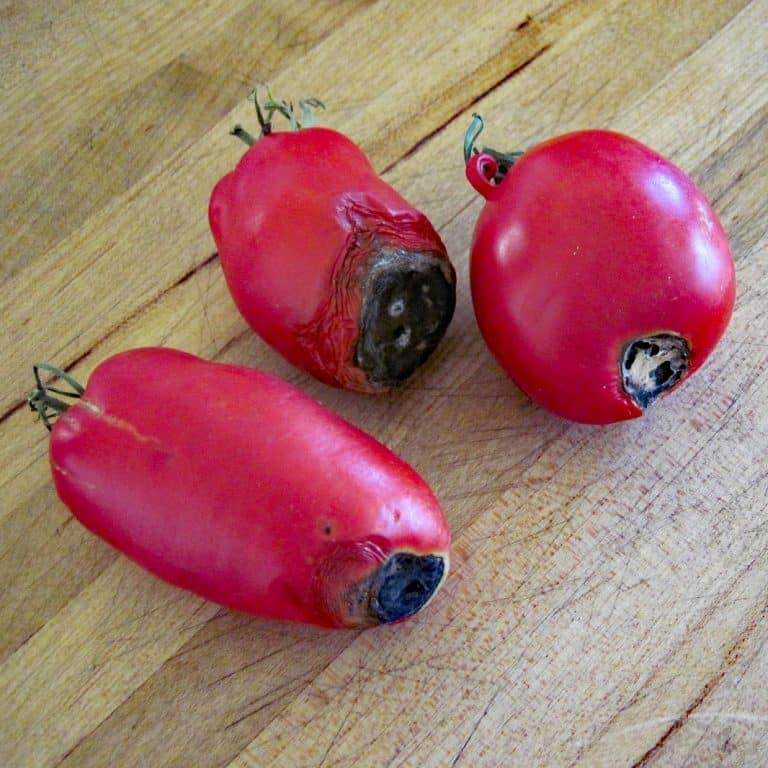
When you plant them in the garden, I prefer deeper holes over shallow trenches (in my climate and location).  Planting deep (just leaving a few inches of leaves exposed above ground) will yield a more robust, more drought tolerant plant.  The plant will send out new roots from the buried stem.  I add a small handful of crushed eggshells to the planting hole to help prevent blossom end rot, which is caused by inadequate calcium levels and is generally made worse by fluctuating moisture levels in the soil.  Tomatoes like rich soil, so I also add some well rotted manure or worm castings, but you don’t want to add too much (a shovel full per planting hole is enough).  Too much nitrogen will give you too many leaves and not enough tomatoes.  I also mulch, trellis and often add a soaker hose under the mulch for watering, but I’ll go into the details of that on another post.  Common tomato problems and pests in the garden will have to wait, too, as this post is getting really long!

Here’s my list of this year’s tomato varieties.

Slicing Tomatoes

Cour di Bue (oxheart type)
Green Zebra – green and yellow stripes
Tigerella – yellow and orange striped
Better Boy – prolific
Glacier- early
Garden Peach – fuzzy!
Pruden’s Purple – large pink/purple
Early Girl – early, reliable
Totem – determinate, can be grown under cover
Defiant – resistant to Late Blight, which hit my garden late last season
Arkansas Traveler – new to me this year

Cherry Tomatoes
Pearly Pink
Black Cherry
Sun Gold
Grandma Tess’ Landrace Current tomato
Peacevine
Yellow Pear
Red Pear
Micro Tom – determinate, can be grown in a small pot

Paste tomatoes
San Marzano Paste
Purple Russian Paste – thrives in cold, dry weather
Polish Linguisa

Opalka Paste – Polish heirloom, my very favorite paste tomato

My breeding experiment – working on natural long storage tomatoes
Long Keepers 2005
Long Keepers 2007

Whew!  I feel like a cowboy at a rodeo, tying up a calf and then lifting your hands to show your done! of course, I’m just getting started with the season around here.  I’ve got about half my seedlings in the cold frames to harden off, the rest still need to be transplanted into the biggest pots and then moved out with their brethren.  Hopefully with a little cooperation form Mother Nature, all I need will be in the garden by the end of the month, and the extras will have found new homes with friends and neighbors.

This post has been added to Simple Lives Thursdays at A Little Bit of Spain in Iowa and
Barn Hop #14 at Homestead Revival.

Painting with a Living Pallet

When I was growing up, I used to spend a lot more time painting and drawing and working on arts and crafts.  Nowadays, I confess, most of my standard artsy-craftsy projects are on the back burner.  There’s just so much that has to be done, between homeschooling and homesteading, that the days seem to slip away.  I was a feeling a little down about this, until I started thinking.  I’m still being creative – now I’m just using a living pallet.

Each of those little seeds that gets stuck in the ground this spring is part of a vision of a bountiful garden.

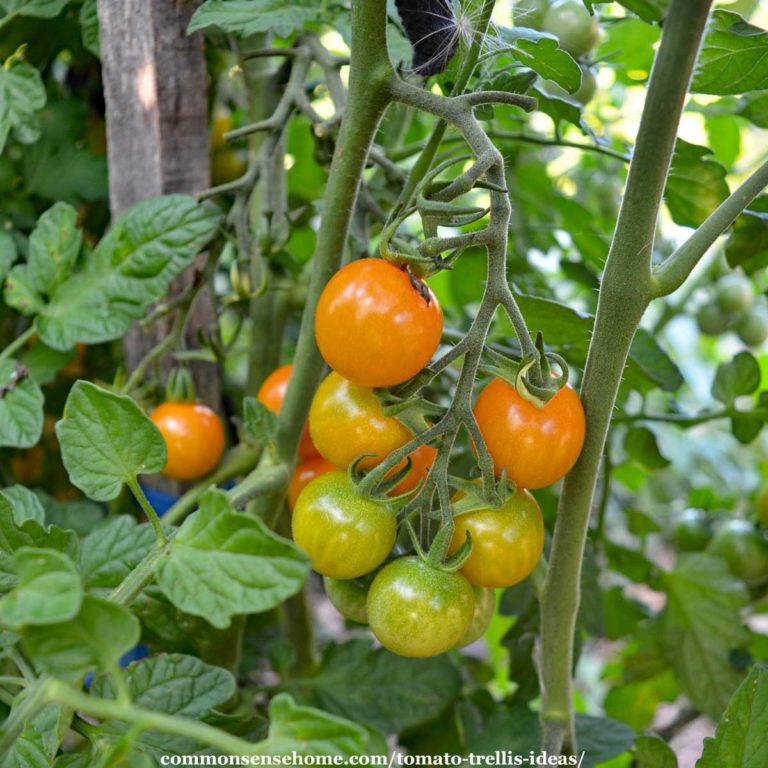
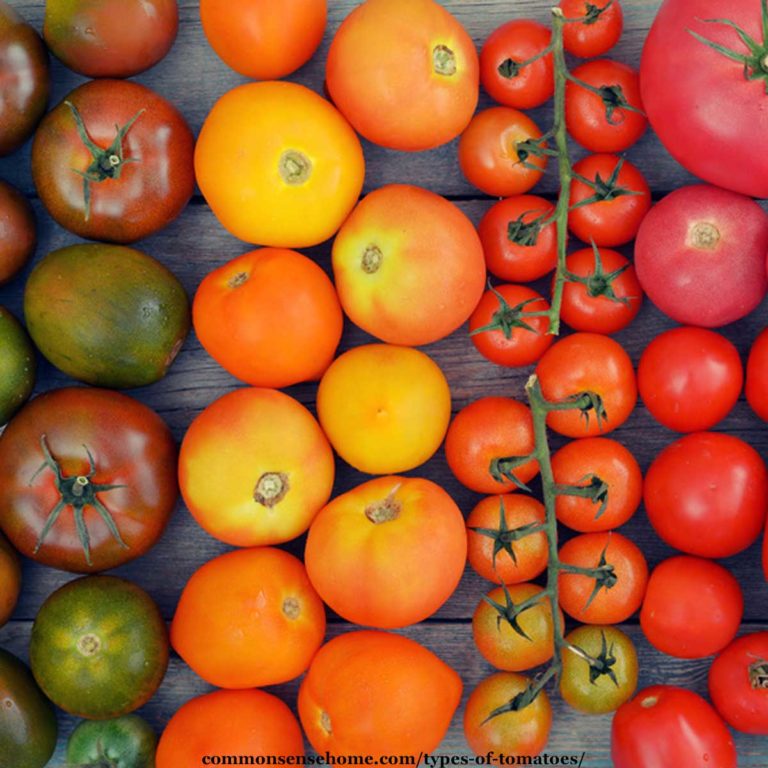
From a rainbow of cherry tomatoes…

to the delicate sherbet-like variations of a Swan Lake melon…

and a welcoming bird bath in my herb and flower bed.

They may start out small (the boys and the plants)…

But they sure do grow quickly.

I’d like to raise a virtual toast to all my homesteading, homeschooling and gardening friends.  May your living pallets always be filled with joy, wonder and a bountiful harvest.

This post has been added to Fresh Bites Fridays at Real Food Whole Health.

Homemade Quesadillas with Soaked Flour Tortillas

The other night I had some leftover baked chicken from the previous night, so I teamed it up with some leftover salsa and shredded cheese to make one of my boys’ favorite meals – cheesy chicken quesadillas.

I start with homemade tortillas based on Katie’s Post at Kitchen Stewardship (Soaked 100% Whole Grain Homemade Tortillas). I generally use 100% freshly ground whole grain flour and lard or butter.  This makes the dough very tender and tricky to work with, but really tasty.  Confession – sometimes I only let these sit for an afternoon instead of 12-24 hours, but I figure I’m still ahead of what you can buy at the store.

I divide my dough into 10 equal portions, then start rolling.  I like to roll it between layers of Super Parchment to make it easier to work with.  My friend, Emma, suggested a lefse grill and stick, but I don’t do these often enough to make that type of investment.

Because the SuperParchment doesn’t burn, if the dough is particularly sticky I can flip the whole sheet into the pan.  Once it cooks a bit I peel the sheet off and flip the tortilla.

I keep these in a large Rubbermaid bowl with a cover as I cook them.  The steam released by the tortillas in the bowl softens them and makes them more flexible and easier to fold and roll.

After I’ve got all the tortillas cooked up, I start on the quesadillas.  They’re very simple (at least the way I do them, I make no claims on being authentic).  I chop up some leftover chicken and mix it with salsa, spread it on half of the tortilla and sprinkle it with freshly shredded cheese.

Cook until the cheese is melted and the chicken/salsa mix is heated through.

Fold over and cut into wedges.

Ta-da!  Not fancy, but very tasty, and a good way to use up leftover chicken parts and the kids really love these.  It’s especially handy for summer meals, because you don’t have to heat up the stove.

This post has been added to Real Food Wednesday hosted by Kelly the Kitchen Kop.

This post has been added to Simple Lives Thursday at Sustainable Eats and
Frugal Food Thursday at Frugal Follies.
Related Posts Plugin for WordPress, Blogger...