Apr 122013
 

 Dear Better Homes and Gardens

Dear Better Homes and Gardens,

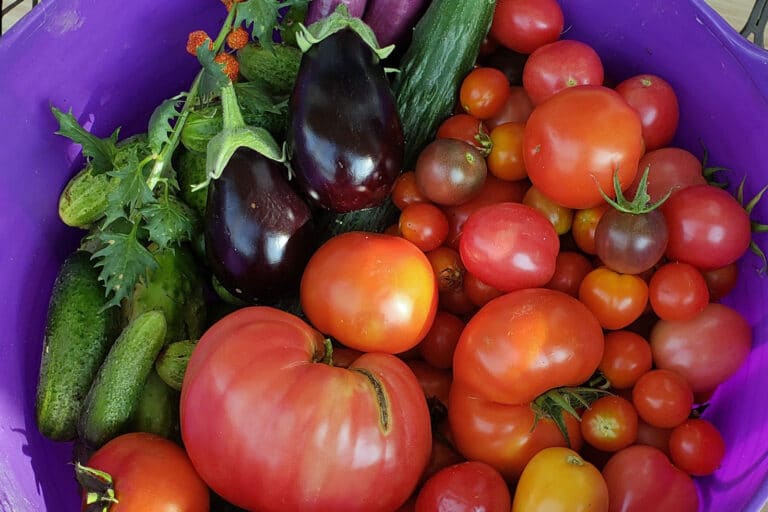
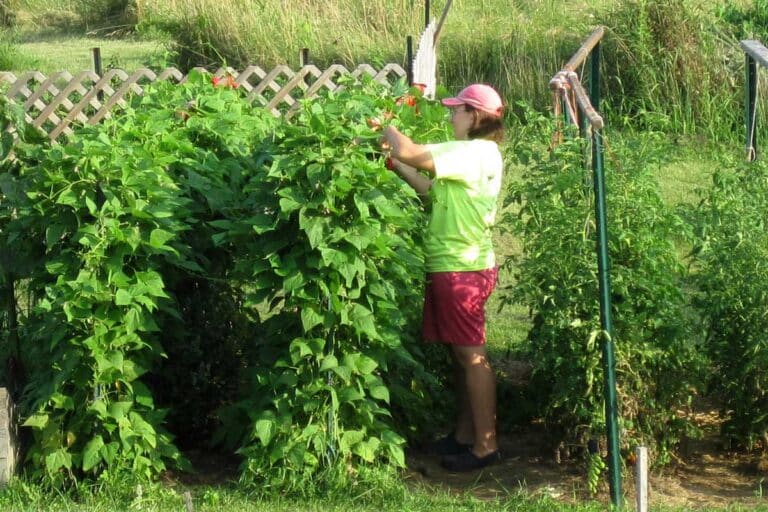
I double dog dare you to show some working kitchens and gardens.  Take a tour of the Midwest during gardening and canning season, and introduce yourselves to some homespun guys and gals with stains on their cloths and dirt under their finger nails.  Sure the celebrities and high priced decorators you usually feature are swell, but most folks I know have little or nothing in common with these people.  Money is tight, and kitchen tools and appliances are picked because they’re needed, not because they are a fashion accessory. Continue reading »

Mar 302013
 

Working with Nature - Shifting Paradigms - Review and Giveaway

Working with Nature – Shifting Paradigms:  The Science and Practice of Organic Horticulture was one of those books that had me jumping up and saying to my husband and boys, “Look at this!”  The author, Heide Hermary, has opened my gardening world to a whole new range of ideas and possibilities.  (Congratulations, Heide, you have indeed shifter my paradigm.)

How is Working with Nature – Shifting Paradigms Organized?

Working with Nature – Shifting Paradigms is divided into eight chapters: Continue reading »

Mar 252013
 

strawberry spinach - Add Some Variety to Your Salads

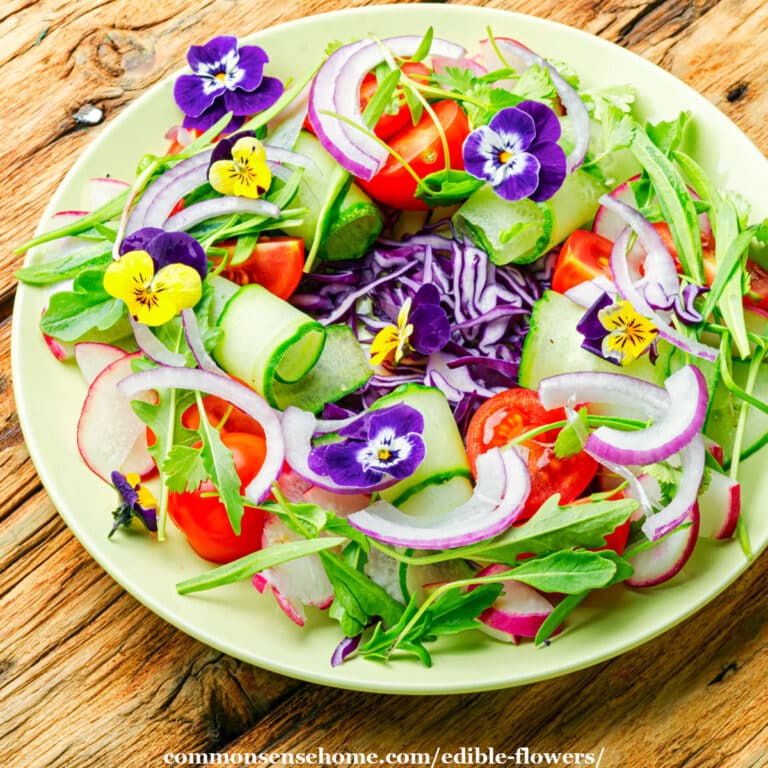
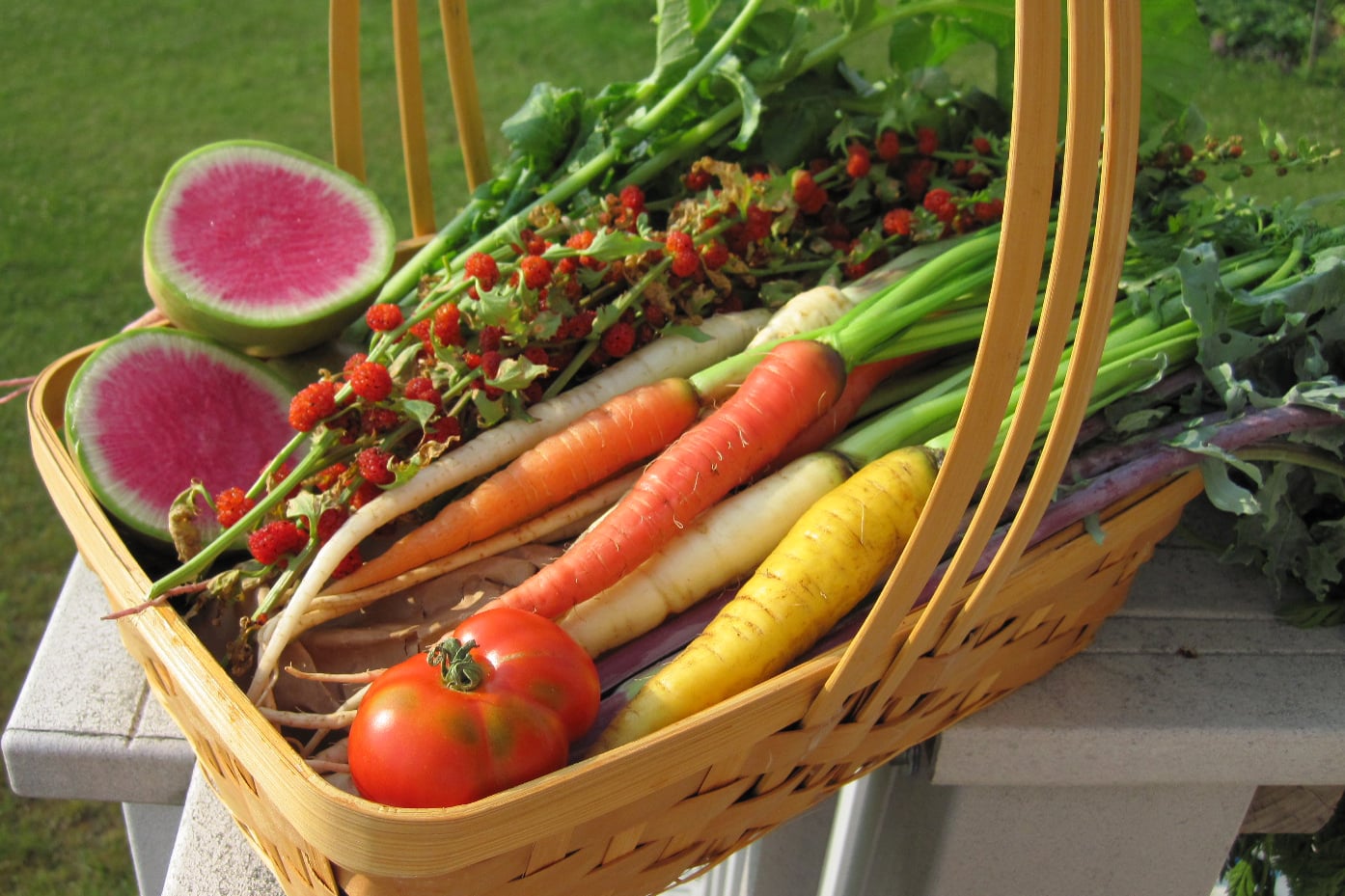
Do you enjoy trying new plants in the garden?  Strawberry Spinach (Chenopodium capitatum, Blitum capitatum) is a fun edible that I’ve enjoyed in my garden for many years.  Both the leaves and berries are edible.  I usually eat the younger leaves fresh in salads, and use the older leaves for cooking.   The berries are bland, but add some texture to summer salads.  Strawberry spinach is also known as Blite Goosefoot, Strawberry Goosefoot, Strawberry Blite,  Strawberry Sticks, Beet Berry, Beetroot, Indian Paint, and Indian Ink.  Wikipedia says, “It is native to most of North America throughout the United States and Canada, including northern areas. It is considered to be endangered in Ohio. It is also found in parts of Europe and New Zealand.”  This is interesting, since I’ve never seen it in the wild, but then again it mentions that it prefers “moist mountain valleys”, and I’ve never lived in one of those. Continue reading »

Jan 172013
 

How to Grow Raspberries @ Common Sense Homesteading

Raspberries can provide delicious sweet tart fruit for fresh eating, cooking and preserves such as jams and jelly. I can only speak for myself, but homemade raspberry jelly is my favorite.  It tastes nothing like the product you buy in the store – the raspberry flavor is much stronger. In this post I’ll share what I’ve learned about how to grow raspberries in northwest Wisconsin.  I’ll also include information from the USDA Cooperative Extension Office.  There are Cooperative Extension Office throughout the United States, and they are a great resource for information specific for your climate and location.
Raspberry Basics Continue reading »

Jan 132013
 

What is terroir?

What is terroir?  I first heard of the concept a number of years ago, and my brain immediately went, “Ah-hah!”  Terroir (from terre, “land”) is defined (via Wikipedia) as:

…the set of special characteristics that the geography, geology and climate of a certain place, interacting with the plant’s genetics, expressed in agricultural products such as wine, coffee, chocolate, tomatoes, heritage wheat and tea. The concept has also crossed to other Protected Appellations of Origin (PDOs a form of geographical indication), products such as cheeses. Terroir can be very loosely translated as “a sense of place,” which is embodied in certain characteristic qualities, the sum of the effects that the local environment has had on the production of the product. Terroir is often italicized in English writing to show that it is a French loanword.

Most frequently, it is used to describe grape and vineyards, but once you start poking around in foodie circles, you’ll hear it applied to a wider variety of foods, such as those listed in the Wikipedia definition.  I live just a couple of miles from a winery called Parallel 44.  They chose the latitude because it includes many of the great wine making regions of the world, and they chose the specific site for the soil and gentle south facing slope. Continue reading »