
What are Shell Beans? (Growing Tips, Usage, Storage)

This post may contain affiliate links. Read my full disclosure here.

Shell beans are easy to grow and easy to store, but may not be right for every garden. We’ll share what they are and how to use them, and pros and cons of adding them to the garden.
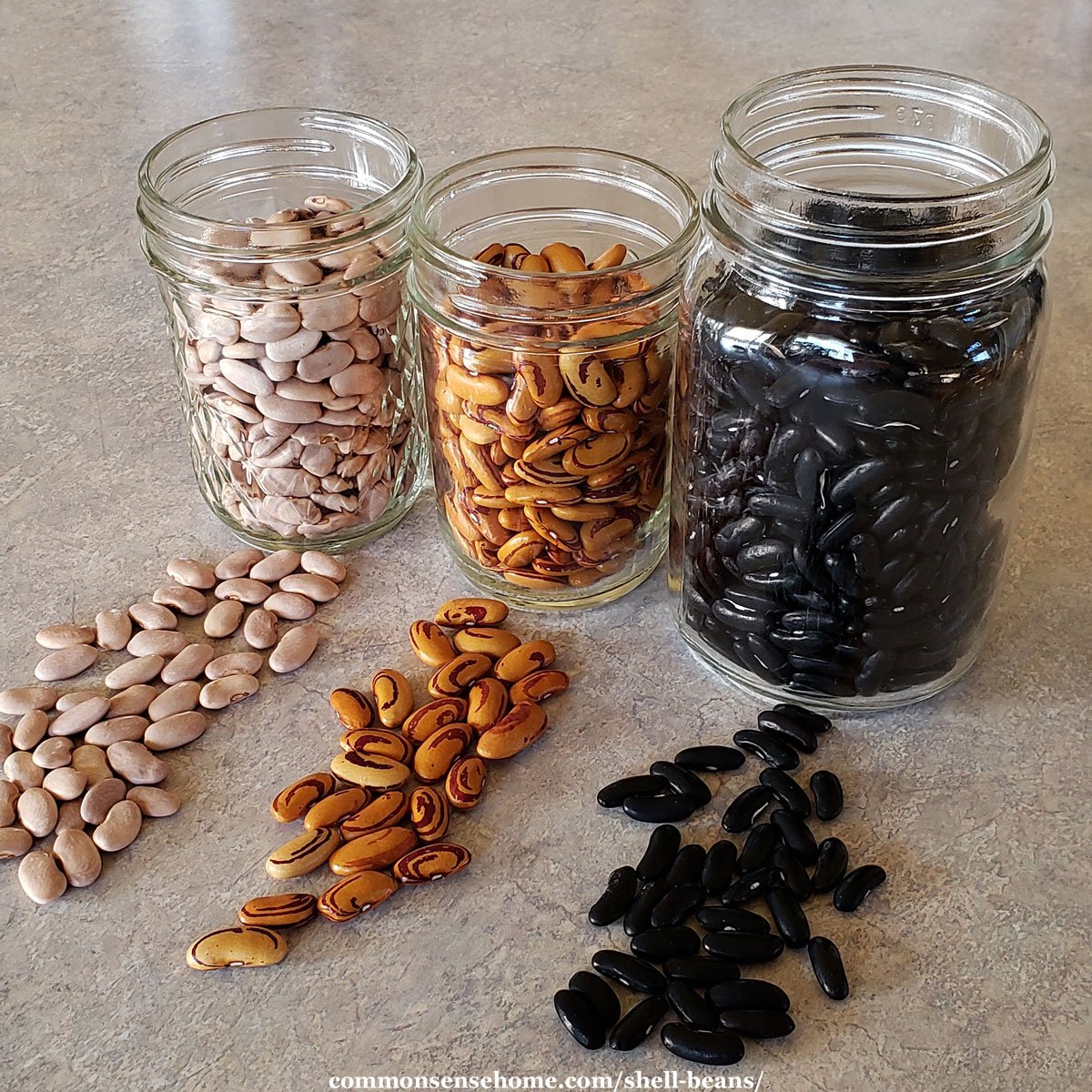
What are shell beans?
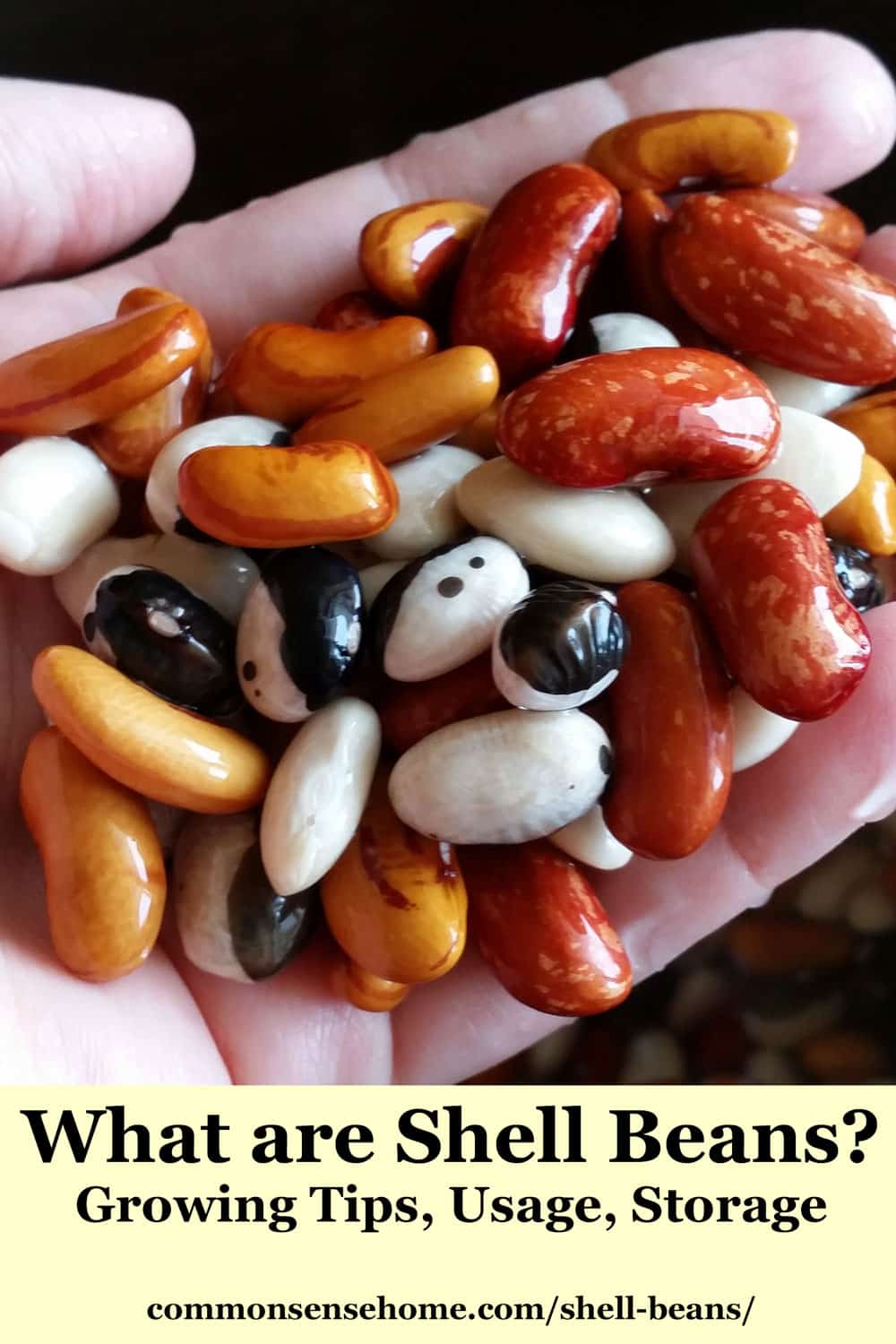
Shell beans are beans grown for shelling. You eat the seed of the bean rather than the pod, like green beans.
You can eat the fresh shell beans in recipes like succotash, or preserve them as dry beans for later use. Fresh shell beans cook more quickly than their dried counterparts.
Some varieties include:
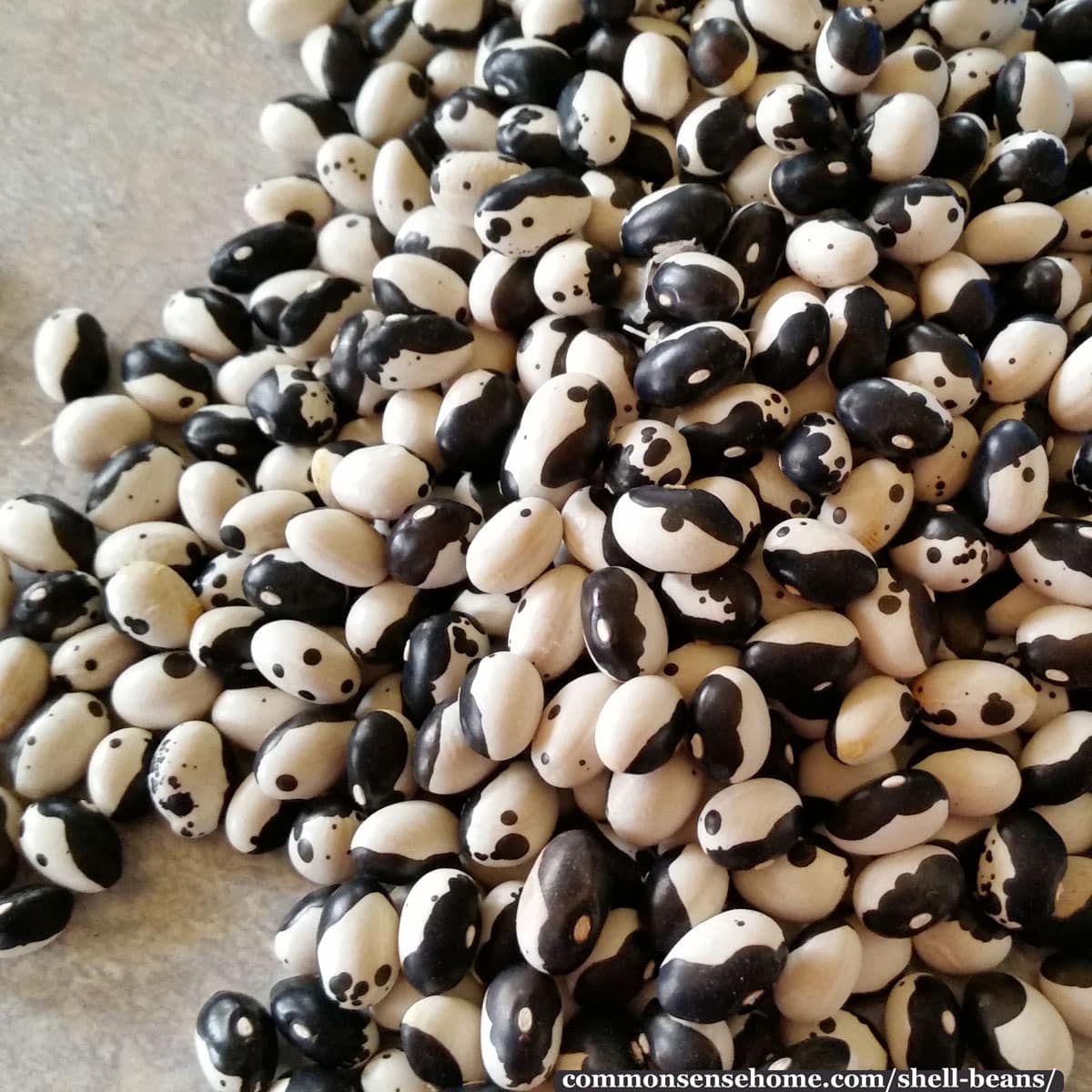
- Tiger’s Eye (our favorite) – These have a rich, buttery texture.
- Silver Cloud Cannellini bean
- Vermont Cranberry beans
- Flambeau
- Etna
- Mitla
- Marfax
- Jacob’s Cattle
- Calypso
- Pinto
- Red Kidney
- Black Turtle
- Borlotti beans (a type of kidney bean)
Runner beans can be eaten young as snap beans, or allowed to mature for use as shell beans.
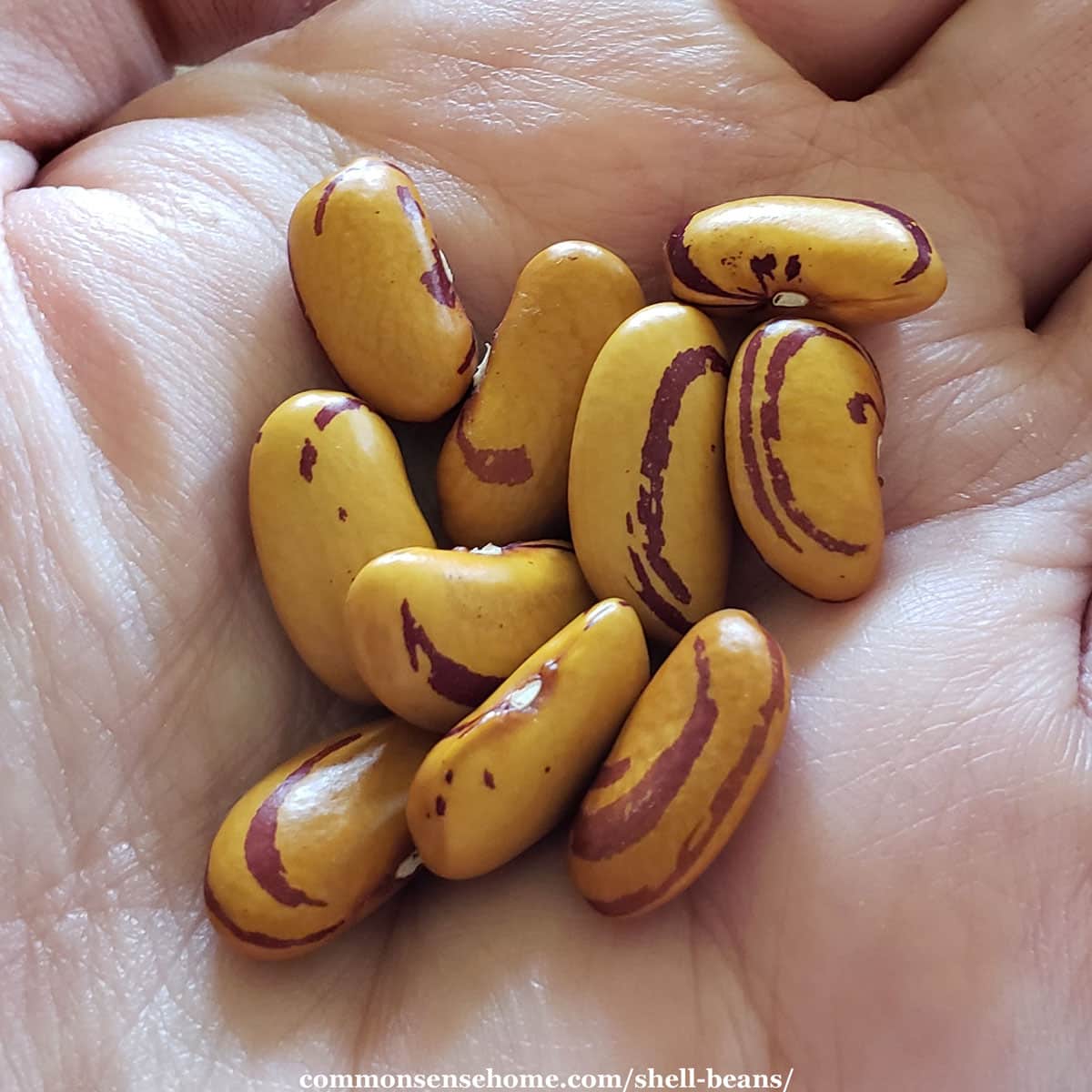
How do you plant shell beans?
Plant shell beans after danger of frost is past and soil has warmed to 60°F (16ºC). Plant seeds about an inch deep. Avoid excess nitrogen in the soil, and water weekly if rains fail.
How you plant them depends on the type of beans.
If you have bush beans, allow 4 inches of space between plants. Plant in rows 8 inches apart.
For pole beans, plant in hills with 4 plants per hill, trained up a “teepee” style support. Alternatively, plant in double rows with a trellis between, spacing plants three inches apart.
See “Grow Pole Beans” for more details on growing beans and saving bean seed.
How Do You Eat Shell Beans?
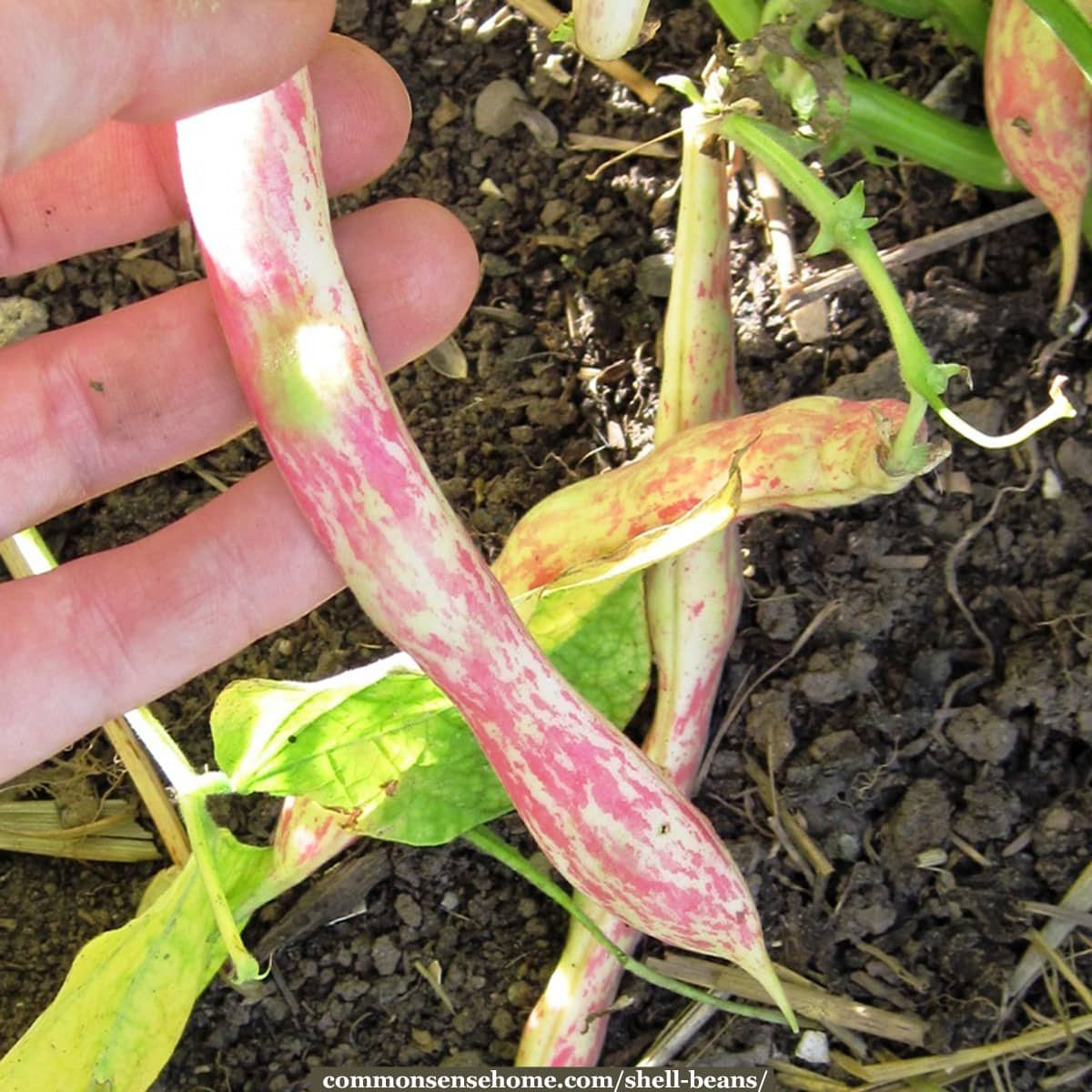
Enjoy fresh shell beans from the garden or farmers market when the seeds inside are full and bumpy.
If you want to eat them fresh, pick them before the pod begins to dry out and get leathery. For dried beans, allow the pods to dry completely on the vine. You can store the beans for a couple of days in the refrigerator, but don’t keep them too long.
To cook fresh shell beans, remove the seeds from the pods and rinse them in a colander.
Place the beans in a stock pot with enough water to cover them by about an inch. Add desired herbs, like bay leaf and garlic, but hold off on the salt until cooking is done.
Bring the beans to a boil, then reduce heat and simmer until tender. Smaller, younger beans cook more quickly, older beans may take around 30 minutes or longer.
Would you like to save this?
When tender, remove from heat and add salt to taste. Allow the beans to cool, and drain, if desired. Toss with butter or olive oil and additional fresh herbs, or add to soups, salads and other recipes.
To save fresh shells beans for later use, freeze cooked beans in an airtight container. You can also freeze the raw beans on a cookie sheet, and then pack them into an airtight container to add to soups and stews.
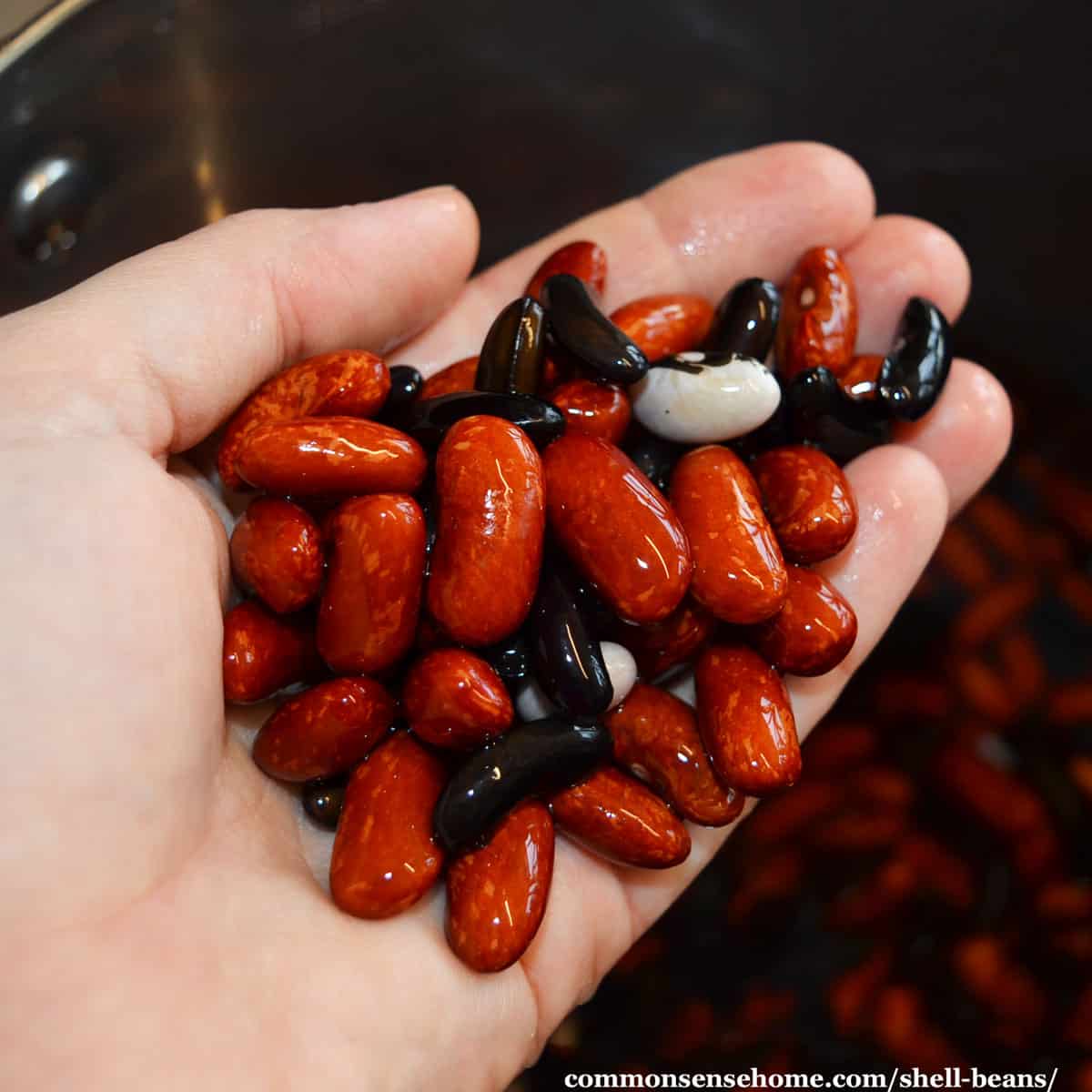
How to Use Dried Beans
To use my dried shell beans, I rinse them and soak them overnight with a little cider vinegar.
The acid medium (vinegar, whey) helps to neutralize the enzyme inhibitors (phytates), making beans and grains more digestible and nutrient-dense.
In the morning, I drain them and place them in a large stock pot. Cover the beans with water about two inches higher than the beans.
Bring the beans to a boil, then reduce to a simmer and slow cook for several hours, until tender. Proceed with the rest of the recipe, like homemade baked beans.
See “Bean and Lentil Recipes – More than 66 Recipes from Soups to Dessert” for dozens of ways to use your beans.
How Long do Dried Beans Store?
For best quality, use dried beans within one to two years.
Stored in an airtight container with an oxygen absorber, dried beans last for many years. As the years go on, however, they take longer to cook. Eventually, they’re still edible, but never get very soft, even with extended cooking.
Pros and Cons of Shell Beans in the Garden
We grow shell beans every year, but they may not be a best fit for every garden. Here are some things to consider.
Pros:
- Easy to grow
- Excellent keepers (see “Easiest Vegetables to Store“)
- Healthy bean plants add nitrogen to the soil
Cons:
- You need a lot of plants to get enough beans for storage, because you don’t use the pods, so these aren’t great for small gardens.
- If you’re growing the beans for dried beans, you only get one harvest per plant.
- If soil is high in nitrogen, bean plants won’t produce well.
I hope you’ve found this post useful, and invite you to take a look around the site to learn more and Pin the post for reference.
More Food Storage and Gardening Articles
We have dozens of articles on food storage and gardening, listed by category on the Recipes and Kitchen Tips page and Common Sense Gardening page.
Browse all of our Food Storage Articles
Originally posted in 2009, last updated in 2022.

Have you ever tried cooking beans in an Instant Pot? I cook soaked beans for 15 minutes and non soaked beans for 30 minutes. As for older and harder beans I have cooked them for 50/60 minutes and at least 90 percent came out soft. If your beans are hard after you cook them, try using an immersion blender to make a puree for hummus or tortillas or a type of bean soup! Comes out like split pea.
Yes, we have. Thanks for mentioning it. I probably should have included that in the post, but it was getting pretty long already. Eldest son uses the instant pot to make refried beans more quickly.
Be careful with the immersion blender with tougher beans, as it can overheat if you push it too hard.
Loved the item. We use a lot of runner beans, young beans with pods for the early season, then save dried pods for bean collection for replanting next year. Unless of course, my husband and son get there first!
Last year I grew scarlet runner beans up some old dog kennel (chain link) panels. They did beautifully, the hummingbirds and bees loved them, and they provided delicious, Romano type green beans all summer and two large pots full of beautiful purple beans in the fall. The shell beans are large, about the size of quarters, and buttery tasting. This year I plan to grow them in front of a hot, south facing wall of the house, again using chain link panels.
If a dog kennel is still in use as such, I can’t imagine that dogs would mind the shade.
Thanks for sharing your experience. I haven’t tried runners in years, but may have to give them a go again.
I love the article, and tried to go to Rebuild from Depression. The link goes to http://www.phyticacid.org and requires a password. Is this the same site?
Thanks for all the great info!
Hmmm… it’s been a while since I updated this post, and it appears that it’s likely the same site, but the password protection is something new. Not sure what’s going on, but I’ll likely remove that from the post unless I find a way to easily access the information. Thanks for letting me know about the issue.
Diane – anything that involves beating on something and my youngest would be all over it. How do you get all the grit out of the beans after the smashing? One of things I like best about doing it this way is that the beans come out very clean.
Here's a much easier way to shell those beans. Put them in a feed sack sort of bag and stomp on it!!! Keep stomping!!! Then if you want to be very creative pour it out in front of a fan. The pods and dust will blow away and the beans will fall! Or if you want to play it safely then you can pick the beans out of the bag!!! Makes a hard job fun. I'm betting your boys will like the bean stomp!
Thanks :D!
Great post to build upon Amanda's Rebuild with Phytates.
I have so much to blog about but out of the loop for a while, till I get my hubby's health healed up.
OK, now my brain is smelling bean and ham soup cooking, and it's making me HUNGRY!! We grew up on lots of beans, such good food, feast or famine. Your're right, beans are easy to grow, harvest, dry, and EAT!!
facinating info on phytates, thank you!